Quinton Byfield’s Superlative Sophomore Season

The situation of Quinton Byfield is a unique one. Not his status as a high pick – second overall in the 2020 Draft – but one of heavy playoff pressure without a lot of NHL success. High picks usually find themselves on their team’s top line at the age of 20 because they’ve had very good age-18 or age-19 seasons. That is not true for Byfield, who has eight career goals in 99 regular season games and had below-average expected goals impacts in his first two seasons, per Evolving Hockey.

Early in the 2022-23 season, the Los Angeles top line was struggling. Through Christmas, they were scoring just 2.7 goals per 60 minutes at 5-on-5 with Adrian Kempe and Anze Kopitar on the ice, allowing 2.5, and that was not nearly good enough for a team that had hopes of a Stanley Cup run (all per Natural Stat Trick). Kevin Fiala did not really mix well with them and while Gabriel Vilardi was fine there, they really wanted to use his skills to help bring some scoring to the third line (which was a success). Byfield was on the roster early in the season, but pushed into a minimal role. He went back to the AHL, put up 9 goals and 15 points in 16 games, and was back on the NHL roster in December. That is when things really changed.

To put into perspective the impact Byfield had on the top line in the second half of the regular season, here is how the top line fared by expected goals for/against at 5-on-5 this season without him (via HockeyViz, and the red areas on offence are where they’re creating offence at high rates while the red areas on defence are where they allowed offence at high rates):
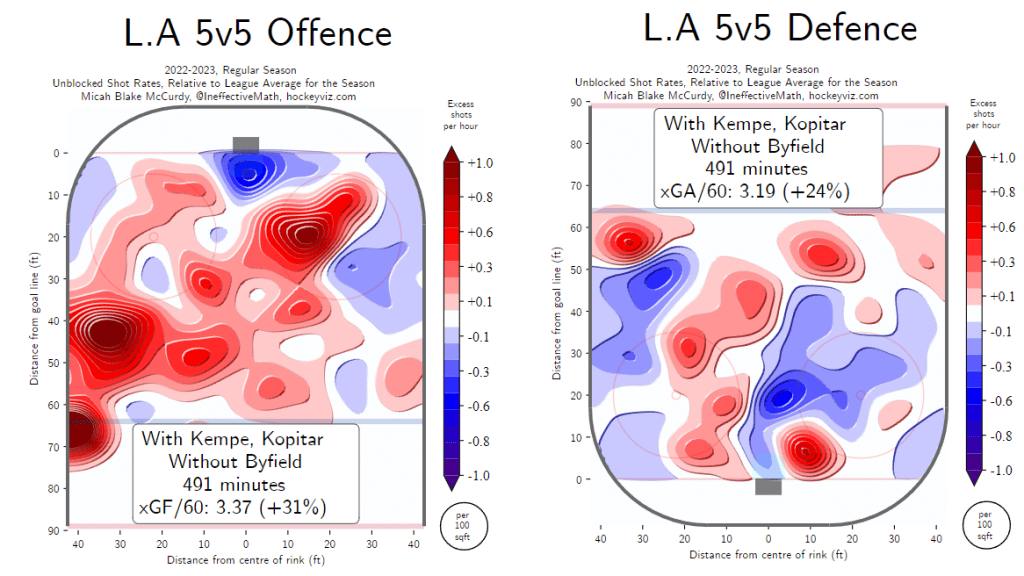
That is a lot of shots on offence from outside the danger areas around the crease, and from the literal blue line for some reason. Conversely, bad numbers on defence as well.

Of course, we wouldn’t be here if there weren’t improvements, so here’s how the top line fared with Byfield:
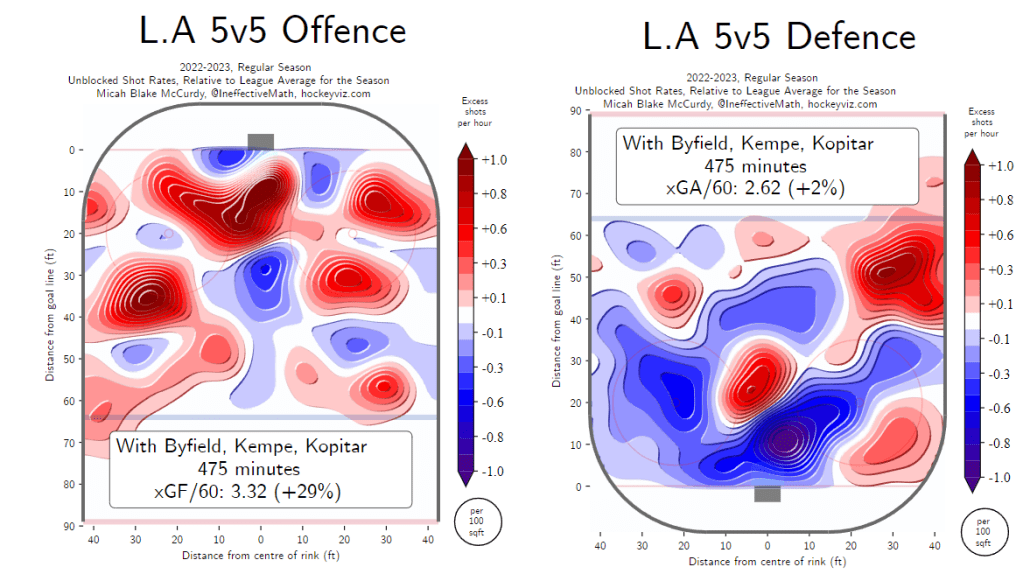
While the expected goals-for numbers are basically the same, we can see the change in offence. The shots from the circles are still there, but the plethora of shots from the blue line are mostly gone with more emanating from the mid-low slot areas. In fact, the line took fewer shot attempts per minute with Byfield than without him, but the added shots from more dangerous areas led to more goal scoring. In fact, their goals jumped from 2.7 per 60 minutes all the way to 4.0 per 60 minutes, increasing by nearly 50%. That is… a lot.

The question is why is Byfield succeeding where other, good offensive players like Fiala and Vilardi (relatively) failed? The first answer is that it’s not strictly about playmaking. It certainly is part of it, but not the whole story. (I will say that I think Vilardi probably would have done well, long-term, but bad shooting percentages in a small sample made it tenuous, at best.)

Using data that is tracked by Corey Sznajder, we can take educated guesses at who the best playmakers are in the league and on a team. One way to help in this regard is scoring chance assists per 60 minutes at 5-on-5, or the rate at which a player assists on a teammate’s scoring chance. The leaders in this regard for 2022-23 include Mitch Marner, Connor McDavid, Artemi Panarin, and Mark Stone, for reference. In the sample of forwards I have (249 forwards with at least 200 tracked minutes), the league average SCassist/60 is 3.1. Among regular Los Angeles forwards this season, just four exceeded that league average:
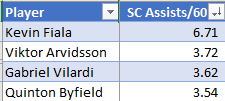
Notice that half the list are guys that were eventually moved off the top line. In other words, if they weren’t willing to move Arvidsson up because of his chemistry with Phillip Danault, and Byfield didn’t work out, they were, in a word, fucked. It did work out, though, so let’s get specific as to why.

For starters, let’s look at what was going wrong earlier in the season. Again, generating shot attempts wasn’t necessarily the problem, but it was getting to quality scoring areas other than Adrian Kempe’s One-Timer Wheelhouse. I thought I’d watch some shifts from bad offensive games in the first half of the season from the Los Angeles top line. We are going to look at one home game (December 17th vs. San Jose) and one road game (December 23rd in Arizona). Neither of those teams were particularly good defensively this season, yet the Kings top line struggled mightily to generate high quality offence against them.

[Note: This is the part where I learned when the NHL’s streaming rights in Canada went to Sportsnet Now for the 2022-23 season, they installed encrypted media extensions that make it very, very hard to create GIFs or screen shots, unlike in prior seasons with Centre Ice. There are workarounds, and I’ll hopefully get to that at some point this summer, but my intention was to create GIFs that illustrate the points made. Instead, we’re going to have to settle for screenshots of my computer screen taken with my phone. The NHL in 2023: always putting fans first.]

The first few screen shots are from the San Jose game, and tries to encapsulate the offensive problems they had early in the season. First, an errant Sharks pass around the offensive blue line creates a neutral zone turnover. It gives space for Adrian Kempe to wrangle the puck:
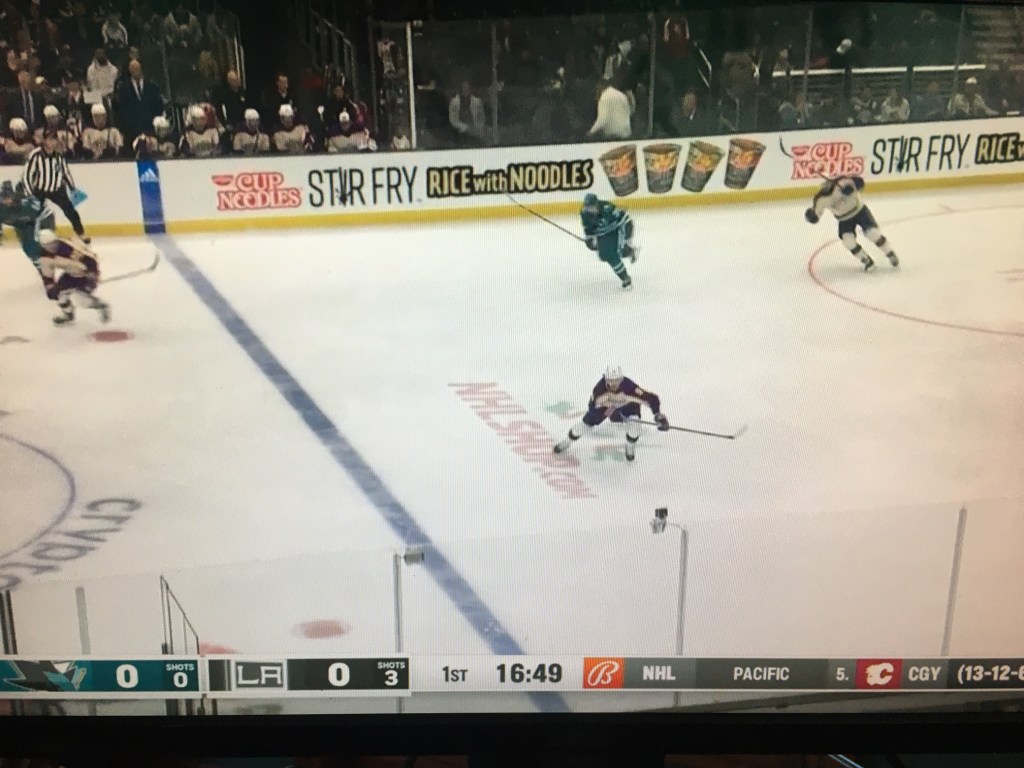
And gain the offensive blue line:

Once the blue line is gained and the offensive-zone play starts to develop, what does Kempe do? Goes right to the net and… stands there:
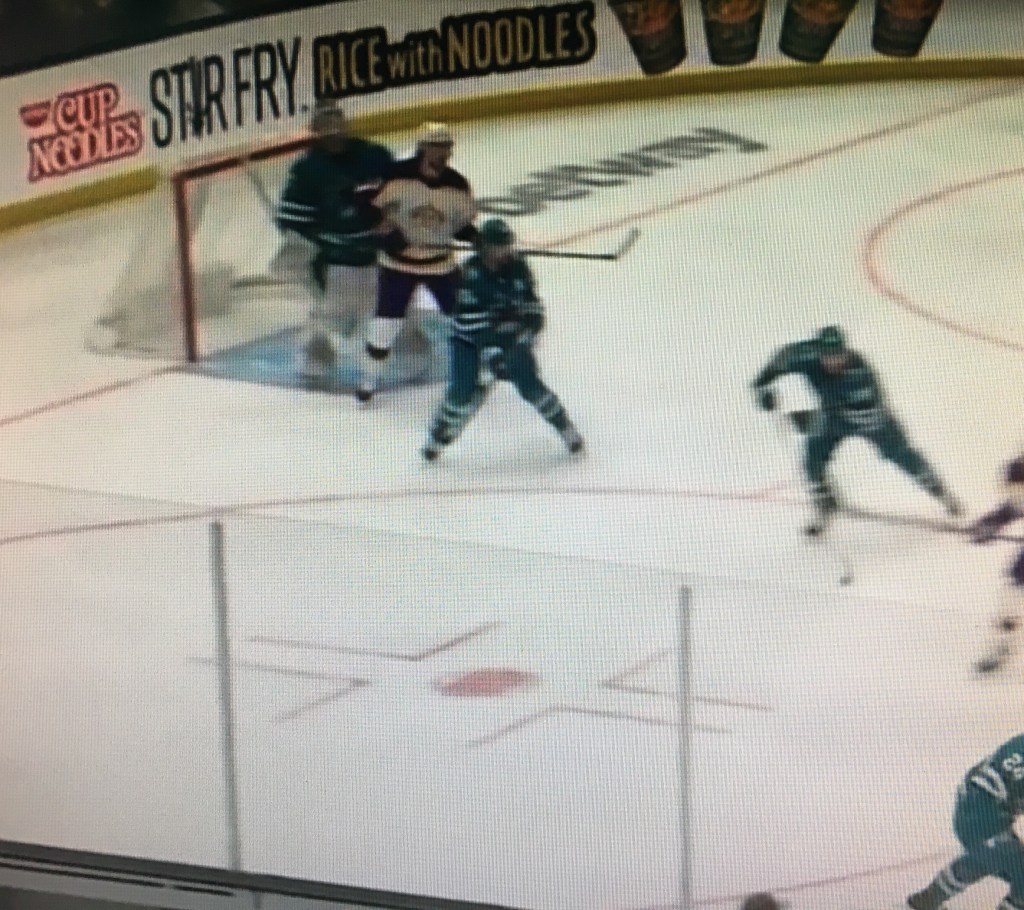
Now, this is a player who does score goals around the crease, but he also has a lethal shot that he rips from the circles (as evidenced earlier by the shot maps for the top line). Over the last three seasons, Kempe has nine goals off tips/deflections in 216 regular season games. For reference, Vilardi has 11 such goals in just 142 games, and Colorado’s Gabriel Landeskog also has 11, but in 105 games. It is something Kempe can do, and can be efficient when he does it, but it’s not his strength, and just standing in front limits options for your teammates because you’re not tying up a defenceman. At that point, they basically have to force a shot to the net from wherever and hope that Kempe can get a stick on it, or tap in the rebound. They ended up forcing a Fiala one-timer from a bad spot, which was blocked, and the puck went back the other direction. It was a great start that fizzled into nothing.

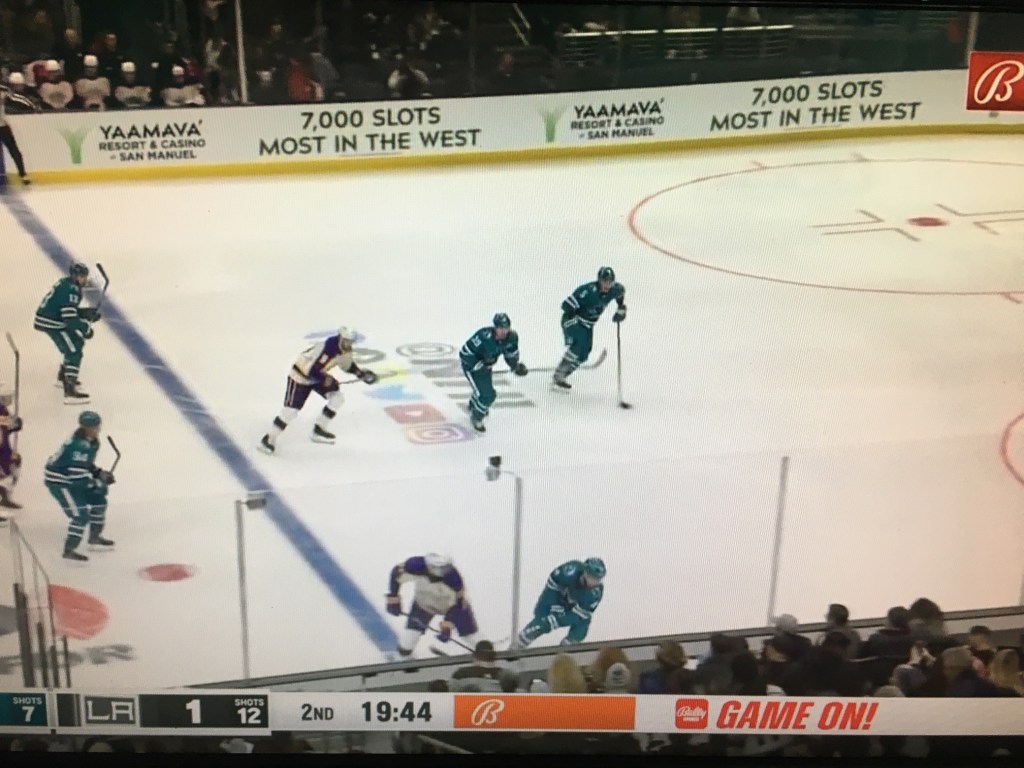
At the start of the second period of that same game, we run into another issue. Kopitar takes a neutral-zone pass on his backhand with his back facing the opposing goalie, so he just soft-dumps the puck into the corner:
Kempe chases it down, but he’s slow on the forecheck so he doesn’t get in first, and just pins a Sharks defenceman against the boards:
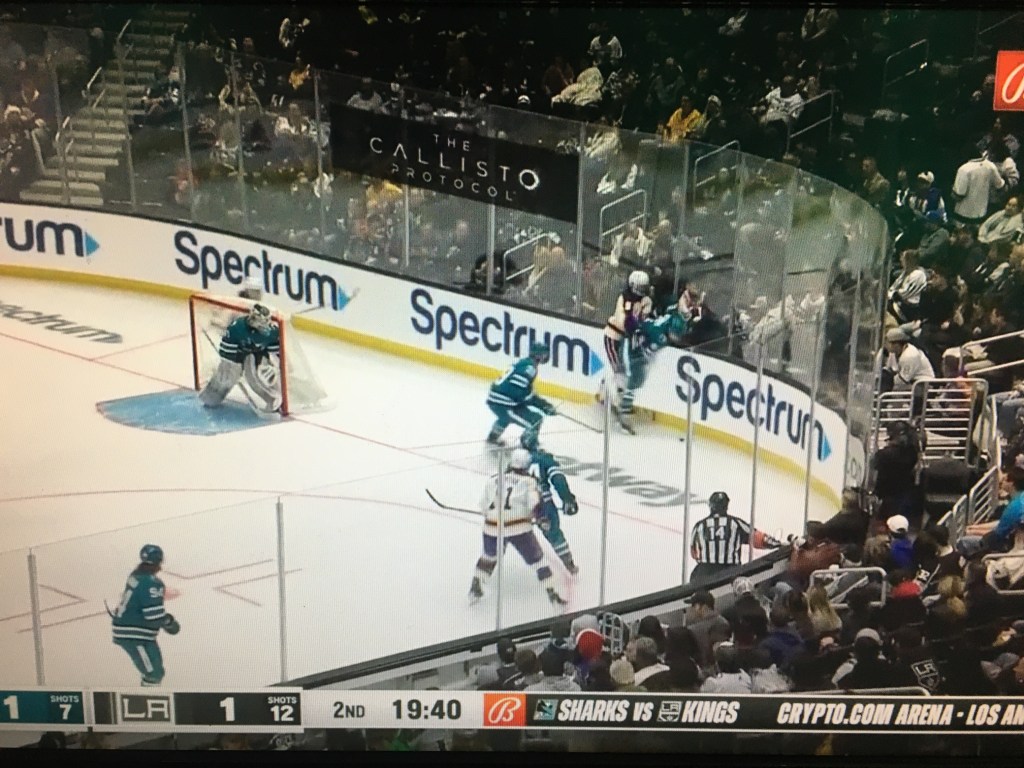
But there is a second man for San Jose providing coverage that retrieves the loose puck Kempe failed to really challenge for. He wraps it to a Sharks forward on the boards and he chips the puck immediately out of the zone:
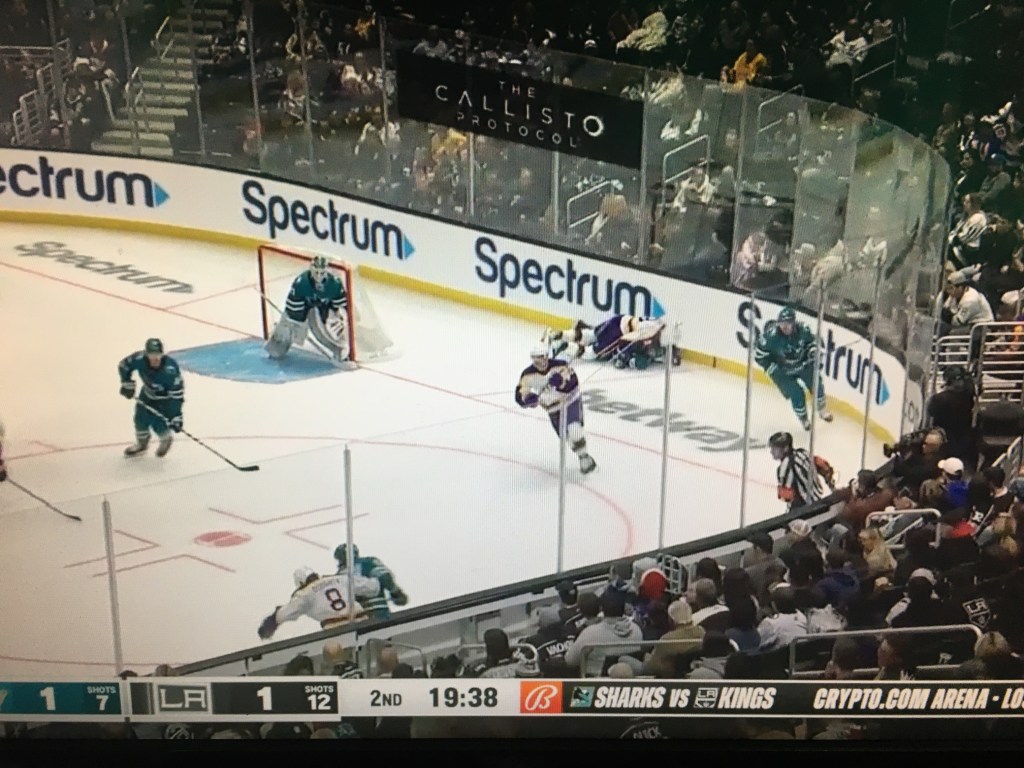
A soft dump-in with back-sided pressure resulted in the puck exiting the zone in about eight seconds. The funny thing is that Los Angeles re-organized in the defensive zone and turned back to the offensive zone, and that rush resulted in two shots on goal. The first was a Mikey Anderson distance shot off the rush:
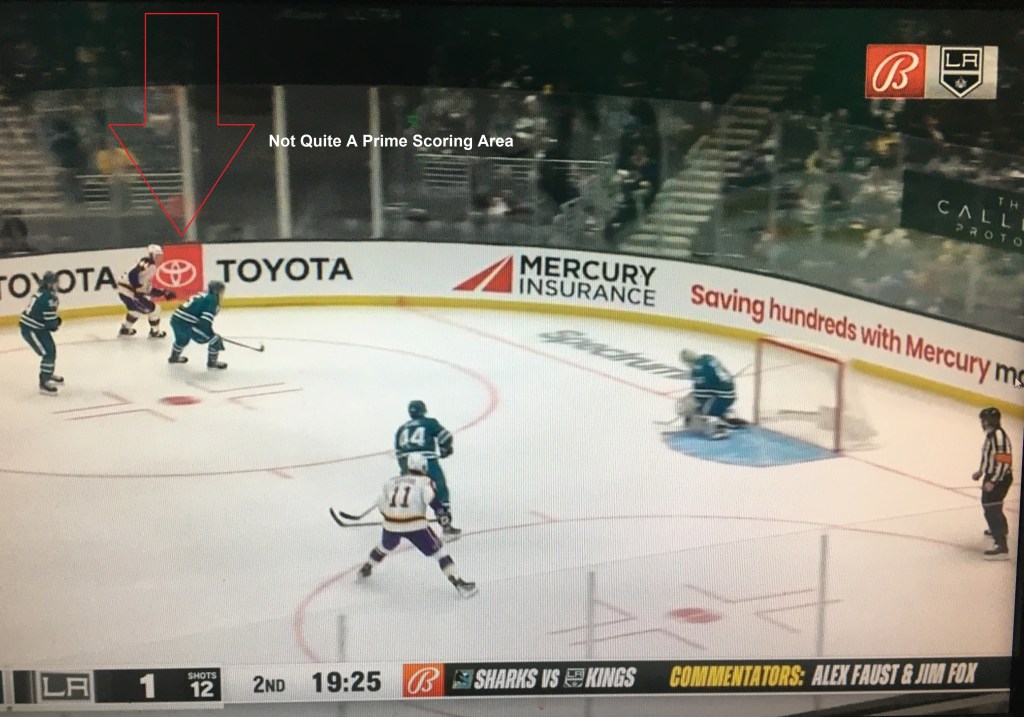
And the second was also a Mikey Anderson shot, this one a one-timer, and again from distance:
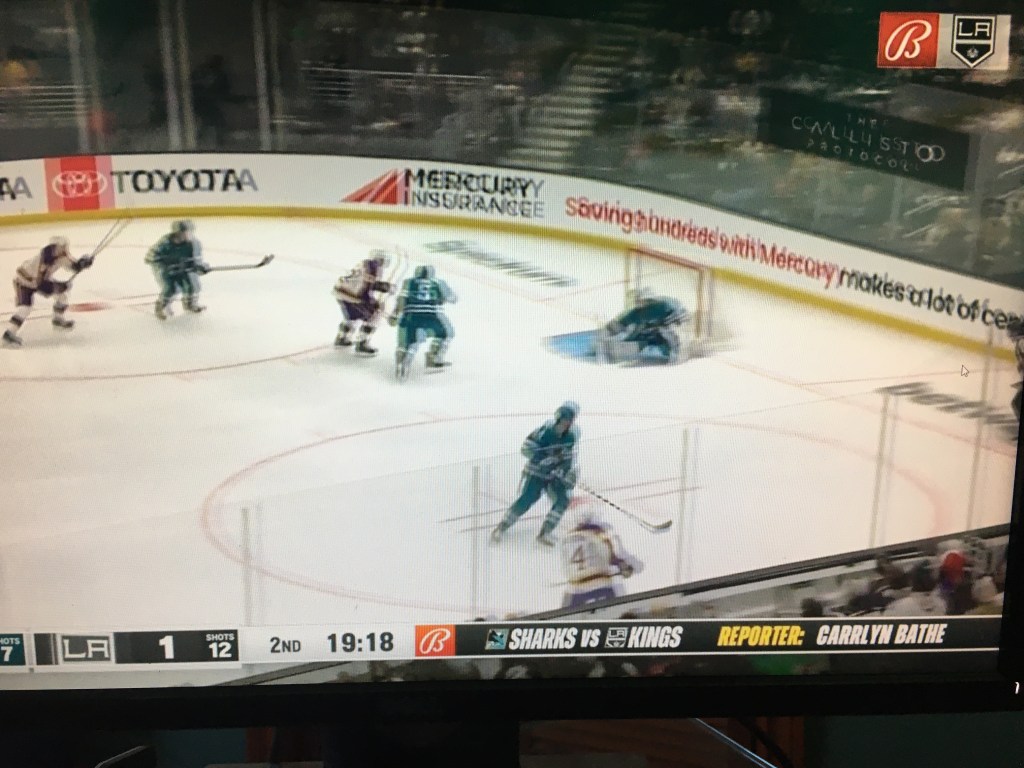
Once more: apologies for the blurriness. Direct your anger to Rogers Sportsnet.

Regardless of the photo quality, here we have three distinct examples of what was going wrong with the top line.

  • Entry 1: A controlled entry off a neutral-zone turnover the results in a blocked shot from distance with the line’s sniper standing in front of the goalie for several seconds.
  • Entry 2: A dump-in that fails spectacularly because of a lack of timing and support (and also Kempe just pinning a player and not even bothering for the puck).
  • Entry 3: A controlled entry off a defensive zone regroup that results in two shots on goal, both from the same defenceman, and neither approaching what could be considered a quality scoring chance.

Again, it wasn’t necessarily that they couldn’t generate shots, but that the quality of the shots wasn’t very good even with clean zone entries. And the ability to create clean zone entries was, in this game, lacking.

Now we get to the Arizona contest, the last before the Christmas break, and one of the last games the team goes without Byfield on the top line. Fiala is still there, so let’s look at a couple plays.

The first is another clean entry for the Kings. They turn the puck over at their blue line and Kempe gains another controlled entry:
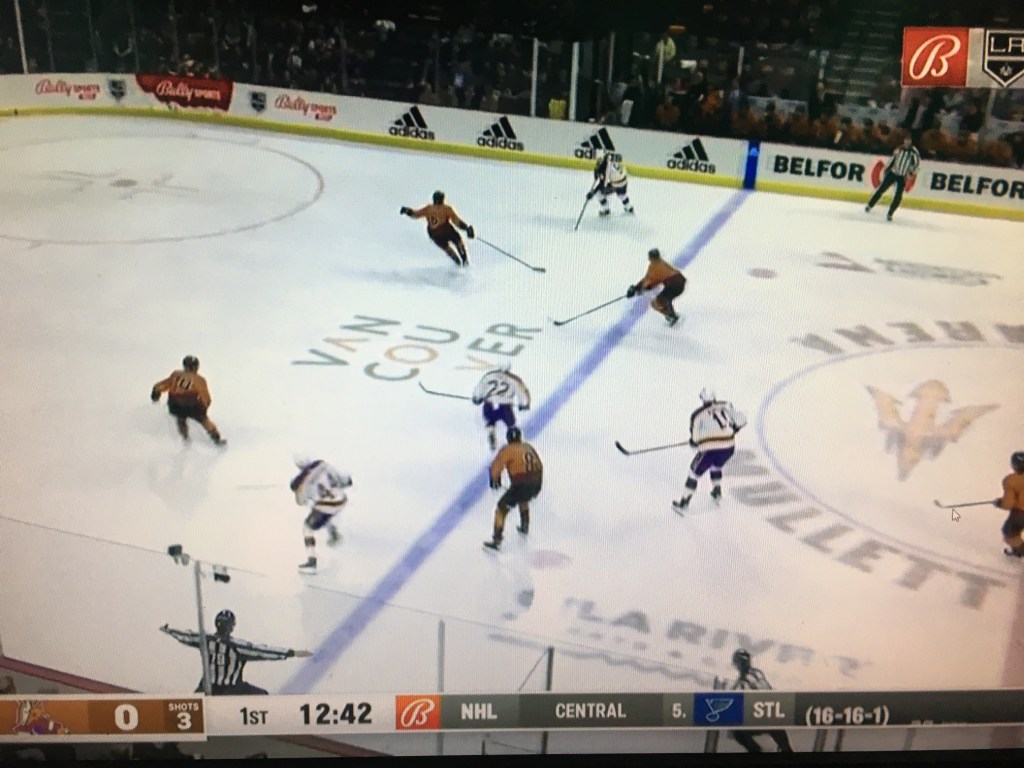
This ends up with a couple missed plays and Fiala eventually chasing down a loose puck in the corner:
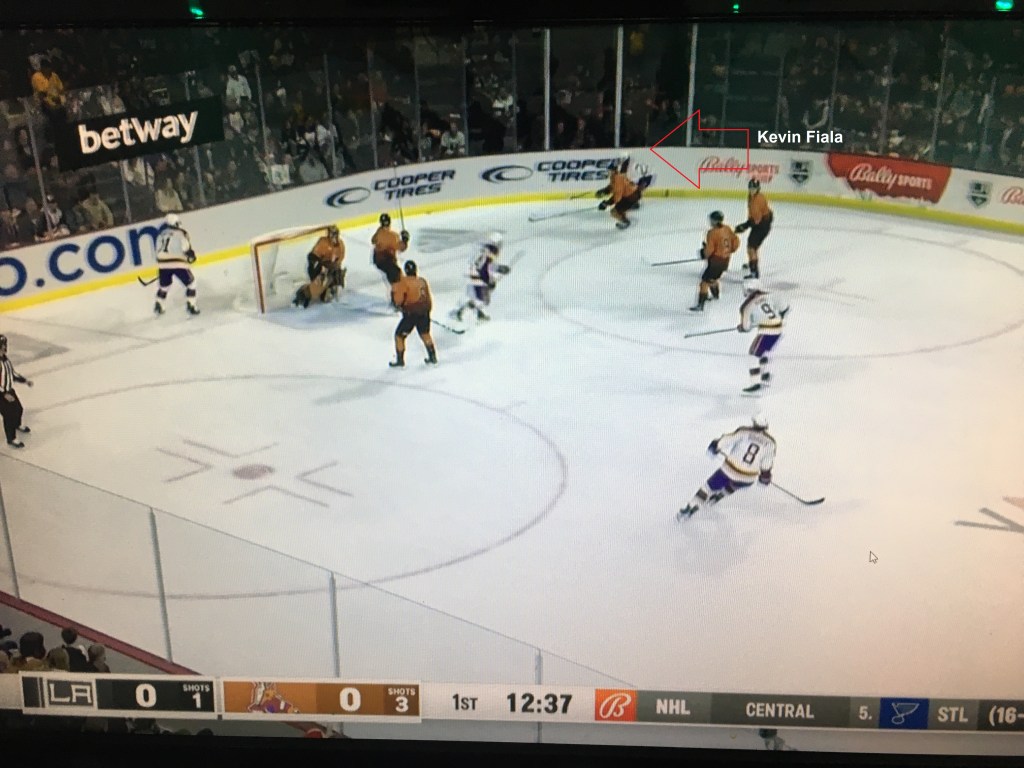
And then Fiala chips the puck to Kopitar, but it’s cut off by an Arizona defender, and chipped passed Kopitar (you can see him behind the net with his head turned because the puck is about to get past him):
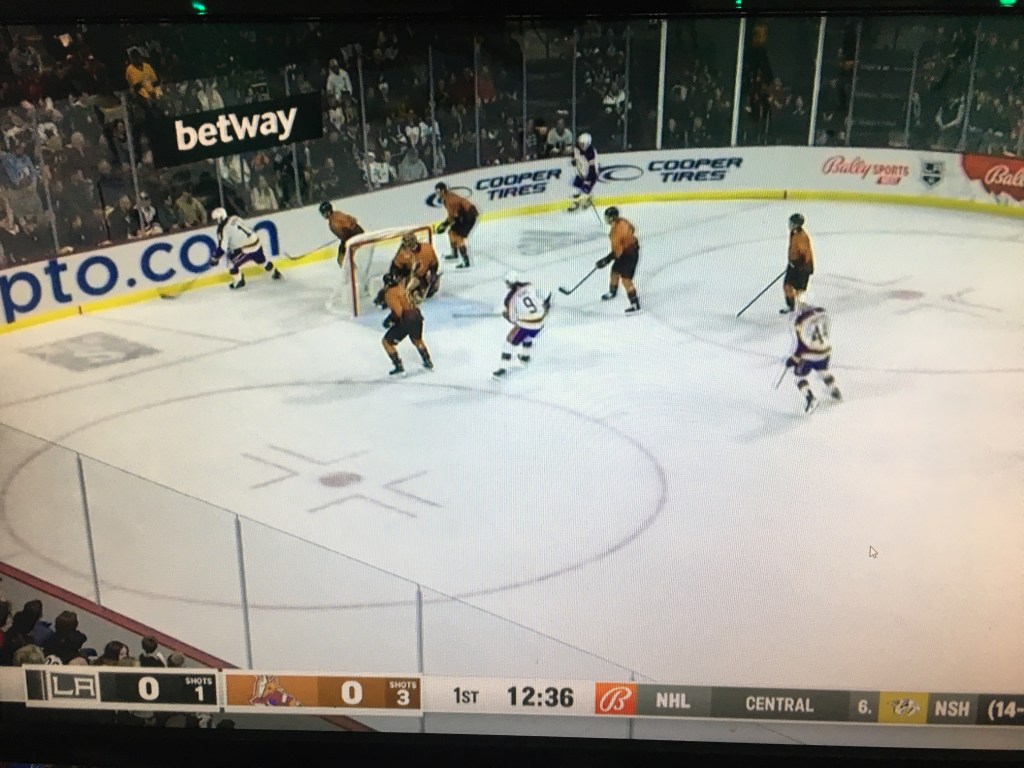
Arizona recovered the puck and went the other way.

Early in the second period, the Kings get an offensive zone face-off and send out the Kopitar line. They win it cleanly to Matt Roy, who just fires a wrist shot with no screen right to the Arizona goalie:
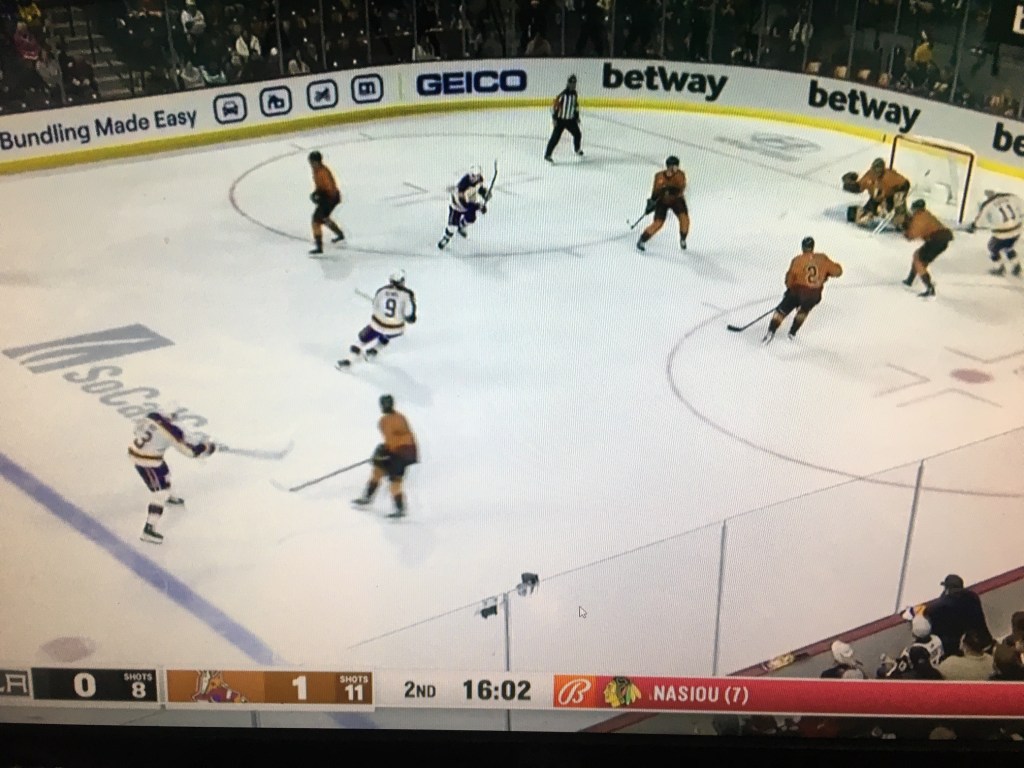
One clean entry, one cleanly-won offensive zone face-off, and we get one (1) shot attempt, which is on net with no traffic, and is from about 55 feet. That sums up the Los Angeles offence from the top line through the end of calendar 2022.

Byfield is on the roster at this point, and gets moved to the top line on New Year’s Eve. We are going to look at two games: January 3rd at home to Dallas and February 28th on the road in Winnipeg. They are both Western Conference playoff teams, so it makes a nice barometer for where they stood in the second half nearly two months apart.

It didn’t take long for Byfield to make an impact. Less than a week after joining the top line, Los Angeles beat Dallas 3-2 in Los Angeles, with Kopitar and Kempe each scoring. Just one was at 5-on-5, though, so let’s look at the goal.

The game is nearing the mid-point of the second period and the game is tied 1-1. Dallas had just scored a minute earlier, and the Kings were looking to reply. For this, we are going to review Byfield’s entire shift because it is a masterclass in how to keep generating offence even when the first couple of attempts go wrong, and to create something out of nothing.

We are going to first highlight his defensive zone work. His defenceman gets the puck behind the net and Byfield curls down low in the zone to race up the ice alongside his defenceman:
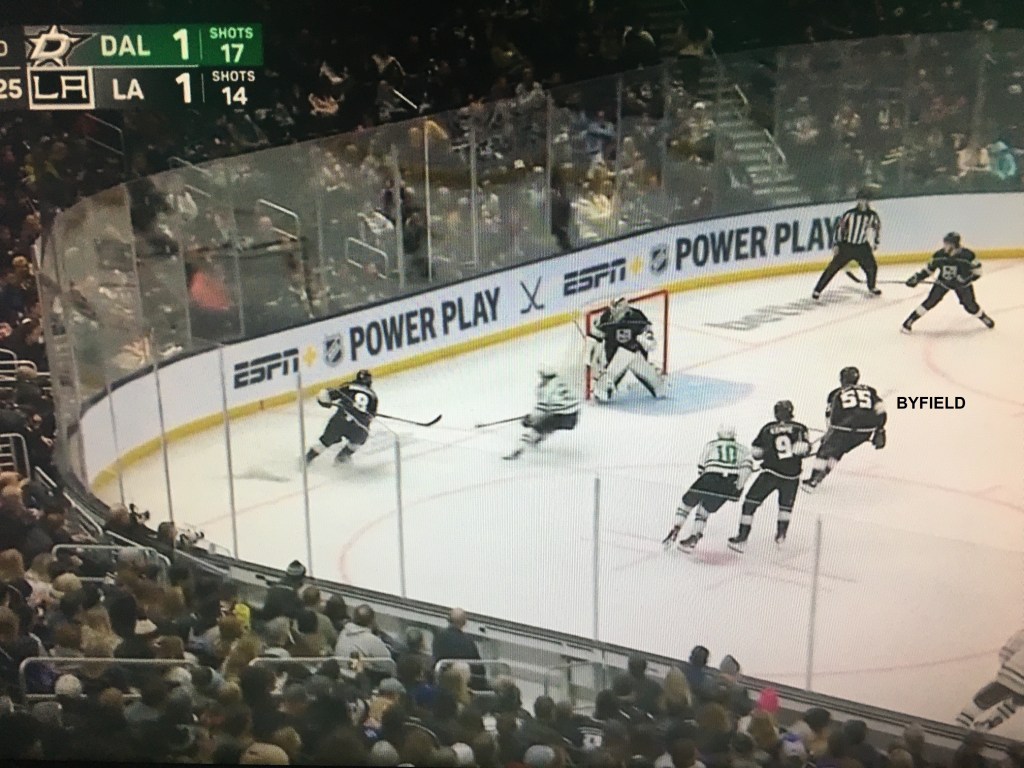
This pushes the Dallas defencemen back as they both take off alongside the speeding Byfield:
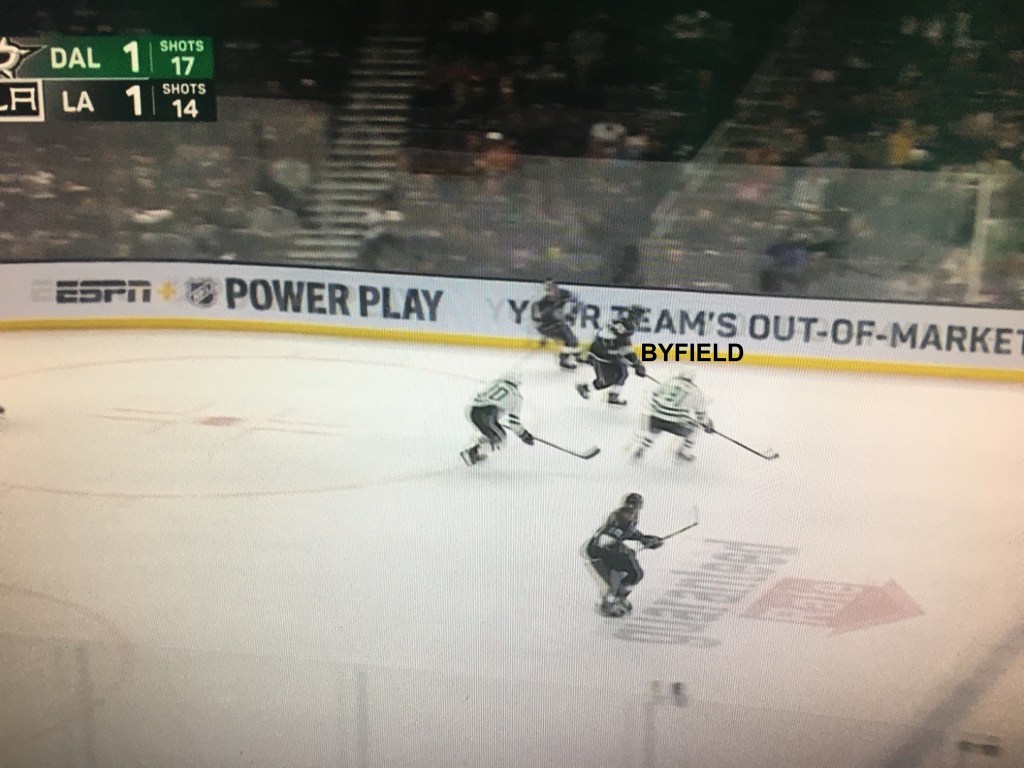
And now there’s a clean cross-ice pass to be made to get the puck into the Dallas offensive zone with control:

However, this play results in nothing as an attempted blue-line entry pass by Kempe is intercepted by Dallas and the puck goes back toward the Los Angeles net.

Byfield doesn’t stop there, though. Seconds later, Los Angeles regroups with the puck in the neutral zone and get the puck to Byfield on his forehand:
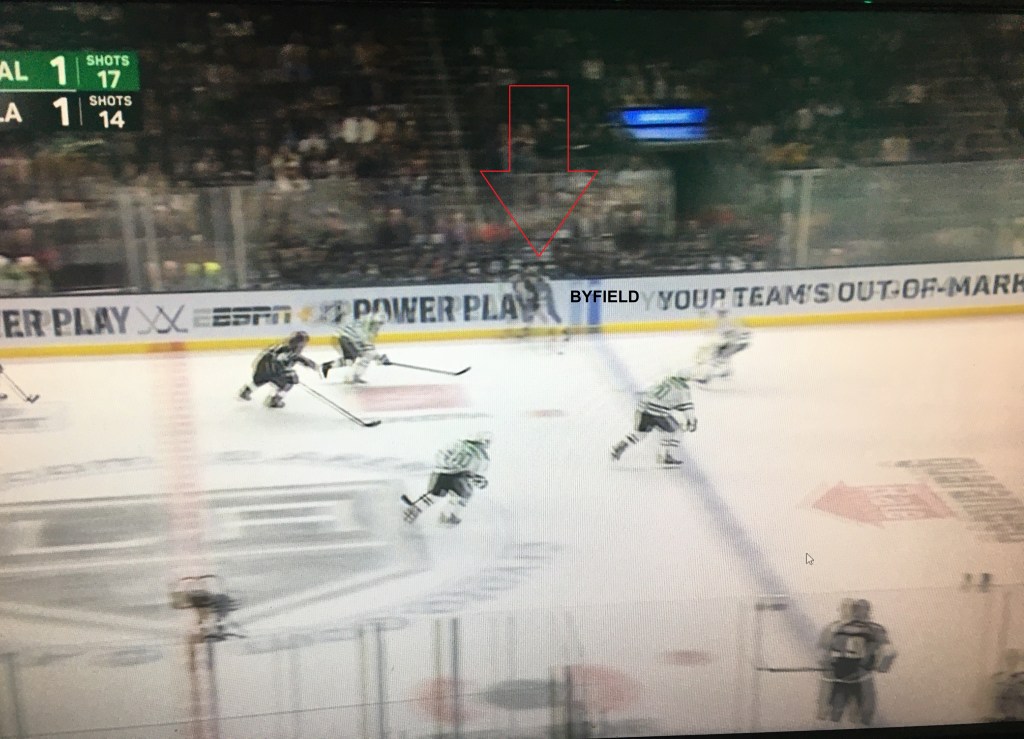
However, he doesn’t just chip the puck in immediately as Kopitar did earlier, knowing it’s a turnover as he has just one forechecker on the move with Kempe at a standstill at the bottom of the frame. So, he holds the puck, and again makes a couple moves at the blue line to shake his defender:
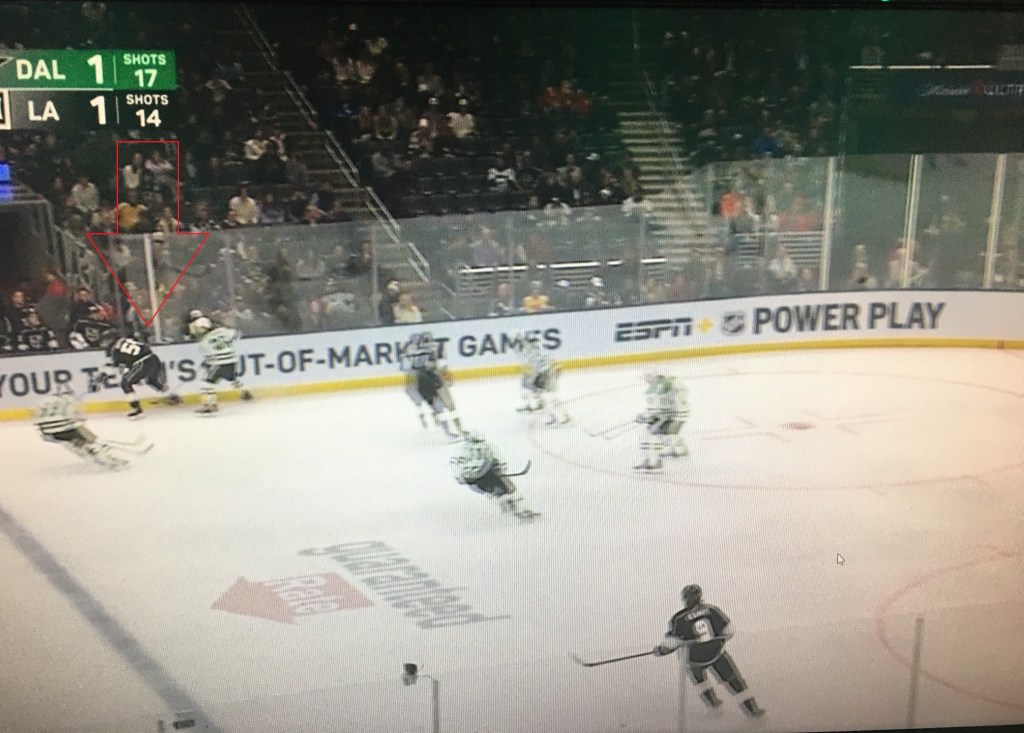
Before now chipping the puck to Kopitar with two forecheckers already in the zone:
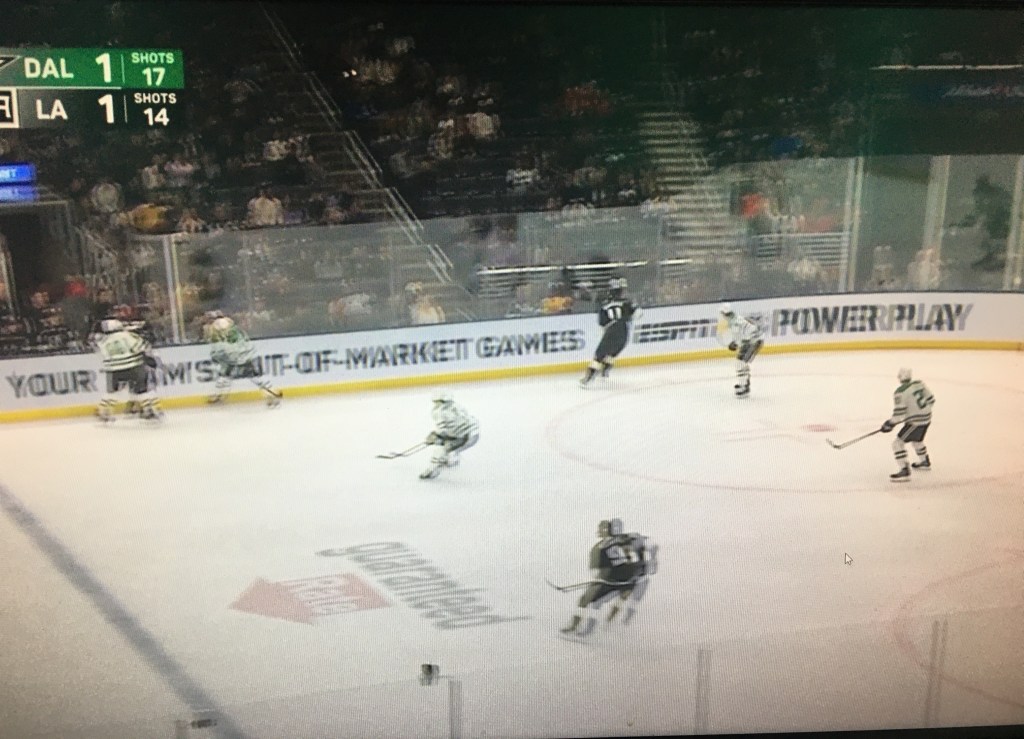
Again, though, the attack stalls out as the Dallas goalie intercepts Kopitar’s proceeding board pass and Dallas moves the puck out of the zone.

AND YET Byfield doesn’t stop there. So far this shift, he has already curled deep in his zone to push the defenders off his puck-carrier, chased down the ice, regrouped in the neutral zone, and made a nifty blue-line play. He has had a big hand on one clean entry and another that should have been clean were it not for a turnover by a teammate. To cap off this very same shift, Byfield races across the ice to pressure Dallas’s Tyler Seguin:
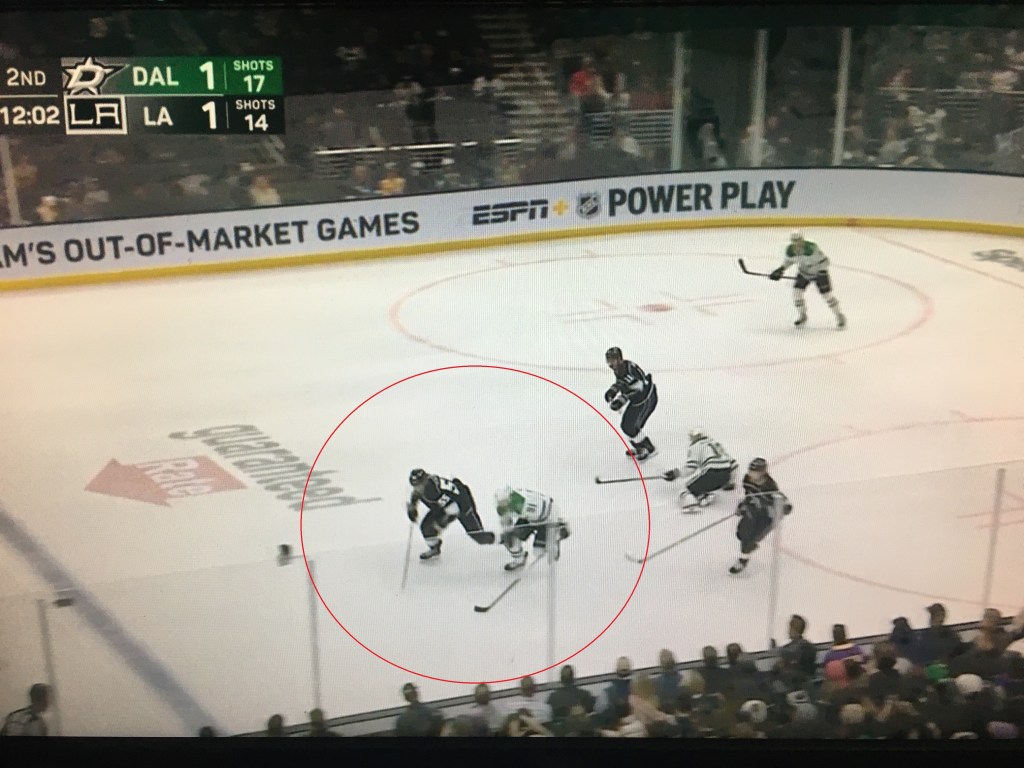
Byfield eats Seguin’s lunch here and tips the puck to Kempe, who is providing back-side support (i.e. slower on the backcheck):
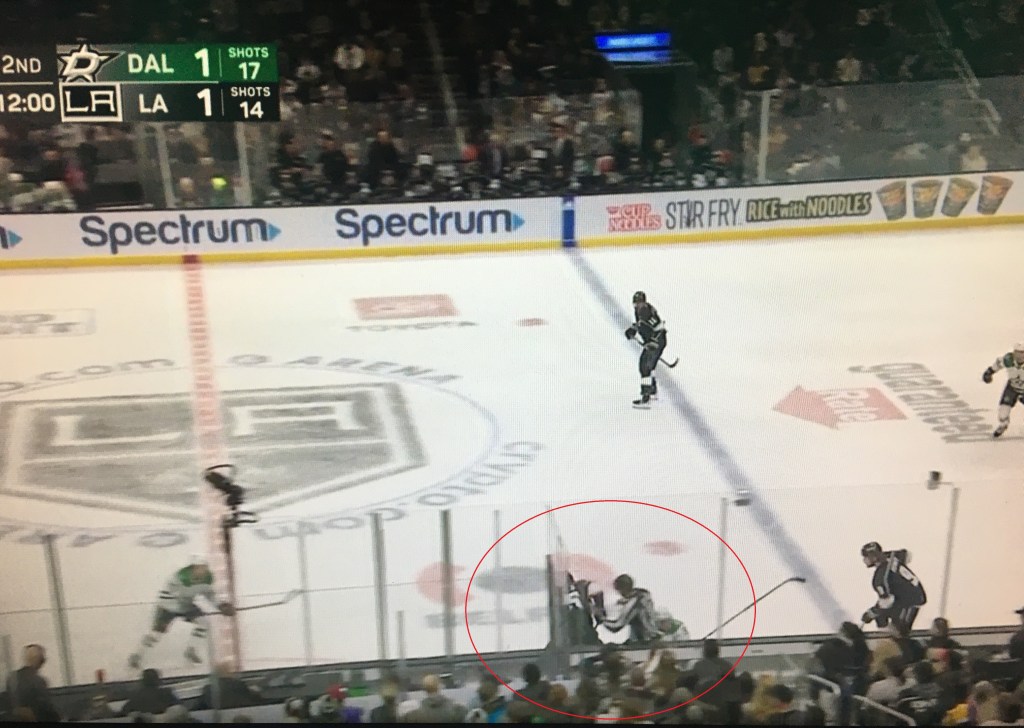
Kempe fires a cross-ice pass to Kopitar, who gains the zone cleanly (thanks again for the backcheck, Mr. Byfield):
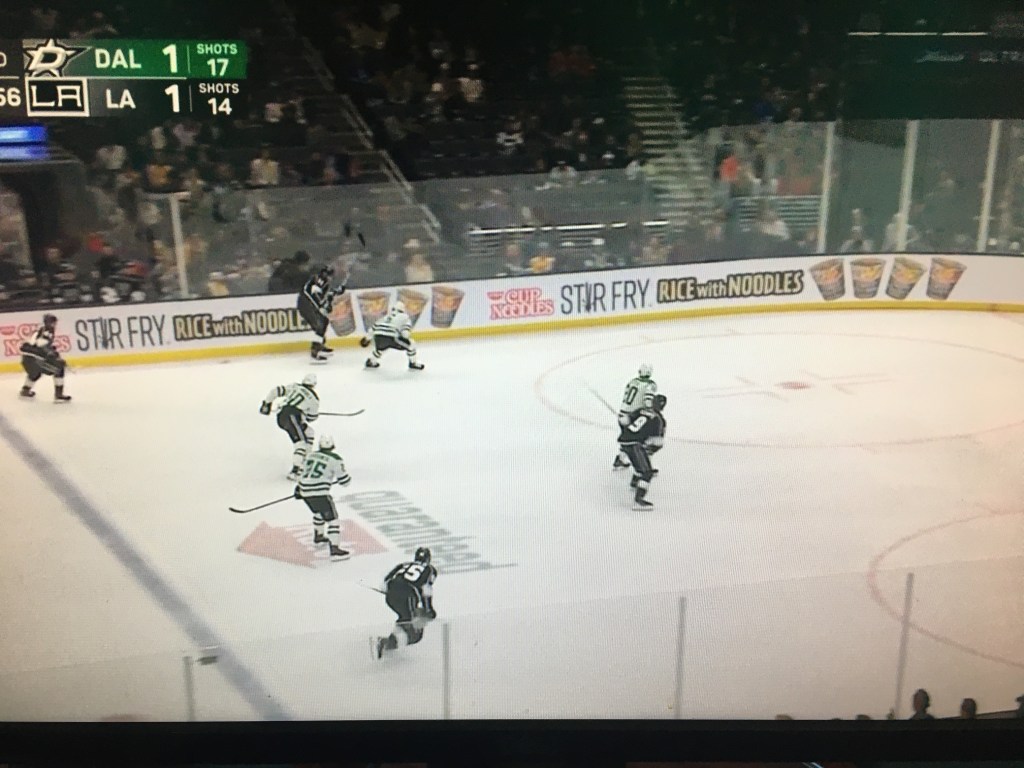
Kopitar chips the puck back to Mikey Anderson, who one-times the puck on net. As this is happening, though, Byfield is racing back into the offensive zone, about 30 feet ahead of Seguin, whom he had just cleaned out, and no one is paying attention to him because of it:
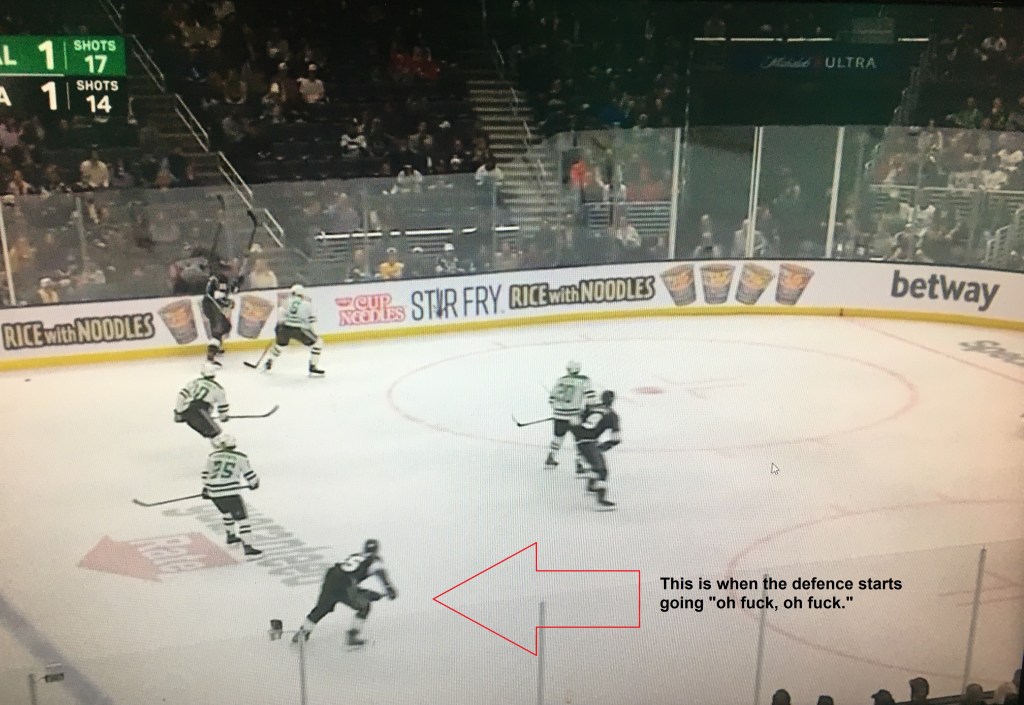
Byfield does something very smart here: he doesn’t skate to the front of the net, or get caught leaking towards the puck on the strong side. He slows down a bit, anticipating Anderson’s one-timer to kick out a rebound. It doesn’t go to Byfield, but because he has slowed and stayed in an open space, he can chase down the rebound that goes to the boards with lots of time to make a play:
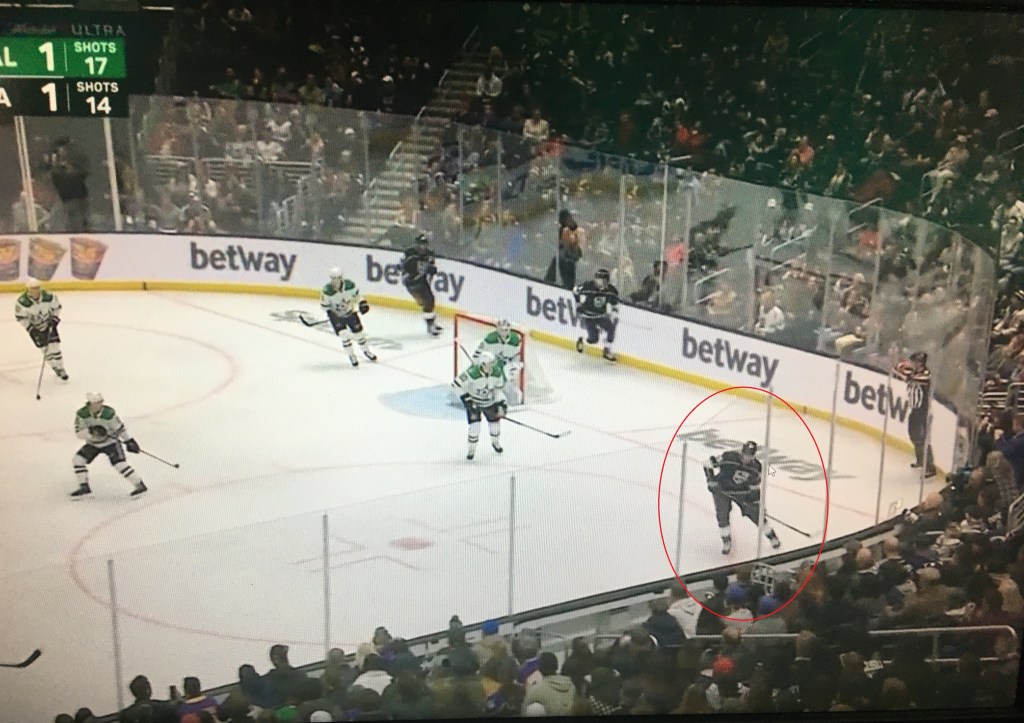
Byfield eventually kicks the puck back to defenceman Drew Doughty, who fires a puck on net:
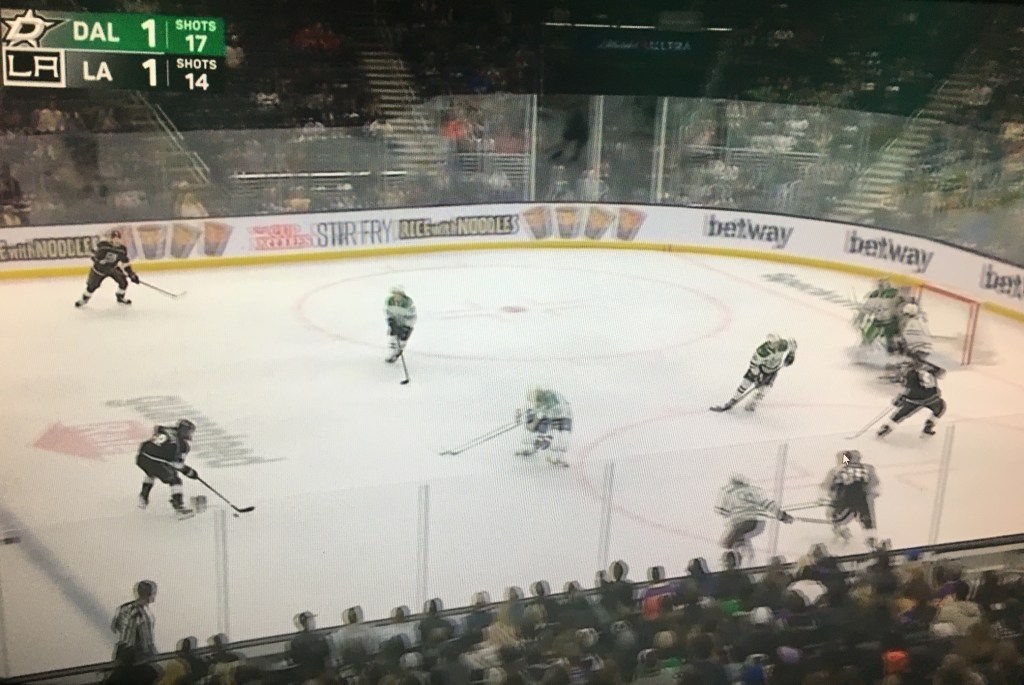
That shot is redirected by Kopitar for a goal to give the Kings their lead back. Kempe would score a power-play goal in the third period to lift the team to the 3-2 win.

One shift from Byfield resulted in two clean entries on three attempts, and the failed entry was a missed pass made by Kempe. They didn’t generate a lot of dangerous scoring chances, but they wouldn’t have generated any shots at all had it not been for the skilled, tireless-yet-patient play from the 20-year-old Byfield. Those are the types of shots the team was taking earlier in the year, but they wouldn’t have been generated at all were it not for the 2020 second overall selection.

Moving to the Winnipeg game, the line scored four goals, though one was on the power play, and one was without Kempe on the ice. Let’s look at the first 5-on-5 goal.

It’s nearly halfway through the game and Los Angeles is down 3-1. The Kings’ fourth line was pinned on the ice for an extended shift, but had made partial changes. Arthur Kaliyev was the last guy to change, but got the puck in the neutral zone and dumped it in to head off the ice as Kopitar races in:
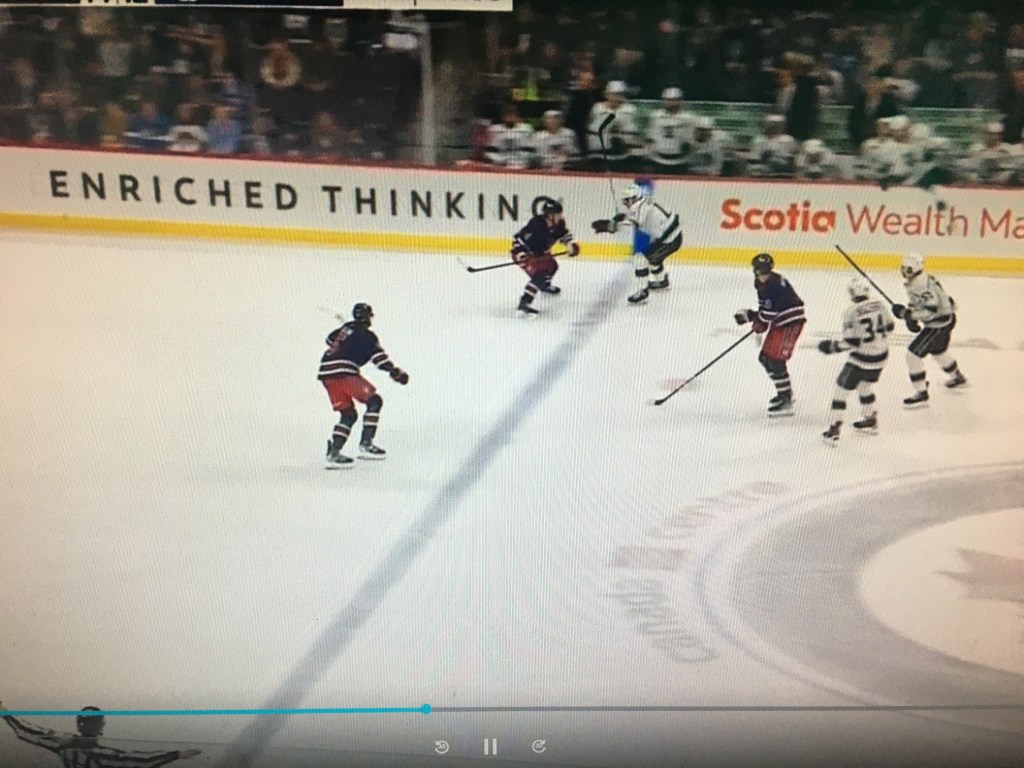
Ok, we’ve seen this before. Why is this different? Well, first off, Kopitar gets in first on the forecheck, which is not what we saw Kempe do earlier. This gets the puck pinned on the boards, ensuring the puck isn’t immediately retrieved by Winnipeg and giving Kopitar’s teammates time to support him:
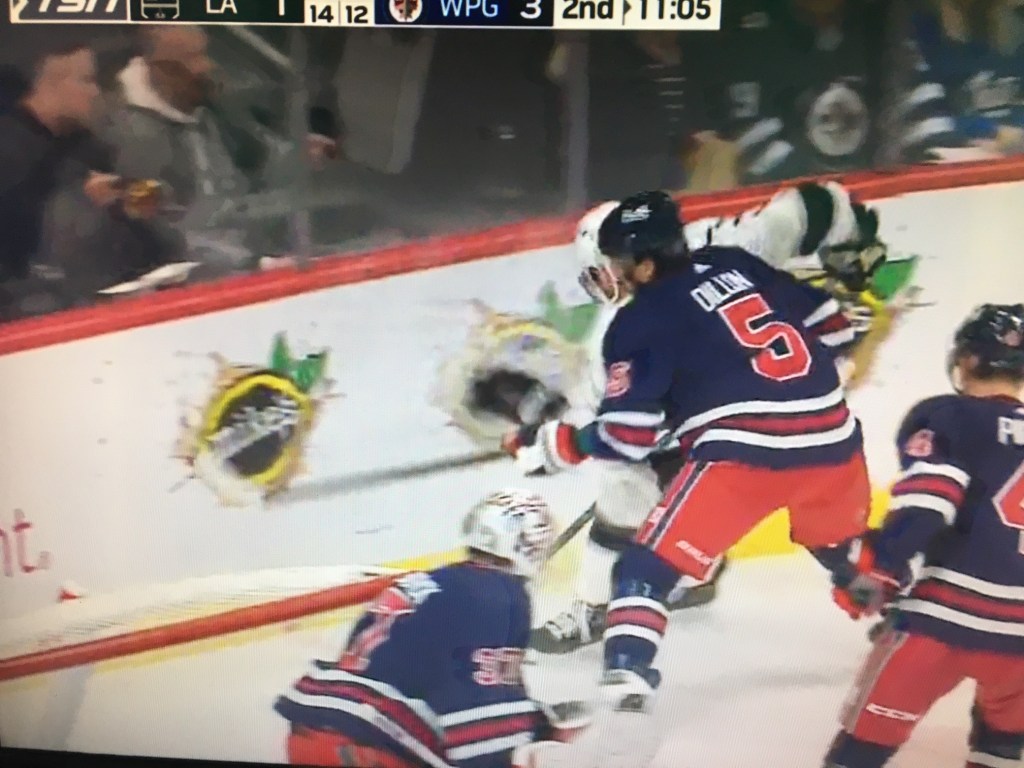
And there we see Mr. Byfield, hanging around looking for a loose puck:
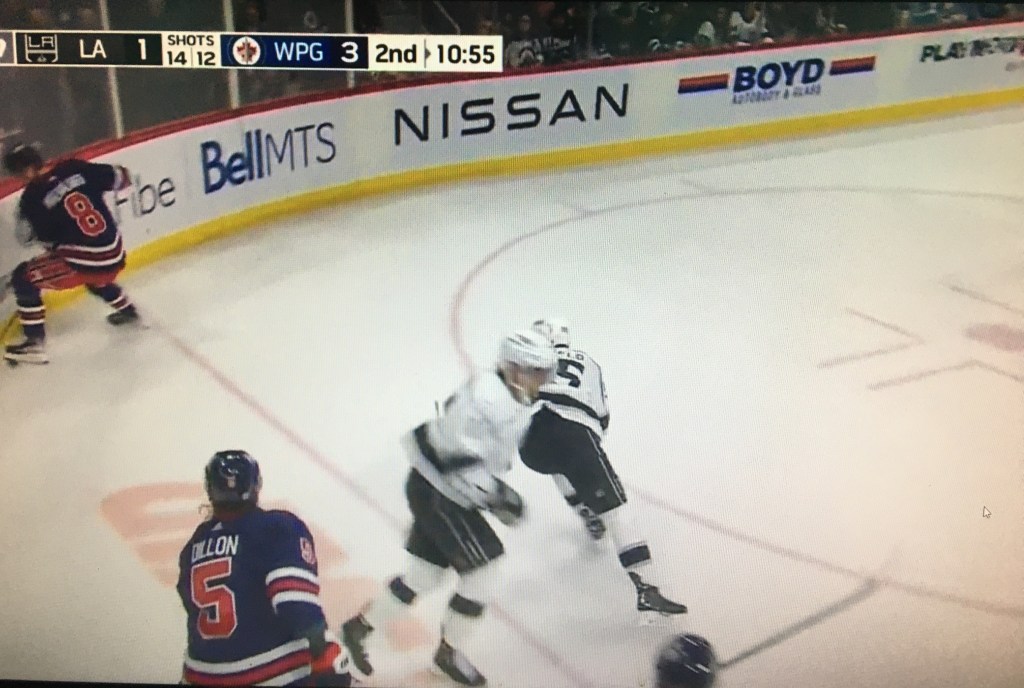
One thing that sticks out whenever we watch him is that he is a puck-hound. He will always seek it out, and will make life hard on the defence, even if he doesn’t chase down the puck directly. He is directly pressuring here, though, and this pressure, aided by a bit of a flub by Jets defenceman Saku Mäenalanen, gets the puck back on Byfield’s stick. Then he does something a lot of Kings players didn’t seem to be doing: he makes the extra move. The Winnipeg forward goes to apply pressure:
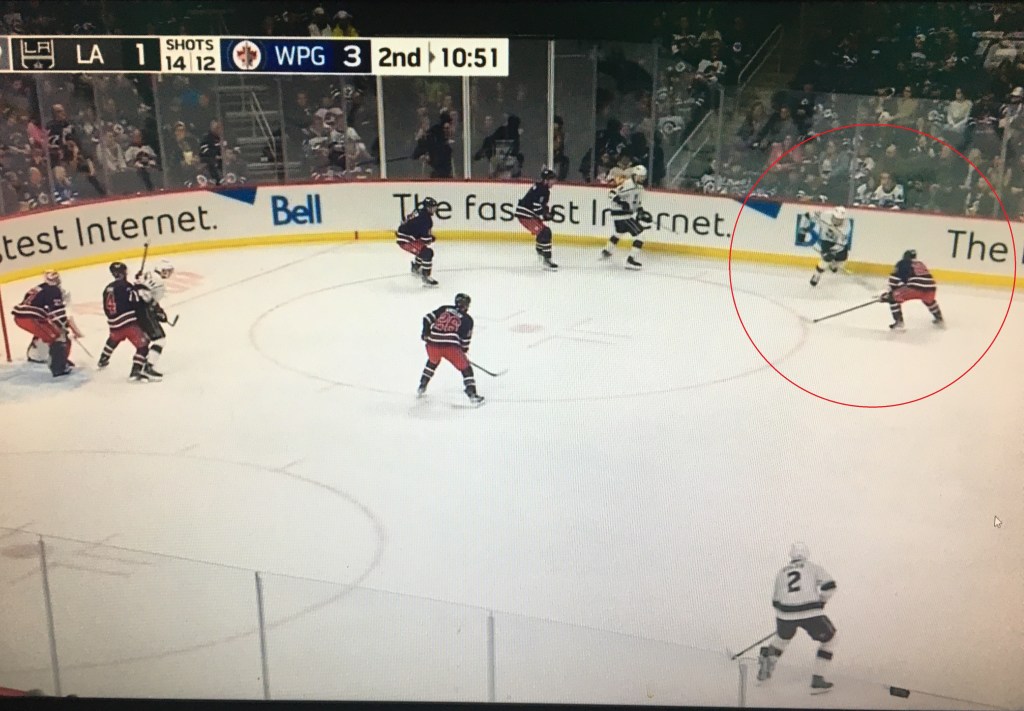
But Byfield goes around him like a pylon and it gives him a clean line of sight to dish to Kings defenceman Alex Edler:
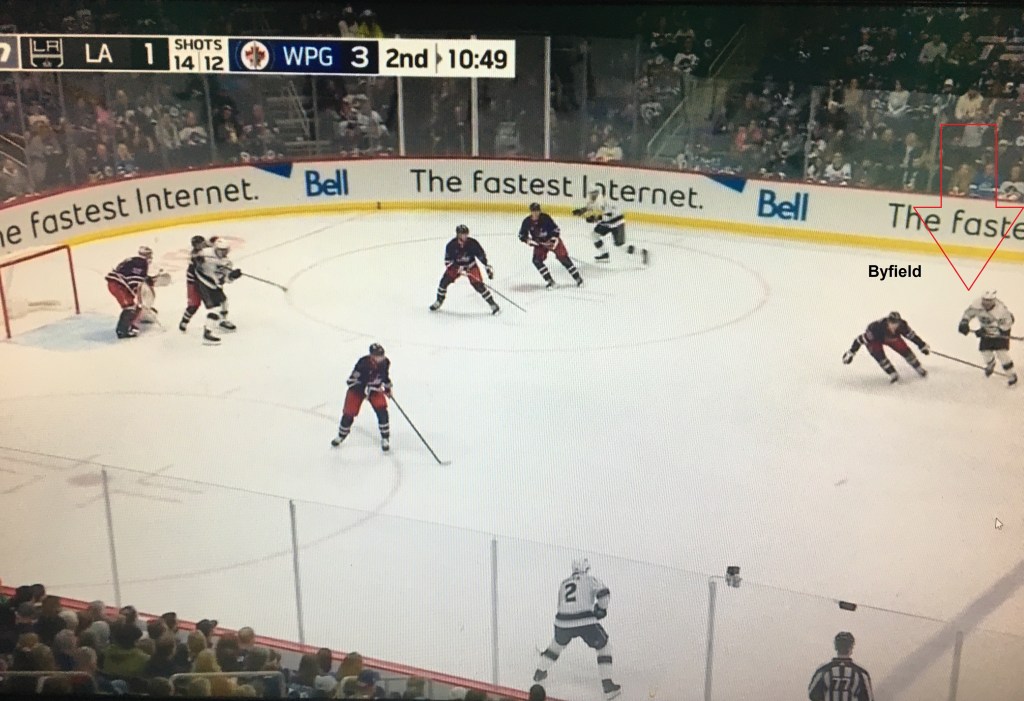
This results in a point shot from Edler that is deflected by Kopitar for a goal. Yes, it’s another point shot, but the difference here, again, is this point shot likely wouldn’t have happened three months earlier. The forecheck could have very easily stalled out off the Kaliyev dump-in and the team is immediately on the defensive. Instead, Kopitar gets in hard on the forecheck, he’s immediately supported by Byfield, and the extra move from the forward gives them an extra shot they never would have had. Yes, we’d like to see a tic-tac-toe scoring play, but this is one example of how the Kings were able to create some offence in a situation they struggled earlier in the year. The Kings would win that game 6-5 thanks to a monster performance from the top line.

It is pretty obvious that Byfield has had a massive impact not only on the top line, but on the team as a whole. How effective he ends up being in the postseason is an open question right now, and I don’t want to expect too much from a 20-year-old that has fewer than 100 NHL regular season games. He has also endured injuries that have slowed his development a bit and how much he has in the tank at the toughest time of year for NHLers is fair to wonder.

With all that said, Byfield is an absolute forechecking menace, but he also has the skill and the smarts to make extra plays that other forecheckers cannot. This isn’t a guy that just skates fast and bangs into defencemen. Well, he can do that, but he can also make tight-space moves and see the ice very well, which helps him anticipate where to go next, and not focus only on where he is now.

To be sure, we’re looking at just a handful of games, and a handful of shifts, across a season that featured 82 Kings games and thousands of shifts. There is a lot more to the story than what is told here, but this should help readers glimpse into why Byfield has remained on the top line for months after struggling down the lineup. It’s not that they don’t have other options, it’s that he’s their best option for that spot, and he’s running with the opportunity. Not only that, but when everyone is healthy, it allows them to move Vilardi and Fiala down the lineup to give them three legitimate scoring lines.

What the future holds for Byfield is certainly up for debate. Is he a Nino Niederreiter-type? Is he a Joel Eriksson Ek-type? Is he Sean Couturier-type? They are all scoring forecheckers, but all play a different style.

Or maybe he just ends up being the Byfield-type that future NHL stars will emulate 10 years down the road.
The Most Interesting Man Of The Tampa Bay-Toronto Series: Michael, Of House Eyssimont

Toronto and Tampa Bay start their series Tuesday night in Toronto. The Leafs are trying to finally take that next step as a franchise while the Lightning are trying to hang on to their dynastic hopes. It is a series loaded with intrigue, but let’s add another layer.

Tanner Jeannot was acquired by Tampa Bay in a then-widely discussed trade. The total haul was five draft picks, though just one could end up a first rounder and three were in the third round or later. Regardless, he didn’t make much of an impact on his arrival, scoring one goal in 20 games, amassing just four points total, and the team was out-scored 11-4 with him on the ice. He is now injured, though he could return at some point in the series.

It means the Lightning have to go to some depth for a roster option, and it brings us to the point: Michael Eyssimont. The 26-year-old forward is slotted to skate alongside Ross Colton and Nick Paul on one of the two bottom-6 forward lines for Tampa Bay. He was acquired from San Jose for Vladislav Namestnikov, who ultimately ended up in Winnipeg. San Jose originally claimed him off waivers from Winnipeg, who had signed him to a two-year, two-way deal the prior offseason. Eyssimont had five goals and 15 points in 54 games for three teams.

But the points belie the reason for discussing him: everything else about his game. He had just one NHL game prior to this year, so this season is all we have to go from, but it was an anomalous year:

  • Of the 347 forwards with at least 600 minutes at 5-on-5 this season, per Natural Stat Trick, Eyssimont was 10th in shot attempt rate, behind Tyler Toffoli and ahead of Nazem Kadri.
  • By individual expected goals per 60 minutes, he was sixth, just behind Zach Hyman and just ahead of Tage Thompson.
  • When he was on the ice, his teams out-scored the opposition 28-25, scoring nearly 53% of the goals.
  • Evolving Hockey has his even-strength expected goal impact 42nd in the league among qualified forwards, easily a first-line rate.
  • His even-strength goal impact was much less than his expected goal impact, but still rated as a low-end second-line forward.

He had elite shot rates, great expected goals impacts, good goals impacts, and seemed to help his teams a lot at even strength. Despite all that, he managed his way to three franchises. Let’s talk about his season with a bit more context.

Eyssimont was a fifth-round pick in 2016, with Los Angeles taking him 142nd overall. He spent three full seasons in the AHL before signing with Winnipeg in the 2021 offseason. At that point, he hadn’t done a lot that was notable, but the 2019-20 AHL season did see him finish with 12 goals in 56 games on 145 shots. It was a sign of life, but he shot 8.3% and moved on.

It’s the 2021-22 AHL season where things get interesting.

In his first year with the Manitoba Moose, Eyssimont posted 18 goals and 42 points in 58 games. He also put up 205 shots on goal, or 3.5 shots per game. He led the Moose in points and played fewer games than his teammates chasing him all while putting up a monster shot rate.

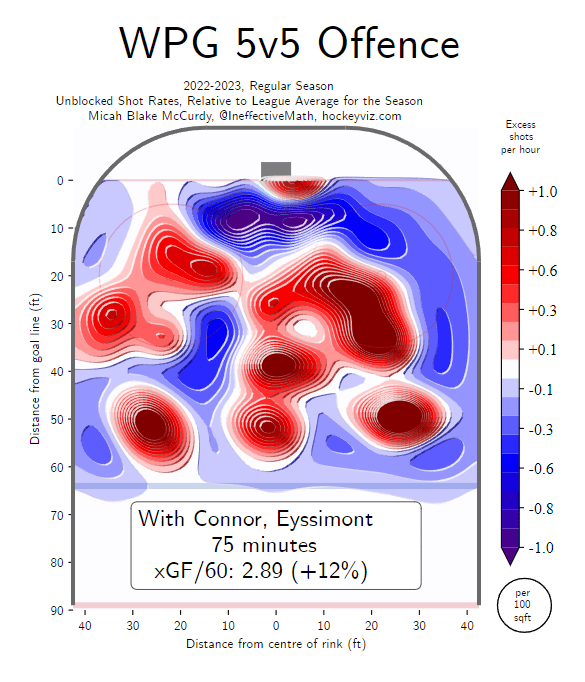
Fast forward to October of 2022 and Eyssimont starts in the AHL. He puts up 2 goals and 9 points in 9 games while averaging 3.7 shots per game. The call-up comes in November, and he plays just 19 games, scoring once, and tallying five points. His most-common line mates were Pierre-Luc Dubois and Kyle Connor, and they out-scored the opposition 6-1 in 62+ minutes of ice time together. His shot rate trailed only Connor and Blake Wheeler in his brief Jets tenure. However – and readers will notice a developing theme – he shot under 4%, and that is very sub-optimal. To be fair here, when you play with Dubois and Connor, you’re not going to be the one taking all the shots. It is why the Jets didn’t get to the net a lot with Eyssimont on the ice and Connor taking his wing shots, as HockeyViz shows:

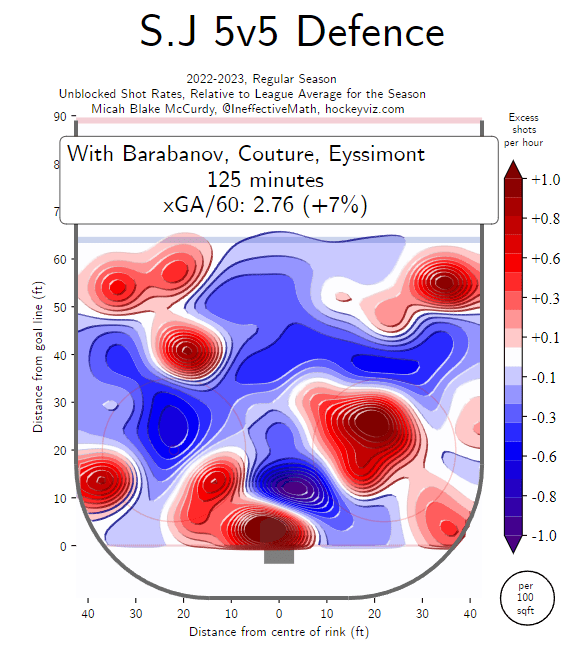
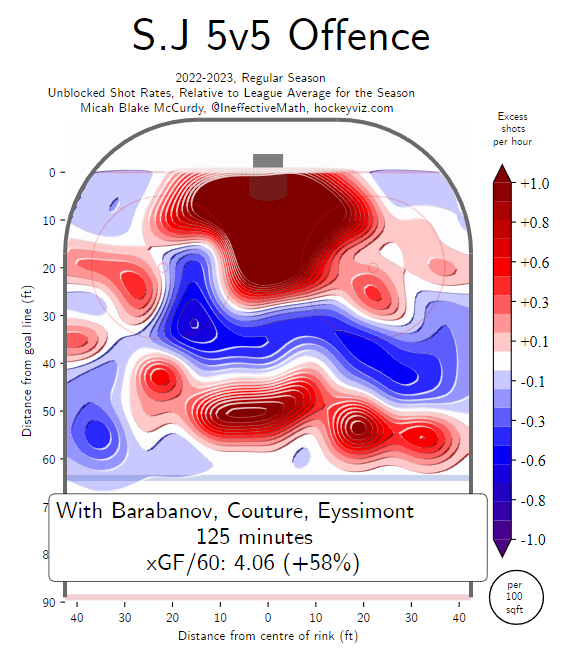
Winnipeg waived Eyssimont early in January and he was picked up by San Jose. Alexander Barabanov and Logan Couture had Eyssimont on their wing for nearly 125 minutes at 5-on-5 with the Sharks. Again, they crush the opposition, carrying over 64% of the expected goal share, out-scoring the opposition 10-7, or nearly 59% of the goals. Keep in mind: this is on a San Jose team that was one of the worst in the league, finishing minus-52 at 5-on-5 this season. This is what the expected goals for/against look like, visually, from HockeyViz:

Eyssimont scored three times in 20 games, but did so on 57 shots, or a conversion rate of 5.3%. Again, his line out-scored the opposition, again he put up a good shot rate (this one, actually, was elite at 21.4 attempts per 60 minutes), but his inability to finish hampered what could have been an even better performance.

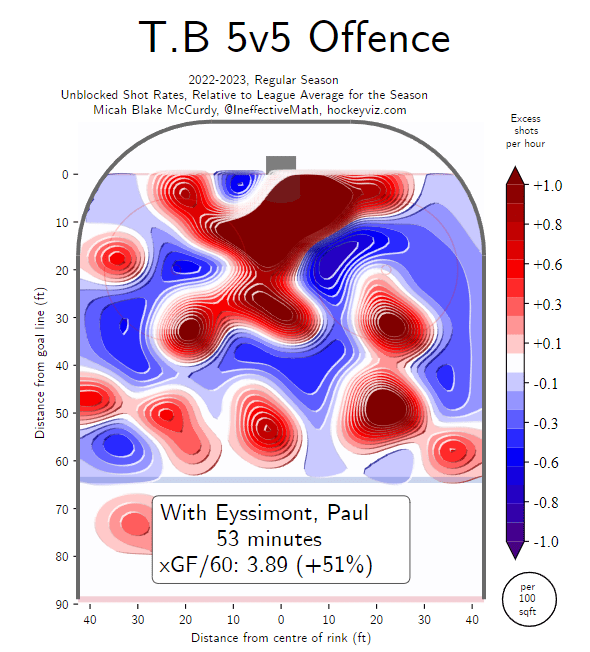
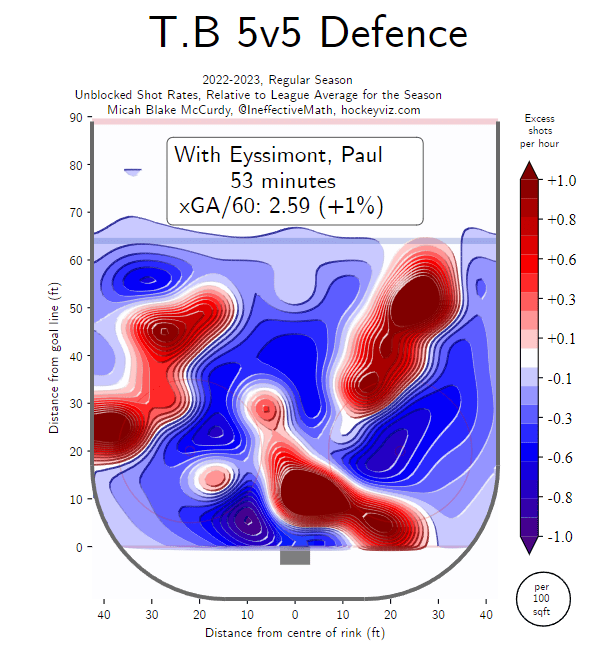
San Jose trades him to Tampa Bay and things go off the rails a bit. He gets out-scored and the team shoots just 2.2% with him on the ice. The crux is that in 53 minutes with Nick Paul as his centre, the Lightning break even on goals, and control 62% of the expected goal share. Again, visually, this is what it looks like on offence with Eyssimont and Paul on the ice, and it looks very similar to what he did in San Jose:

Remember, this is a guy with 238 shots in his last 67 AHL games. That he’s playing with guys like Paul and Couture and that they get more shots around the net – his calling card – makes sense.

There is also the concern of chemistry here. In Ottawa, per Corey Sznajder’s tracking data, Paul played off the cycle/forecheck more than off the rush by a considerable margin. In a small sample, that is what Eyssimont did in San Jose. He did both, really, but his shot rate off the cycle was among the league leaders. He did it a lot, and with his centre playing the same way, it could lead to quick chemistry for them, aside from the 50-plus minutes already spent together.

Of course, like everywhere else, the team is shooting 2.8% with Paul and Eyssimont on the ice. This has been a hallmark at every stop in the NHL. He also shot just 8.4% on those 238 shots in the AHL as he started breaking out. Back during the 2021 pandemic season in the AHL, he scored nine times on 135 shots, or 6.7%. While we shouldn’t put a lot of stock into 55 NHL games, he also has three recent AHL seasons with the exact same issue. That he is driving play so well – combined with some good goaltending – is why they keep out-scoring the opposition.

Here we have a player that led his team in points and shots (by a wide margin) in the AHL but had problems finishing. He is driving the play in the NHL but is having even more problems finishing, as we might expect. But if he can keep driving the play at a 60% rate, do they dominate the play enough to make a difference?

The last point to make is one of luck. Hockey has a lot of it, and it’s a huge factor in postseason success. At the same time, if players driving the play to this level can endure some good luck for a month, or a couple weeks, they can win hockey games. Even if they don’t get lucky, they can dominate the play enough to break even on goals, or come close to it, as Eyssimont showed with Paul in their brief time together.  

It brings us to the series against the Toronto Maple Leafs. They roll into the playoffs with a well-known postseason drought. Tampa Bay looked very shaky over the final two months of the season, ranking 23rd by points percentage over their final 30 games. It is a great opportunity for the Leafs to rid themselves of the playoff disappointments.

Toronto traded forward Pierre Engvall to the New York Islanders before the Trade Deadline. Over the last two seasons, the Leafs out-scored the opposition 57-51 with Engvall on the ice, or nearly 53% of the goals, while controlling nearly 56% of the expected goals. The trade is relevant because since he left Toronto, Toronto’s bottom-6 is out-scoring the opposition 12-9 but carrying just 42% of the expected goal share. They can thank their goalies for putting up a .945 SV% because even a .925 would have seen them get out-scored.

The theory goes like this: if Eyssimont-Paul keep dominating as they have, and Toronto’s bottom-6 doesn’t generate more offence, can the new Lightning third line create a meaningful difference in a 7-game series? Hockey fans are going to find out soon enough.

We are still working with small sample sizes here and there is no telling how good (or not) Eyssimont will be in the long-term. However, if he can maintain his regular season play into the postseason, not only can he have a positive impact in Tampa Bay’s bottom-6, which is valuable in itself, but his line could win them hockey games. It makes for a fascinating story heading into a series that has no shortage of them.

WrestleMania 39: The Builds, The Expectations, And The Predictions

The weekend that wrestling fans wait all year for has arrived as WrestleMania 39’s two-night extravaganza starts on Saturday, April 1st, emanating from Los Angeles. Let’s dispense with the niceties and get right to it.

WrestleMania, as a concept, has changed over the years. Celebrities and gimmick matches have always been part of the event, and things haven’t really differed much in that regard lately. Logan Paul – a YouTube star – is an integral part of the WWE Universe at this point, legends like John Cena, Trish Stratus, Lita are around to help elevate the next generation, and elder statesmen like Edge and Brock Lesnar are on the card to do the same. But where the Showcase of the Immortals was once a blow-off for stories that had built up in recent months, or over the course of a year, it is less about that and more about the event itself. Having a ‘WrestleMania Moment©’ takes precedence over storytelling. That can work out incredibly well sometimes, like Zack Ryder winning the Intercontinental Championship at WrestleMania 32 or The Iiconics winning the women’s tag titles at WrestleMania 35. Those matches weren’t well-developed stories, but led to iconic moments, and that is certainly worth something.

So, let’s talk about what led to each match, what I’m looking forward to in each one, what I’m not, and a prediction. There are 13 matches booked for now so we will try to be as brief as we can.

Austin Theory (US Chamption) vs. John Cena

How We Got Here: Both in story – Theory has been taking shots at Cena for months – and in the real world – Theory has been hailed as the next Cena for WWE – there is a feel of Old Guard vs. Young Star to this one. Cena’s Hollywood schedule has kept him from really building this up face to face, but the root of why we’re here is very obvious: Theory is the next Cena, and Cena wants to be the only Cena.

What I’m Looking Forward To: This match is opening the weekend, and the crowd will be all-systems go. For the knocks against Cena’s wrestling ability, his in-ring storytelling is nearly impeccable. It might not be a 5-star technical classic, but the trash-talk alone should be worth the price of admission.

What I’m Not Looking Forward To: Personally, there aren’t many drawbacks for me in this match. I am not a Theory fan, personally, but he can really go bell-to-bell, Cena is a great story-teller, and that should mesh well with the undercurrent of this match. It might get too meta for the casual fan, is one concern, and that can bog down what should otherwise be a tremendous face-off.

Prediction: It would be great to have another Cena US Champion Open Challenge Run but with his full schedule outside of the ring, it’s hard to see Theory losing the title here. At best, Cena wins by disqualification, so the choice is Theory in a non-clean pin.

Seth Rollins vs. Logan Paul

How We Got Here: With the main event tied up, the IC/US titles with their own feuds, and Brock Lesnar otherwise occupied, credible opponents for Rollins at ‘Mania were sparse. Enter Logan Paul, who eliminated Seth at the Royal Rumble, cost him the US title at the Elimination Chamber, and has cold-cocked him a few times since.

What I’m Looking Forward To: Even Logan Paul detractors have to admit he has put on banger matches in his limited time in WWE. Rollins has never had a letdown match at ‘Mania before because of his ability to get great matches out of everyone. These two together? It is going to be a highlight reel.

What I’m Not Looking Forward To: This match seems primed for some fuckery, and that likely means Paul’s brother (or entourage, or brother’s entourage, or whatever) gets involved. Outside factors may influence the finish, but it doesn’t seem like we’re going to get a clean match. That makes sense in the story, but it really would be nice to see these two go for 17 minutes with no outside interference.

Prediction: This could depend a lot on what they decide to do with the main event because there’s a Cody Rhodes vs. Seth Rollins main event story waiting to be told. Rollins doesn’t necessarily need to win here for that to feel more credible, but it would help (and Paul’s WWE contract is reportedly up for now), so Rollins wins despite chicanery.

Becky Lynch, Lita, and Trish Stratus vs. Damage CTRL (Bayley, Dakota Kai, Iyo Sky)

How We Got Here: Becky Lynch has been feuding on and off with Damage CTRL, namely Bayley, since SummerSlam. She got some backup in Hall of Famers Trish Stratus and Lita, the latter of whom teamed with Becky to win the Women’s Tag Team Titles (which they still hold). A couple of promos later, and we’re getting this blow-off match.

What I’m Looking Forward To: It is always great to see Trish and Lita in a high-profile match. It is, in my eyes, a way for them to enjoy the fruits of their labour 20-25 years ago. With the natural risk-taking nature of both Lita and Sky, and WWE’s general ability to book multi-person matches well, this could be the sneaky banger of the weekend.  

What I’m Not Looking Forward To: The story here, even if it’s stretched to SummerSlam for Becky/Bayley, feels rushed for some of those involved. It took Becky’s promo on the go-home Raw to really give this matchup some juice, and if this goes sideways, it could look even worse in hindsight with the lack of real build.

Prediction: Everyone on Lynch’s team is getting along a bit too well considering one of them doesn’t have a title. This seems primed for a turn from either Lita or Trish – my guess is Trish – to set up more future matches featuring some combination of the Becky-Lita-Trish trio. Damage CTRL needs a big win to re-establish their prominence, so Bayley’s team goes over thanks to their opponents’ in-fighting.

Braun Strowman/Ricochet vs. The Street Profits vs. Alpha Academy vs. The Viking Raiders

How We Got Here: It used to be that the wrestlers that had done a lot of great work over the last year, but didn’t have a ‘Mania match, would get the Andre Battle Royale or an entry to some sort of 6-to-8-person ladder match. This year, we get a fatal four-way tag match for… pride? Honour? Not entirely sure.

What I’m Looking Forward To: Despite there being no build here, these are four incredibly entertaining tag teams. When we look back at Night One – if that is where this match ends up – it wouldn’t be a surprise to say this was the most entertaining bell-to-bell match.

What I’m Not Looking Forward To: This is one of those matches where the lack of build and stakes hurts excitement. How does this match differ from what we might see during the second hour of Raw in the middle of the summer? I feel torn because it’s good that the wrestlers are getting acknowledged for their work with a ‘Mania match, but there’s just nothing to make this feel special for the biggest event of the year.

Prediction: Braun/Ric are a temporary team, the split of the Street Profits might actually start here, and Alpha Academy’s fracture has already begun. Meanwhile, the Viking Raiders may have gotten more vignettes over the last six months than anyone but Cody Rhodes. Viking Raiders go over to establish them as the next top heel tag team.

Charlotte Flair (Smackdown Women’s Champion) vs. Rhea Ripley

How We Got Here: Ripley won the Royal Rumble, so she had her choice of either the Raw or Smackdown women’s champions for a WrestleMania match. Charlotte beat Ronda Rousey for the title just after Christmas. Ripley and Flair have history going back years, particularly to their WrestleMania 36 match, which was at the very start of the COVID Pandemic. Charlotte won then, Rhea wants payback, and feels she desperately needs the title.

What I’m Looking Forward To: For all the flack she gets as The Prodigal Child, Flair is one of the best between the ropes. She knows how to act like a superstar while pulling off incredible feats of athleticism. My personal opinion is that Ripley is still not close to that level – at least the wrestling part – but her power adds a fun dimension to this match. This might not be the most entertaining match, per se, but a clash of styles could turn it into a classic.

What I’m Not Looking Forward To: Ripley is one of the wrestlers I’m lower on than the consensus. In all fairness, she’s just 26 years old. At 26 years old, Flair still hadn’t had a televised singles match in NXT, let alone establish herself as a top star in the entire company. It took Flair a decade to get where she is and she’s a tremendous natural athlete. Ripley will get there, but she needs more time to truly ascend to elite bell-to-bell status, and that will likely make this match drag for me at times.

Prediction: Flair is chasing her father’s record of 16 world title reigns, and she has to lose a lot of title matches to get there. The way Ripley has been built over the last year makes it seem like this is the time to finally push her, and that means she takes Flair’s title.

Rey Mysterio Jr. vs. Dominik Mysterio

How We Got Here: For months, Dominik, Rey’s son, has been goading him into a fight. He has attacked him, he has ruined multiple holidays, and generally ran down his dad in every promo. Rey finally reached his limit when Dominik started taking shots at his mom, Rey’s wife, and now here we are in a Father vs. Son match. Let’s hope it goes better than the Vince McMahon vs. Stephanie McMahon ‘I Quit’ match.

What I’m Looking Forward To: Outside of The Bloodline, this is probably the best story in WWE right now. Dominik has really grated the audience, making him a heat magnet rarely seen these days in pro wrestling, and a testament to his character work. Rey is one of my favourite wrestlers of all time, so it’s a treat for me whenever he steps into the squared circle.   

What I’m Not Looking Forward To: There is no doubt of outside interference here, and that’s to be expected. Problems could arise if this gets stuffed with outside interference: first Damian Priest gets involved, then Legado shows up, then Finn shows up, then Rey’s family shows up etc. It could shift from “great family drama” to “silly sideshow” if they don’t walk that line.

Prediction: Rey’s career is winding down, Dominik’s is just starting, and he’s ascended as one of the top mid-card heels in the company. It would be criminal if Dominik isn’t walking out of SoFi Stadium mocking his injured, defeated father (isn’t wrestling fucking awesome?).

The Usos (Undisputed Men’s Tag Team Champs) vs. Sami Zayn and Kevin Owens

How We Got Here: For nearly a year now, Zayn has been either in The Bloodline, or on its periphery. (I wrote last month about the post-Chamber WWE main event scene so check that out for more in-depth thoughts.) The Underdog From The Underground was a broken man, started following a brutal mob boss-cosplaying Roman Reigns, and it led to one of the best WWE stories of my lifetime. The interplay between The Usos, the rest of The Bloodline, and long-time best friends Zayn/Owens led to this match.

What I’m Looking Forward To: Everything?

What I’m Not Looking Forward To: The news that Vince McMahon is involved in WWE creative is disconcerting. This match features four guys that are extensions of the main event scene and could comprise a big chunk of the main event scene once Reigns goes on his summer vacation. There are any numbers of ways produce this match in a very satisfying way, and I’m worried Vince will go for none of them.

Prediction: Zayn/Owens take the titles, foreshadowing the crumbling of this iteration of The Bloodline. Please just give Vince a heavy pasta meal at 6 PM on Saturday so he’s napping by 7 PM.

Gunther (Intercontinental Champ) vs. Drew McIntyre vs. Sheamus

How We Got Here: While the official reason for the match is some sort of double-pin/double count-out situation, this story has been brewing for a while. Sheamus/McIntyre have been kind of enemy-of-my-enemy friends for the last several months, Sheamus/Gunther had a banger match in Wales last September, and Gunther has established himself as the next top European men’s talent in the company, a spot once held by his opponents at various times of their own careers. Sometimes, the story writes itself.

What I’m Looking Forward To: Speaking of matches that could wind up stealing the show, this is absolutely one of them. Sheamus/Gunther at Clash was one of the best matches of 2022, and not just in WWE. Introduce McIntyre to this environment and it seems like we’re going to get an absolute car crash of a match. Can’t wait.

What I’m Not Looking Forward To: Sometimes, the best story to tell is the easy story. Sheamus needs an IC title win to finally complete his grand slam (Heavyweight title, US title, tag title). He was robbed of that in Wales, so making that right at this time is the easy (and best) story to tell, considering Sheamus’s contributions over the last 15 years. The concern is they do anything other than that.

Prediction: Sheamus completes his grand slam by pinning McIntyre, which leads to a longer feud with McIntyre turning into a bad dude, and this allows Gunther to move up to the main event scene.

Edge vs. ‘The Demon’ Finn Bálor – Hell In A Cell Match

How We Got Here: Edge started the group known as Judgment Day, which contained Priest, Ripley, and Bálor. They turned on him, ‘injuring’ him in the process, which kept him out of action. Bálor became the de facto leader (for now), brought in the aforementioned Dominik Mysterio, and really helped elevate the entire group. They injured Edge’s (real-life) wife Beth Phoenix in an I Quit match, leading to a tag match at the Elimination Chamber won by Edge and Phoenix. Now, it all comes to a close in Hell In A Cell.

What I’m Looking Forward To: Hell In A Cell is just a special match. The contained, violent nature lends itself to tremendous contests and you’d have to work at actually fucking this up (which they did with Rollins and Bray Wyatt back in 2019, so nothing is guaranteed). Add in the history between the two combatants, and their supernatural alter-egos, and this is a special brew.

What I’m Not Looking Forward To: This is more a general complaint, but WWE’s move to more PG programming over the last decade-plus has really hurt HIAC matches. These are supposed to be violent, brutal, almost barbaric encounters. They still have these elements sometimes – remember Randy Orton with the pliers? – but looking at Cell matches 15 years ago and Cell matches in the last five years, and it’s not the same. Just once I’d like a throwback, but that won’t happen at WrestleMania.

Prediction: Edge got his big win over the group in a tag match with his wife at Elimination Chamber. He is also rumoured to be nearing the very end of his career. Not putting over Bálor in what should be a huge weekend for Judgment Day would feel very weird, so The Demon gets the win.

Liv Morgan and Raquel Rodriguez vs. Natalya and Shotzi vs. Ronda Rousey and Shayna Baszler vs. Chelsea Green and Sonya Deville

How We Got Here: This is the other fatal four-way tag match with no build, this time for the women instead of the men. Baszler/Rousey is the only true tag team in this match, and they have one televised match together in the last six months. There has been sparse interplay between individual components of the match, but it’s another ‘thanks for the last 12 months’ affair.

What I’m Looking Forward To: All eyes are on Rousey/Baszler to run over their opponents, and that seems to be the premise here. Regardless, Liv Morgan has shown the willingness for massive spots – like her sunset flip off the top of the ladder at Money In The Bank – so what she has cooked up is what is drawing me here.

What I’m Not Looking Forward To: Again, I’m glad that the wrestlers who put in work over the last year are getting rewarded. Personally, I have similarly low interest here as I do for the men’s four-way match. It’s just putting people together in a match that feels like it could easily slide in the middle of television programming during the summer.

Prediction: If this match happens without Rousey/Baszler beating the ever-loving fuck out of the six other participants and raising their hands in victory, what are we even doing this for?

Bianca Belair (Raw Women’s Champ) vs. Asuka

How We Got Here: Asuka won the women’s Elimination Chamber match back in February to get a shot at Belair’s title. That is… about it.

What I’m Looking Forward To: Once the bell rings, this is going to be a banger. Asuka’s striking and Belair’s speed/power combination should make for a great blend of styles. This is another match that, when the weekend is over, we could look back and say, “that was incredible”.  

What I’m Not Looking Forward To: The matchup itself is appealing, everything else is not. This match might have the worst (read: non-existent) build of any on the weekend, and that’s really saying something considering the four-way tag matches already discussed. On paper, this contest should absolutely fuck, but the lack of care given to this story brings concern about the care the company will put into producing the match.

Prediction: This is going to be one of the shockers of the weekend: Asuka wins, and takes the title. Belair has been spinning her wheels since Survivor Series in November (at least) and needs a character tweak. Losing her title might be the spark needed to get her to another level, and it might be one of the last times we have a chance to see Asuka in a prime ‘Mania matchup.

Brock Lesnar vs. Omos

How We Got Here: Comically large men that can’t wrestle is a Vince McMahon hallmark, so here we are. Lesnar showed down with Gunther at the Rumble, and nothing came of it. After a lengthy feud with Bobby Lashley which somehow ended with Lesnar kicking Lashley in the dick (seriously), we just had Omos/MVP show up on Raw after the match and challenge Lesnar at WrestleMania. Lashley still isn’t on the card. Welcome back Vince, I guess.  

What I’m Looking Forward To: Lesnar always pulls out something entertaining in a match, even if the match isn’t entertaining. There should be one spot that makes the audience laugh in incredulity, and that’s what we’re waiting for.

What I’m Not Looking Forward To: Everything else but that one spot.

Prediction: Who fucking cares. (There is a real chance this is used as an opportunity to bring back MVP, Lashley, and The Hurt Business, but if it’s a messy finish that requires 3-4 guys to overtake Lesnar, who does that help? If this is a Hurt Business reunion, which I’m very much in favour of, generally speaking, they have to be very careful about how it’s booked.)

Romain Reigns (Undisputed Men’s Champion) vs. Cody Rhodes

How We Got Here: Rhodes returned to WWE at WrestleMania in 2022 but was hurt not long after. He spent months on the shelf recovering from his torn pec, returned at the Royal Rumble, won the Royal Rumble, and challenged Roman Reigns. He has been integrated into overarching Bloodline story, so this isn’t just about Reigns and Rhodes.

What I’m Looking Forward To: Despite my personal misgivings about Rhodes (never was a fan, still not a fan), his ability to really go once the bell rings is undeniable. Even if Reigns isn’t on the same technical wrestling level, Reigns’s aura and big-spot ability will make for what should be a wildly entertaining match.

What I’m Not Looking Forward To: The tangled nature of the main event scene, stretching to The Usos, Zayn/Owens, Solo Sikoa, and Paul Heyman, could make this plane hard to land. I am not sold that Rhodes is for-sure winning the title, but regardless of the outcome, making this too complicated is a real concern.

Prediction: Though I’m not 100% on Cody Rhodes taking the title, that’s where the signs are pointing, especially with Reigns’s new (and considerably less busy) contract.

One thing I will say is that a good point was raised by Cain Knight at Cageside Seats: this feels too easy for Cody. Granted, this is being written the morning before the go-home Smackdown show and things can change over the next 12 hours, but Rhodes has had a cakewalk to this point. He is (apparently) a good guy who entered the Royal Rumble at number 30 – the in-story easiest spot from which to win – and eliminated Gunther (a bad guy) who was trying to go wire-to-wire after entering number 1, typically a babyface thing to do. Rhodes hasn’t suffered a beatdown at the hands of Reigns or The Bloodline, and even ended Solo Sikoa’s undefeated streak. He’s recruited backup, of sorts, in Zayn and Owens. This feels way, way too easy for Cody when we consider the way Reigns has been built over the last four years, and that makes it primed for a swerve. We shall see.

Those are my thoughts on the entire (announced) card. There is absolutely a handful of matches I can’t wait to see, but there are others that have an uphill climb in front of them because of the approaches taken over the last 2-3 months. Despite this, WrestleMania almost always ends up delivering in a big way from start to finish. My misgivings about some of the matchups could look real stupid in about five days. Enjoy the show, everyone.

The MCU Sag and the Potential DCEU Rise

It sure seems as if superhero movies are on the decline, if a little bit. No movies from the MCU’s Phase 4 are in the top-6 for domestic box office grosses for the franchise, with Wakanda Forever coming it at 7th. The other three phases all have at least one movie in the top-6, as even Age of Ultron took in more money then Black Panther 2. Only two MCU entries have finished below 50% on Rotten Tomatoes’ critic scores and both – The Eternals and Ant-Man: Quantumania – are from Phase 4. We are still waiting for things to shake out on DC’s recently released Shazam 2 but the early returns are a dismal box office opening, and that’s the sequel for a movie that is somewhat beloved. Black Adam just bombed 5-6 months ago. The DC Universe itself is resetting after The Flash. Marvel is slowing down its television releases in fear they have saturated the audience and thus turned them off. All this is to say that there are clear signs that a declining appetite for superhero movies is a real thing.

Of course, the movies are still making money. Quantumania is one of the poorest-performing MCU entries ever with a domestic box office less than Shang-Chi, which was released in the summer of 2021, and Thor: The Dark World. Quantumania also had a $200M budget and, using the popular Budget Times Two formula to reach profitability, the movie still ended up in the black. Wakanda Forever made even more. The Batman came out a year ago and grossed three-quarters of a billion dollars. There is clearly still some appetite, so why are the box offices and critics ratings declining?

Starting with the MCU, we have to remember this isn’t a franchise built on popular superheroes. It was years before Spider-Man was introduced, the X-Men still haven’t been, and that indicates that it isn’t the popularity of comic books that drove the success of the movies, or at least isn’t the sole, primary driver. Iron Man was released in 2008 and at that time, movie theatres had a lot of varied but, quite frankly, boring IP at the top. For the calendar year 2007, Spider-Man 3 topped the box office with Transformers, one of the Pirates entries, and one of the Harry Potter entries in the top-5 box office grosses. The movie-going audience was clearly interested in fantasy-type stories and Robert Downey Jr’s performance as Iron Man was as transformational for the movie industry as we have seen in recent memory. Not only was it the beginnings of the MCU, but it pointed to a shift away from family-focused entries like Potter or Pirates, and one that, if not geared towards adults, would at least entertain them.

It is also important to highlight the variance in the stories from that era of superheroes. While the early MCU entries are all about establishing its foundational pillars, the way it goes about them is wildly different: the first Iron Man is about a billionaire playboy philanthropist realizing he’s doing more harm than good; the first Thor is about an unworthy hero who has to prove he is what others think he can be; the first Captain America is about a person with such deeply-held beliefs in truth and justice that they will do whatever they can to help, and will forego their own happiness to do so. The Iron Man and Thor movies are just elaborate family dramas while the first two Captain America movies are an action period piece and a spy thriller, respectively. All of the early films build the threads between the heroes, but the story-telling of their individual rise are all very different.

As the MCU started winding down in the mid-2010s, in anticipation of the Infinity Saga’s conclusion, what stood out was the continued variance. Guardians of the Galaxy was a space drama about found family, Doctor Strange had a story that paralleled that of Thor (even if he was being groomed as Iron Man’s replacement), while Spider-Man: Homecoming was a teen drama. These movies weaved the Infinity Saga through them, but it never felt as if the showdown with Thanos was the impetus for these movies.

None of this is the case anymore. The premise behind Quantumania is what Ant-Man will do to protect his family. The premise behind Wakanda Forever is what Shuri will do to avenge her family, then protect it. The premise behind Spider-Man is what Peter Parker will do to protect his friends/family, and then avenge them. The Eternals was a mess and may not have had a premise. Black Widow is about reuniting with fam… you know what, I think we get the point here. With the possible exception of Multiverse of Madness, all of Phase 4 and the start of Phase 5, at least for the MCU proper, has been largely the same. There isn’t even much variation among the types of movies that they produced. MoM could be described as a horror film, but the rest are just basically action-dramas. There is nothing wrong with a good action-drama, but let’s look at Phase 2, for example. Iron Man 3 is a straight character study of Tony Stark’s dealing with the fallout of the Attack on New York and his family’s past, which leans it hard into the ‘drama’ section. Thor: The Dark World is a bad movie, but at least it has the same Shakesperean DNA of the first Thor movie. The Winter Soldier is a spy thriller, Guardians is a space drama, Age of Ultron is an action team-up, and Ant-Man is a through-and-through surrealist comedy. Six movies, all in the same universe, but with six very different ways of presenting the story.

Compare that to what we discussed about Phase 4 already. MoM is horror-adjacent, Shang-Chi does have excellent martial arts sequences, and Love and Thunder does riff heavily off Ragnarok, so there’s a bit of variation, but they are all largely action-dramas. There is no spy thriller. There is no period piece. There is no character study. There is no action team-up (yet). Perhaps one of the reasons there is some superhero fatigue is that the widest array of stories that could possibly be told are all being told in relatively the same manner. Basing movies/television off comic books gives filmmakers and writers a sandbox as big as there is in the world and they keep building the same sandcastle.  

All this doesn’t even get into the TV debacle that Disney got themselves in with their Marvel property. Wandavision was the first MCU television show, and it started its run in January of 2021. She-Hulk is the most recent MCU Disney+ offering and it finished in October of 2022. That 21-month span saw eight different MCU TV shows and a total of 57 episodes between them. Even just averaging 30 minutes an episode is nearly 29 hours of run-time. That span also saw six MCU movies released and that adds nearly 14 hours of run-time to watch. In total, the 21-month span gives us about 42 hours of MCU watching, or two hours a month. The entire Infinity Saga, which spanned 134 months, had a run-time just under 50 hours, or about 25 minutes a month. To stay current on what’s going on in the MCU, the viewer had to raise their MCU intake four-fold every month. For comic-book lovers, that’s no big deal. For casual TV/movie watchers, that is a huge deal.

As for DC, well, they’re just a lame duck right now. With the news that everything will reset after the upcoming The Flash movie, everything else is pointless. It doesn’t matter what kind of movies Black Adam and Shazam 2 are because it’ll all be irrelevant in a few months. That doesn’t mean they didn’t create their own problem.

Aside from a lack of direction, DC just never realized that they were trying to do what the MCU was doing but the MCU was already doing it considerably better. That is why all the early DC movies are largely forgettable while more recent entries like The Suicide Squad, Birds Of Prey, and The Batman (even if it’s not in the main DCEU) did so well. The Suicide Squad was a comedic team-up, Birds of Prey was more of the same but had a good character study of Harley Quinn, and The Batman offered a comic book movie the likes of which we hadn’t seen in several years. Even the earlier Wonder Woman was a period piece. The successful movies DC produced were more than What Will Person X Do To Protect/Avenge Their Family and they never realized that. Hopefully James Gunn will.

That is the hope for DC here. Gunn has shown the ability to make different types of movies, even in his own specific way, between DC and Marvel. He seems to know that DC can’t just try to replicate what the MCU did, or is doing. They need different types of stories that the MCU currently isn’t providing and if DC does that, it wouldn’t be surprising to see them on more even footing five years from now.

Think of all this like a person and their favourite food. Ever see someone that just absolutely loves mac and cheese? They might eat it all the time… for a while. And some will keep eating it regularly their whole lives. Most people, though, get sick of eating the same food all the time, and will just stop eating mac and cheese altogether after enough daily spoonfuls. They don’t stop eating food, they just eat different kinds of food because they can’t stand the taste of mac and cheese anymore. They probably still like it to a degree, and after an extended break, may return to it, but they can only take so much in the moment. This might be the mistake Disney made: a lot of people love the movies, generally speaking, but getting a lot more of the same thing isn’t good. There needs to be some variance if the audience is going to keep eating, and it may be too late for Disney to realize that to save the Secret Wars. It does give the chance for the DCEU to really take a step forward, and they may not get a better one to bring themselves on par with Marvel.

WWE Has A Story Problem At WrestleMania

A couple weeks ago, I wrote my thoughts on the main event of the Elimination Chamber between Sami Zayn and Roman Reigns. That article covers a lot more than just that main event, though, as the history of The Bloodline is discussed, including the Blood In/Blood Out nature of Roman’s relationship with Jey Uso in particular, along with Sami’s entire WWE tenure. For extended thoughts on this whole situation, please check that out.

This article is not re-hashing that (not directly, anyway). This is about the WrestleMania main event between Cody Rhodes and Roman Reigns, on the heels of their first face-to-face segment on the March 3rd episode of Smackdown.

Before the Elimination Chamber, we had a Cody Rhodes vs. Paul Heyman promo that discussed Heyman’s relationship with Cody’s father, Dusty. My issues with the promo are outlined in that other article, so, again, there is no need for a re-hashing here. The essence of the chat was Heyman helping Dusty out 20+ years ago and what that meant to Dusty, and a young Cody. Then Heyman did what he does best by turning the sincerity it on its head by saying Dusty admitted that Roman Reigns – a protégé of Dusty’s in the old FCW/NXT days – was the son he always wanted, not Cody. It was a great promo line and an interesting line to take with Cody, trying to get him over-emotional and off his game, so to speak.

It does present a wrinkle in the Reigns character. For the most part, he’s steamrolled his competition for a year and a half now (or more) and he’s not had to do it by playing mind games. Whether it was Cesaro, Finn Balor, Edge, Logan Paul, or Kevin Owens, maybe Heyman would try to run his mouth a bit, but Reigns would, more or less, just show up, smash them, pin them, and walk out. That Reigns feels the need to stoop to this level to get some gamesmanship on Rhodes means he sees him as a different challenge than those who came before. For Roman’s character, it’s something we haven’t really seen, at least not to this level, and it jibes with the crumbling Bloodline around him.

Fast forward to the March 3rd Smackdown and the Reigns/Rhodes promo. It was a lot more of the same. It was Cody putting over Roman as the unquestioned Top Guy, but that Cody was the guy to climb the mountain no one else could. On the other side, it was Roman continuing the Heyman mind games by bringing up Dusty and reinforcing the notion that Dusty didn’t care about Cody and preferred Roman.  

This is the part where I interject that I am not a Cody Rhodes guy. First off, as a Canadian, the American Hero gimmick doesn’t resonate. It didn’t resonate with Hulk Hogan, it didn’t resonate with John Cena post-Thuganomics, and it doesn’t resonate now. For Americans, I can understand that it’s a whole different kettle of fish for and it’s a big reason why he’s so over with American audiences (he’s also clearly over in Canada, and this is just my personal opinion). He’s an excellent pro wrestler but speaking just for myself, he fits into the Daniel Bryan/Young Bucks category of “they’re clearly great at what they do but they’re not wrestlers I personally look forward to seeing every week”. In that sense, my personal excitement about the main event is less than a lot of other people.

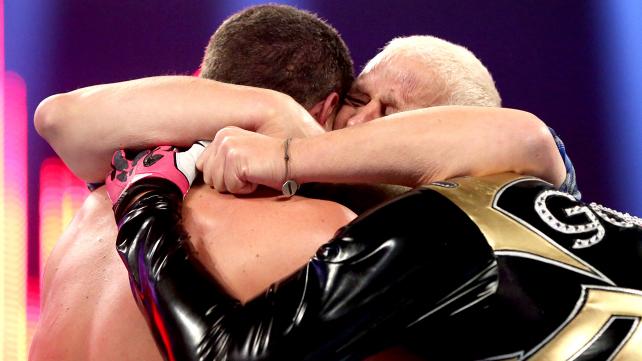
Setting that aside, here is my problem with this main event: to Cody, it doesn’t matter that Reigns is holding the belts. It wouldn’t matter if it were Reigns, or Zayn, or Lesnar, or Lashley, or Rollins, or anyone else. All that matters is the belts themselves. Cody has made it clear on numerous occasions that he’s here for his legacy, his father’s legacy, and the championship(s) that neither of them could ever attain. That it’s Roman Reigns that has the title is incidental, and this is making the Dusty portion of the promos feel really forced. Does WWE think no one remembers the product? Does no one really remember Dusty, Cody, and Dustin Rhodes teaming up to take down Roman Reigns and The Shield? This picture is from after the match, in which Dusty’s kids just beat Reigns and his Shield buddies:

This is a picture of a father hugging his sons in victory, with tears in his eyes, after beating the guy he secretly wanted as his son all along? That is what we’re meant to believe here? And Cody is not only believing all this, or at least considering it, but is getting over-emotional about it? How does Cody not just laugh this off as a blatantly stupid attempt to get in his head? If this is the crux of the main event, it sure rings hollow because it makes no fucking sense.

(As a completely unrelated aside, this is what makes the Kevin Owens character so great. His character, at its essence, is “angry French-Canadian that watches WWE and remembers stuff” and I relate to it greatly.)

And that brings us full circle to the main event of ‘Mania, or the main event that isn’t coming. For Cody, he could face anyone because for his story, it’s about the title and not about Roman. It never was, and it never will be. For Sami Zayn, the title is almost irrelevant. What is important is bringing down Roman Reigns, which is what the story should be not only because of the Sami/Bloodline story, but because of Roman’s dominance for at least a year and a half, if not nearly three years. Sami even referenced that on Smackdown doing his promo among the fans: this is about the end of the Bloodline and Roman’s dominance. Roman Reigns needs to lose and the fact that he has the belts is just a bonus.

This is kind of the problem with the whole build. This is being billed as the Top Guy vs. the Next Guy but to the Next Guy, the Top Guy doesn’t matter. It is what the Top Guy is in possession of that matters. And if the Next Guy honestly believes all the Roman Was His Favourite Son shtick about his father, he’s dumb as fucking dirt considering he was in the storyline less than 10 years ago that showed the exact opposite. Conversely, to Sami, it is the Top Guy that matters more than anything. With that in mind, going to a Cody/Roman match feels very underwhelming if the build is going to be around a story that makes less than no sense. Cody could have faced anyone for the titles at WrestleMania – he just needs to walk out with the titles. At the other end, the (very real in kayfabe) animosity between Zayn and Reigns is what legendary matches are made of. Not in the chain-wrestling-five-star-rating sense of legendary, but showdowns fans remember forever. People will remember Cody beating Roman not because of the build to this one match, but because of the work done by Roman and The Bloodline in the prior 30 months.

Facing down the main event of WrestleMania, WWE has done what it has done for years now and that’s just shoehorn its favourites into the prime spots. We saw it with Reigns 7-8 years ago when he wasn’t over like he is now, we saw it with the Becky/Charlotte/Ronda triple threat, and we’re seeing it again with Cody. Not that they can necessarily be blamed as Rhodes is going to be the top star once he beats Roman and Reigns becomes a very part-time wrestler. But they had a whole slew of options to make this a compelling story and they went the route that tries to build a connection but is so very obviously fraudulent. The point of pro wrestling is to suspend belief and if we’re meant to believe that the guy pictured above loved Reigns more than the son he’s hugging, then maybe we really do deserve what we get from WWE.

Roman, Sami, Jey, Cody, The Story, And The Chamber

After taking a couple of days to get some thoughts in order about the main event of the Elimination Chamber, well, here they are.

The story between Sami Zayn and The Bloodline is one that goes back years and involves a lot of disparate threads. Let’s try to sort through this.  

Sami Zayn

Despite a memorable debut on the main roster against John Cena, and a memorable conclusion to his NXT run with one of the promotion’s all-time great matches against Shinsuke Nakamura, Zayn’s real introduction to the WWE main roster was intertwined with Kevin Owens. He eliminated Owens at the 2016 Royal Rumble, they were in the same ladder match at that year’s WrestleMania, they would run-in on each other for a few months before perhaps their greatest match in WWE against each other at 2016’s Battleground. After floating in the mid-card for a year, he and Owens teamed up as heels to eventually take on Daniel Bryan and Shane McMahon with their jobs on the line (remember that story?). After some more floating and some injuries, we get all the way to 2019 where he and Owens team once again before Owens and Shane break off into (another) feud, and that’s when Zayn’s WWE story really takes off.

At this point, Zayn has been on-again/off-again with his best buddy Kevin for a few years (in WWE kayfabe). He latches on with Nakamura and becomes his manager, of sorts, and after a few months, Nakamura loses the Intercontinental Title to Braun Strowman. Zayn wins that title. That was in March of 2020, and we know what happens next. The pandemic leads to Zayn being stripped of the title, only to win it later that year. He loses it again a few months later and, three weeks after that, is eliminated by Owens in an Elimination Chamber match. Sami finally loses it; his best friend keeps blocking his path, his partnership with Nakamura fizzles quickly, he loses a bunch of matches, and starts to believe that management is trying to keep him down as an absurd conspiracy theorist. This brings Owens back into the picture which culminates in a Last Man Standing match. After all this, Zayn has lost his best friend, his partner, his championship, and any sense of confidence in himself. This leads into a storyline with the guys from Jackass which, against all odds, ends up being a fantastic match at WrestleMania (which he loses).

Sami is now truly broken as a person. He has lost everything he has worked for and now he got embarrassed by a stuntman on the biggest stage in pro wrestling. He has no belief in who he is, he has no one to support him, and all this makes him desperate. So desperate that he’ll try to ingratiate himself to one of the cruelest characters in the company in Roman Reigns.

Roman Reigns

Roman’s WWE story is well-known and thus not necessary to re-hash, but very quickly his Bloodline-era story is one of vanity. After being the Chosen One for about a decade, he finally found the character that would get him to the level management had always hoped for. It was one of a pseudo mob boss who demands absolute loyalty with no questions asked. He beat the loyalty into his cousin Jey Uso in two fantastic matches in the fall of 2020 which led to the unification of Jimmy and Jey Uso with Reigns as the Head Of The Table. Add in Paul Heyman as an advisor figure and Reigns – who won the title in August – now had everything he needed to hold onto his spot as the unquestioned top of the food chain.

Of course, it’s a brittle façade. Reigns is always one unfiltered thought away from laying a beating on someone (as he had often done with Jey). He is aware that at the top of the food chain, he’s the target, and any time that title is on the line, he’s three seconds away from everything that took him a decade to earn to disappear. He is willing to hold onto his position by any means necessary, and for him to do that, he needs unending loyalty from those that are beneath him. Challenges to his throne will be met with brutality and it will be merciless. It takes broken people to follow a broken man like Reigns, and Jimmy and Jey were broken by Roman’s fists. They will serve him out of fear of what happens if they don’t.

Enter Sami Zayn.

He helps the Usos win matches, he helps Reigns win matches, and he always does what they ask him to do (or not do) week in, and week out. He does this because he has nowhere left to go. He doesn’t have a best friend, he doesn’t have a partner, he doesn’t have the belief in himself anymore. He wants to be accepted in a family unit because of all he’s lost, even if it means serving a ruthless boss-type figure like Reigns.

However, as is pointed out later by Owens in what is a turning point in this story, Zayn is not family. He might help them win matches, he might kick Owens in the balls at War Games, he might act with unquestioning loyalty, but he’s not, in a word, ‘Ucey’ enough for The Bloodline. Eventually, Reigns will turn on him, as everyone in Zayn’s WWE history has turned on him, and that is something he cannot endure again.

Reigns puts Zayn to his final test at the Royal Rumble, which leads to Zayn slamming the chair in Reigns’s back and his break from The Bloodline. He has finally stood up to Reigns, and will do so again right up until the Chamber match itself, but that’s not where the story ends.

Jey Uso

Because of how good Zayn and Reigns have been in this story, it’s easy to forget that this all starts with Jey Uso. It’s him standing up to Reigns back in the fall of 2020 that kicks off The Bloodline story in earnest, that installs Reigns as the Head Of The Table, and it’s one that establishes the ground rules for being in The Bloodline. As has been repeated: loyalty without thought is paramount. If Roman says ‘fight him’, Jey is fighting whomever he’s pointing at. He does this because Roman, over the span of about two months, regularly beats the tar out of Jey. Sure, the tag-team Uso gets his own shots in, but Jimmy eventually has to save Jey from himself and they both acknowledge Reigns as their leader, their Head Of The Table.

Jey is the wrinkle in this entire story. He is the test case; he is Patient Zero. He is the one who knows better than anyone else – including Sami – what happens when Reigns feels he’s been disrespected. Him not bending to Roman’s every whim over the last month is what has been crucial to this story. It shows that it isn’t only Sami who is sick of Roman’s shit – there are at least two of them in that faction with similar feelings. There may be even more (who knows what Solo is thinking?). The façade is starting to crack, and Reigns is suddenly vulnerable at the Elimination Chamber.

Getting To The Chamber

We have the Ultimate Underdog in Zayn who lost everything but, after months of an awful situation in The Bloodline, finally found the nerve to stand up to the biggest bully in WWE. He is doing this while having been in contact with Jey over the weeks leading up to the Chamber. That it’s those two who are linked so much leading up to the Chamber is notable. It’s not Zayn and Owens, because Owens isn’t his friend, not right now. Owens and Zayn aren’t a team, but Jey and Zayn are, at least spiritually. They are the ones from The Bloodline that have stood up to Reigns, and they will need to do so again to take him down. (That is if Jey actually helps Sami, which we’ll get to.)

The stage is starting to set. Reigns is vulnerable as at least one member has left after smashing him with a chair and there’s another with previously questioned loyalty, and it is being questioned once again.

This is where the first problem appears: the promos between Cody Rhodes and Paul Heyman, and Cody Rhodes and Sami Zayn. In a vacuum, the promos are both great. They are both electric, actually. But they belong in another story or should be done at another time. The Rhodes/Heyman promo makes it clear WWE has no intention of Zayn actually winning at the Chamber. While (I assume) most fans were thinking Zayn wasn’t winning anyway, this was a clear signal the title would not change hands. (As an aside, here is another issue. Zayn didn’t necessarily need to win the WWE Universal Titles. That isn’t really part of his story. But that is also something else we’ll get to in a minute.) As for the Rhodes/Zayn promo, it was wholly unnecessary. Zayn’s story is about him having the belief in himself and standing on his own two feet. It isn’t about finding validation or acceptance from people that don’t really care about him. And, in this story, why would Rhodes care at all about Zayn? Rhodes left the company in May of 2016, about seven weeks after Zayn’s last match in NXT. Rhodes feuded with Seth Rollins when he initially returned. There is no reason why Rhodes should care about Zayn, or why Zayn should care what Rhodes thinks. They have the same goal in mind – taking down Roman Reigns – but Rhodes is doing it for championships and legacy. Zayn is doing it because he wants to take down the schoolyard bully while building himself back up from scratch. There is absolutely no overlap which is why as good as their back-and-forth was, it was for another story, or even for before the Rumble to give Sami a pep-talk leading to him crossing Roman. That, on top of the Heyman promo, were either out of place or telegraphed the finish. Neither is successful for the story of Sami, Jey, Roman, and The Bloodline.

For good bully/bullied stories to work, there needs to be a build-up of confidence (which Zayn started to exhibit while still on good terms with The Bloodline), a confrontation with the bully (the Chamber match), and the bully needs to either A) lose or B) see the error of their ways and reform. Sometimes, it’s both. The legendary Simpsons episode ‘Bart The General’ doesn’t work if instead of Nelson Muntz getting pelted with water balloons and tied up in a pushcart, he dodges the water balloons and hangs Bart by his underwear off a flagpole. They eventually make peace and that is part of this story as well (which should happen between Reigns and Zayn, even if it’s years down the road). For another pop culture reference, as bad as Season 8 of Game of Thrones was, at least they made the right choice (***** SPOILER WARNING***** though I find it hard to imagine having to do it for this show) by having Jon kill Dany. Imagine if Dany just roasts him in the finale and finishes the series ruling as a despot? It somehow could have finished worse, which seems unfathomable but here we are. Either way, Dany had to lose because of her actions.

That is what made the Chamber match weird. Yes, Sami was going to be received as a hero in his hometown no matter what. However, this was his pinnacle. He had re-found his confidence, he had stood up to the fragile boss, and he was going to take him down. And, hey, maybe Jey would even help.

Only, no he wasn’t. We had the promo from Rhodes a couple weeks earlier that made WWE’s intentions crystal clear. And it is unfair to Rhodes. He rebuilt his value when he left WWE, he is wildly popular with a large segment of the fanbase, and he looks to be the next Chosen One for them with Reigns now on a part-time schedule. But WWE simply gave a story between Zayn and The Bloodline that had been probably the best story since Daniel Bryan’s Yes-tleMania run and among the best storries they have ever told, period. When a story this good happens, there has to be a payoff. Not paying it off gives an air of so what? We invest week in and week out for 10 months (and, really, two and a half years) and the result is… the bully wins? If that’s going to be the reward for many (100? 200?) hours of attention spent on this one story, then so what? Why invest in these stories? It’s like re-watching Game of Thrones. Remember how good those first four seasons were? And how even five and six look pretty good in retrospect? Almost none of it matters because of how it finished. It took years to recover (and is not to the same level, yet) and careers were altered forever.  

That is why the finish to the Chamber match was so wholly unfulfilling. Yes, the Rhodes promo weeks earlier made it clear what would happen. By the same token, there was a feeling of “they can’t possibly not pay off this generational story, can they?” And they didn’t. As good as the match was, two ref bumps, a non-chair shot, an accidental spear, and a whole lot of messiness eventually led to Roman getting the three-count and Sami losing. The bully wins. The bullied lost. The crux of the story – Jey – could have helped the bullied party, showed up and didn’t help, and got speared by Sami for his efforts. This currently unparalleled wrestling story ends with Bran as King of the Seven Kingdoms.

Of course, there is always the chance this isn’t the end. It wasn’t long ago where KofiMania ran wild even after he lost in the Chamber match in February 2019 but still ended up winning the title at WrestleMania a number of weeks later, eventually working his way into the match. It could happen and there is a good story to tell there with Rhodes and Zayn having different motivations but mutual respect and a common foe who is starting to lose his grip on his dominance.

The first difference between KofiMania and this is Reigns. His undefeated streak could push 1000 days. He has been the unified champion for almost a year, and a world champion for two and a half. When he loses, it’s going to be to the next face of the company. Back in 2019, there were two championships so there was one they could use in the non-Brock Lesnar feuds. There was no one besides Kofi that the company wanted to ‘make’ with a win (besides, perhaps, a face Seth Rollins going over Brock Lesnar). Rhodes is the second difference and the company’s intentions are clear: he’s the man that’s going to be made.

There are always chances of a swerve here. Zayn could get inserted into a Triple Threat and that leads to a Rhodes/Zayn feud after ‘Mania while Reigns takes a vacation. They could make it a Fatal Four-Way with Jey in the match, too, as he completes his arc to being the rebellious force against Roman’s reign once again. As always, Card Is Subject To Change. However, it sure seems as if we’re on course for a Rhodes/Reigns main event at WrestleMania with Cody going over while Zayn/Owens reunite to take down the Usos, which is where we were a month ago after the Rumble.

That is part of what makes this feel unsatisfying. The real magic of The Bloodline is not knowing necessarily what to expect next. Everything from Jey challenging Roman, to Jimmy saving Jey and them starting it all, to Solo showing up from NXT, to the Ucey chants and Zayn becoming an integral part of the faction. Not knowing what was around the bend – except Roman’s grip on his power slowly loosening – was a big part of the joy each week. What happened at the Chamber had been telegraphed for perhaps a month, and at least two weeks, which is unusual for this story. However, knowing where they want to end up, it’s not surprising.

The other part is that it’s an incomplete story. If Rhodes is the one to take down Reigns, well, good for him! He has found his self-worth, and his wrestling worth, over the last 6-7 years and he’s worked hard for this, especially given that brutal pec injury. But this isn’t the story that was told. The story being told was that The Bloodline was going to take down The Head Of The Table, possibly led by Jey, but certainly with an enthusiastic and confident Sami Zayn. And if Jey and Sami didn’t do it individually, they’d do it together. None of that happened, and now it looks like Rhodes/Reigns is the destination.

Kazeem Famuyide said something on his February 20, 2023 Masked Man Show podcast with David Shoemaker that is important (to paraphrase): these guys will be intertwined forever. Just how they could run Shawn Michaels vs. Marty Jannetty matches years after their tag team split (or Michaels split the team, rather), or Hulk Hogan and Macho Man, or, more recently, any angle involving former The Shield members, fans invested so much in this story that in three years, they can do a Zayn/Jey angle, or an Owens/Reigns angle, or any sort of combination. This story, in its entirety, isn’t over. But we’re talking years down the road and that’s if they all stay in the WWE (Reigns and Rhodes may both have interests that take them elsewhere in the not-too-distant future). Again, outside of a huge swerve in the next six weeks, this story looks done for now, and the finish of the bully winning feels about as satisfying as having communion wafers for supper.

Thrones Season 7 Was, Indeed, Good

Having re-watched season 7 of Game of Thrones twice now since the pandemic began, I feel confident saying something along these lines: season 7 was very, very good.

With the benefit of hindsight, a lot of the pitfalls of season 7 make a lot more sense. Allow me to explain, character by character.

Tyrion

One of the most popular criticisms of late-Thrones Tyrion was that he almost became… dumb. This is a guy who out-smarted Catelyn Stark, ran King’s Landing, tried to extend the olive branch to the Martells (which bore fruit later), and was generally viewed as one of the more intelligent players on the show. Later in the series, though, a number of blunders put this intelligence into question.

When it comes down to it, it seems obvious that Tyrion was blinded by his hatred for his family, specifically his father, rather than love. This comes to a head in episode 5 when he meets Jaime in the crypts beneath the Red Keep. Even three years after killing his father, in essence dispensing the justice he felt justified (and it was), he still could not get past the hatred his father had for him, and the sentence passed to him. It is obvious, in hindsight, that this is what’s clouding his judgment all through seasons 7 and 8.

When Tyrion says that House Lannister has long been the seat of power in Westeros, he’s right. Or, he would have been right about 10 years earlier. As we know from a conversation earlier in the series between Tywin and Cersei, the gold mines under Casterly Rock are empty. Therefore, House Lannister is only the power in Westeros as long as people still *think* there is gold in the gold mines. Had Tyrion done a little bit of digging, perhaps literally, he would have known there was no reason to take Casterly Rock, giving up The Reach to the Lannister army.

But, Tyrion let emotion get the better of him. Instead of reinforcing the one area of the country they rely upon for food supplies, they attack the one area of the country that is basically useless, because he wants a symbolic victory, for himself and for the Targaryen regime. Sometimes, symbolism is important. Here, all it did was show Tyrion to not be as clever as he thinks he is, something Olenna rightly pointed out.

Arya and Sansa with Littlefinger

One of the fairer criticisms of season 7 was the Arya/Sansa arc over the final few episodes. It seemed as if their conflict came out of nowhere and was just a mechanism to do away with Littlefinger, one of the more beloved villains not only on this show, but on television from the last decade. But, I don’t think the criticism is necessarily warranted upon re-watch.

One thing that always drove me nuts was all the ravens in season 7. It seemed basically every scene in Winterfell in that season had ravens cawing in the background. It wasn’t until my most recent re-watch that you don’t hear ravens during all the conversations at Winterfell, you only hear them:

  1. After Arya’s return in episode 4
  2. When people are having conversations in a room together, or a character is searching for something

EXCEPT

There is one exception, and it’s when Arya and Sansa reunite with Bran for the first time, and they’re pushing Bran on his wheelchair through the Winterfell courtyard. I really recommend everyone watch this video of the entire reunification process, from Arya/Sansa in the Winterfell Crypts, to the two of them meeting Bran at the Weirwood Tree, to the three of them walking through the courtyard.

During the conversation at the Tree, it is clear the three of them know that Littlefinger is up to something: he has given Bran the catspaw dagger the assassin used to try to kill him in season 1. As Sansa states, Littlefinger is not a generous man, he wouldn’t give something unless he could get something in return. What does Littlefinger want?

We need to remember back earlier in season 7. Remember when he went to talk to Sansa, and Sansa basically just shut him down?

At this point, between this and the meeting in season 6 in the Mole’s Town stable, Littlefinger knows he’s lost his control over Sansa. He is smart enough to know that.

So, what does he do next? He tries to get on Bran’s good side. Unfortunately, Bran is a weirdo now and knows everything Littlefinger has ever said. So, no bones there.

At this point, Littlefinger has lost his control on Sansa, has no control over Bran, and will never get control over Arya. Yet, he wants Sansa more than anything in the world, so he’ll try to drive a wedge between the kids.

His plan might have worked, except remember the raven cawing over Littlefinger’s shoulder at the end of the video linked above? Yeah, that’s Bran spying on him. How do we know that and it’s not just a random sound cue? Because there are a lot of sound cues over the rest of the season at Winterfell with people having conversations in rooms, or while looking for things.

Don’t believe me? Check out this video of when Arya is searching Littlefinger’s room for the letter Sansa wrote back in season 1, and listen for the ravens at the 2:33 mark and the 3:07 mark:

You can also hear the ravens in this video, as Sansa is entering Arya’s room, where she finds her bag of faces. They are especially prominent right at the start:

Without just posting a bunch of videos, there are other examples pointed out in this Reddit thread. There is a sound cue when Littlefinger and Maester Wolken are talking about the scrolls, for example. In other words, it seems that instead of having an onscreen conversation, or laying the foundation for this over a couple seasons as they did with the Red Wedding, the showrunners used sound cues to give us a heads up that this was all a ruse.

Is it fair to the audience? I am not sure. We had been primed for years to think of Bran when we hear ravens, but I’m not sure there’s a straight line between “ravens should make you think of Bran” and “because the kids know Littlefinger is up to something, and you hear ravens, you should assume everything you see on your screen is a ruse.”

All the same, it’s obvious the Stark children were planning Littlefinger’s demise all along, and they just wanted proof they could present to the other lords and ladies that would justify killing the acting Lord of the Vale. It was just very hard to catch on the first, or even second, watch. And in the end, the fact they used Littlefinger’s desire for Sansa against him to trap him is a very poetic end for a figure who loved her mother for most of his life.

Jon’s Bad Plan

Going beyond the Wall seemed real stupid at the time and even in hindsight it doesn’t feel like a great decision. But after re-watching season 7 a couple of times, I understand it a bit more.

Up until this point, Dany’s whole schtick is she didn’t want to be the Queen of the Ashes, hence the siege and the attempted ferrying of the Dornish army and the not-burning of the Red Keep and so on. She didn’t want innocent people to die for someone else’s war. How does she do that? Squash Cersei, but with as little bloodshed of the innocents as possible.

To do that, they need to minimize Cersei’s sphere of influence. Just look at the Battle of the Gold Road. At this point, Cersei has the Stormlands, the Riverlands, and the Reach. Even with just three of the seven Kingdoms, thousands die between the battle of the Reach and the Battle of the Gold Road. Mostly soldiers, but as we saw with the scene between Arya and the Lannister army, they don’t all want to be there.

So, if mid-season 7 Dany leaves the Seven Kingdoms to Cersei to go North, Cersei can expand her influence to include all the Kingdoms, save the North and the Vale. Now, she would be sitting at five Kingdoms, and likely even more bloodshed than necessary.

This is the paradigm in which we need to work: minimization of bloodshed, not conquering the Iron Throne. If they want to minimize bloodshed – remember at this point, Dany is still not 100% convinced of the army of the dead, though she’s close – they need to minimize the reach of the Lannister army. So, if they can keep Cersei to 2-3 Kingdoms while executing the aforementioned Bad Plan, then there would ostensibly be less bloodshed when it came down to it.

Is it a bad plan? Absolutely. In no way should the King of the North be going on such a dangerous mission. But if we work under the assumption that casualties need to be kept as low as possible, then this is one of the few things they could do to bring Cersei into the fold.

Again, bad plan? Yes. But if we take the perspective of Dany and Jon and what they’re trying to accomplish at that point, then it’s at least defensible.

So here we are. I think this explains the three most contentious issues of season 7, beyond the pace of travel (which, let it go, man). This wouldn’t have appeared as ham-fisted had they just done 10 seasons of 10 episodes each, but the use of sound cues to indicate what’s going on, as well as the undercurrent of Tyrion’s life-long trauma, are excellent shortcuts to get to the same place.

Season 7 is better than you remember. Season 8 isn’t, though.

Back Problems

I decided to write about my lower-back problems and how they got better because I had a few replies to a tweet about them. It seemed some people may be in the same spot I am. Here is a bit of background, no pun intended.

The first time I hurt my back was when I was 16 doing deadlifts in the gym. It was way too much weight for a 170 lbs. 16-year-old to do, and the result was predictable. But I was strong and young, so it was basically a week out of the gym and then I was fine.

The next few years were basically fine as well. It would hurt once in a while working – I worked a lot of construction – but again, I was in my late-teens and early 20s, so recovery wasn’t a problem. A sore back on Friday night was fine on Monday. And I kept myself in good enough shape to keep playing sports and such anyway.

Then I really hurt my back when I was 22 years old, and the problems started in earnest. Long story short, within a couple years, I would find myself with a sore back all the time, unable to sit in chairs that didn’t recline. Bar stools? Non-park benches? No. Working out became an absolute chore so I eventually stopped. The results were predictable: by my late 20s, I was over 260 lbs and my back was at its weakest.

Eventually, at 29 years old, I started taking care of it with my doctor. We are still conducting tests (COVID has greatly slowed down the ability for timely MRIs and the like) but the likely factor is a genetic condition that is degenerating the disc between my L4 and L5 vertebrae. It is very easy to slip, and I mean it when I say I have thrown out my back picking up a book, sleeping the wrong way, and sneezing too hard. I would throw it out 3-4 times a year, and each time would be roughly the same timeline: in bed unable to walk for one day, able to walk *extremely gingerly* for 2-3 days, then able to walk somewhat normally sometime in Day 5, and stretching can begin. Then another week off from the gym to continue treatment, and perhaps light weights by week three. By week four, it would be back to normal, but then it’d be three months until the cycle began again.

I decided then I had a decision: this was going to get worse as I was going to get older or I was going to do something about it before I got too old to recover.

I took a year to lose the weight and got down to about 180 lbs. For anyone out there with a bad lower back, losing weight is the first thing I would recommend. Whatever is appropriate for your body. You don’t need to drop to 140 lbs., but being 5’9” and over 260 as I was, well, you’re putting a lot of unnecessary stress on your lower back. Nutrition is incredibly important but that is nothing earth-shattering. All I will say is that what you put into your body is vital to your overall health, and dropping weight specifically helps with your lower back pain. Whatever you feel is necessary, if at all.

Beyond that, I will say that yoga is what has helped the most. I have just explained how much pain there has been over the last 15 or so years, and absolutely nothing has helped like regular yoga. But I need to explain the process of getting better.

If you’re someone with lower-back problems similar to mine, you cannot just jump into a 40-minute yoga routine of almost any level. Most popular YouTube videos are good in general, but if you’re starting from scratch, they can be very bad for you. There are postures that require a certain amount of flexibility and lower-back strength, and not building up to those is a quick way to injure yourself again, and often. Believe me, I went through it, pulling my back out once doing a simple forward fold.

Here is what did help: a program called DDP Yoga. That link goes to his shop. It has an app, and DVDs, and everything. First, a bit of background.

DDP is Diamond Dallas Page, a former pro wrestler (and a very successful one). He found his post-career niche helping old former wrestlers rehab, and rehabbing from a very bad spot. We are talking guys in their 50s and 60s with replaced hips/knees and 100 lbs. overweight. He takes them from quite literally needing a chair to hold themselves in a kneeling position to doing full yoga routines. When I say these are workouts designed for people that are starting from the very beginning, I mean it. And that is what makes them ideal for people just starting to really take care of their back: these are designed for people like that. There is more advanced stuff, obviously, and you build up to that, but to start out, it’s truly the very basics of strength and flexibility. That is a crucial first step not only to protecting and strengthening your back, but to sticking with a program that doesn’t ask too much too fast. It has several modifiers in every workout for people that need to take it slow.

Listen, I get it. It feels like I’m hucking DVDs. But I have been dealing with this for nearly two decades, and I would not be where I am now without DDP Yoga. I can run miles, I can do (light) deadlifts, and I can touch my toes. Those are all things I thought I had no hope of ever doing again. I am doing them all again.

I don’t do DDP Yoga anymore because the basic stuff is too basic for me now and the more advanced stuff is more a workout than a yoga routine. I like to work out with weights, and I do different individual yoga routines on my own. That is because I’m at the point where I don’t need DDP Yoga. But I would never have gotten to this point without it, and that is why I’m recommending it so highly. Start there, give it at least six months of regular use, then see how you feel.

So, we’ve covered weight loss and workouts. What else? Oh yeah, needing to take six months.

The final boss is the mental game. I have been there and experienced every possible emotion. I have felt the despair days not being able to walk as a person in my 20s, having been playing competitive sports just 5-10 years earlier. I know what it’s like to feel as if you’ll never play tennis, go hiking, or round up a game of pick-up hockey again. The feeling that it’ll never get better; the feeling that there is no hope. Thinking that you may as well start selling your sports equipment. I understand that because I’ve felt all those feelings and thought those thoughts. It completely sucks and there’s no way around it.

But there is hope, and I say that because I’ve come out the other side with somewhat normal function. I have given up on feeling like I’m 17 again, but if I can delay feeling like I’m 95 all the time, I feel like it’s worth the effort.

And that is the final point I want to make. This will take a lot of effort. A lot of commitment, and a lot of effort. For me, I had to make the health of my back a priority. I am lucky where I do not require a job that needs my back strength (anymore) and have access to the equipment I need. I also don’t have young children to chase around, which gives me more time to look after it. Those are things that make me fortunate in this situation.

All I will say is regardless of your situation, your back needs to be a priority. You need to watch your weight – you don’t need to be a string bean; I’m 195 lbs. at 5’9” and am getting by just fine – and you need to do stretching constantly. I mean you should do 4-5 yoga routines a week, and during the day you should take a few minutes a few different times just to do a quick stretch. These are habits that will take time, but once they’re drilled in, you’ll wonder how you lived without them.

Commitment. Effort in your workouts and commitment to stick with it. And it will take months. And months. And likely more months. It took me over a year of consistent DDP yoga and then regular Yoga to get to a good spot, and I have a ways more to go. This really is about changing how you approach your health, and your back specifically.

Ain’t nothing to it but to do it.

If you feel like you’re at a spot where you can bypass DDP Yoga, I recommend trying Yoga With Adriene on YouTube. She has a couple 30-day programs you can try that are very good. I will say that you better have a good amount of strength and flexibility or there is a chance for injury. If you are just starting out, please stick with DDP Yoga.

A Reading List

While 2020 has been, in a word, bad, there have been lots of good reads to dig through in the in-between time. I have compiled a list of books that may or may not interest readers, or spark some ideas for Christmas presents.

Most of this list is non-fiction as that is what I normally read but there are a couple fiction offerings as well. There is even a collection of comics.

These are brief reviews that will have the overview of the book and a few sentences of review. Feel free to reach out for questions on any of these books.

Nothing To Envy – Barbara Demick (4.5 stars out of 5). Interviews with North Korean defectors from the late 1990s and early 2000s.

The best non-fictions are those that can weave many human stories and Demick does this incredibly well. Accessible language for anyone, but some parts regarding disease and famine can be tough (though necessary).

Gigged – Sarah Kessler (3/5). About the rise of the gig economy and the companies therein. Covers more than just Uber and Postmates.

An interesting book for those who are new to the entire notion of the gig economy. My personal issue is that while there are interviews from many people negatively affected by working with Uber, for example, the true scope of these apps’ damage isn’t really dug into.

Masters of Doom – David Kushner (4.5/5). Chronicling the lives of John Carmack and John Romero, and their creation, progression, and eventual dissolution of the partnership responsible for ground-breaking games like Wolfenstein, Doom, and Quake.

For those too young to remember, or weren’t interested in video games at the time, aside from this being a very balanced look at two of the founders of one of the most legendary gaming companies of all time, it’s also a good historical text of the early years of the gaming industry. It is proficient at creating the context in which these two men grew up and got into the business, as well as the technology that made it all possible. For anyone that is interested in those games, this era of gaming, or these guys in particular, it’s a must-read.  

Warnings – Richard Clarke and R.P. Eddy (3.5/5). Reviewing significant negative events either caused or exacerbated by human failure/hubris – Hurricane Katrina, the rise of ISIS, Fukushima – and the people who predicted those events. They then interview those predicting potential future catastrophes – nuclear winters, CRISPR, A.I. (There is a chapter on viral diseases, and I read this in February of 2020. Prescient!)

The premise of creating their own subjective coefficient is the overarching theme threading the chapters together, and I find it takes away from the enjoyment of the book when the focus turns there. Otherwise, thoroughly researched with many experts in all disciplines. Interesting to read about what really happened leading up to some of humanity’s greatest disasters.

The Radium Girls – Kate Moore (5/5). The story (rather, stories) of the girls who worked with radium at dial-painting plants in the 1910s and 1920s. Follows both their day-to-day lives working in the dial-painting plants, then followed them as the radioactive poison ravaged their bodies, and then finally their court cases seeking compensation and legislation changes.

Both incredibly heartbreaking and hopeful, it’s a story of sheer bravery from a group of women seeking justice from those who had knowingly given them a death sentence. It is a book that encapsulates the weight of the institutions that are designed to keep the working class in check, with the problems compounded by being a woman in the early twentieth century. One of the best non-fiction books I’ve ever read.  

Fire & Blood – George R. R. Martin (4/5). It is the first half of a two-part tome (the second release is TBD). The subject is the first half of the Targaryen reign in Westeros after Aegon the Conqueror showed up with his dragons.

For the enjoyment of the Game of Thrones books, it’s not a necessary read. But for more depth into the events that shaped the GoT books, it’s invaluable. It differs from the ASOIAF books because those are all told from first-person narrator views, while F&B is written as if a historical text, taking cues from scrolls, scripts, and books “written” about the early reign of the Targaryens. Sometimes, the unreliable narrator portion can wear, because there’s often no agreement on exactly what happened and how it happened, but it’s also a refreshing change from ASOIAF and accurately mirrors real-world texts. Does an excellent job of laying out all the behind-the-scenes scheming.

Movies (and Other Things) – Shea Serrano (4.5/5). A collection of short essays that answer questions most people haven’t even thought to ask about their favourite movies, such as, “what would a Michael Myers (yes, the Halloween guy) post-game press conference sound like?” and “which Michael B. Jordan performance broke our hearts the most?”

Serrano has a very unique way of writing, making it seem like he’s having a conversation with you, explaining the answers to the questions in his head. Some are heartfelt – there’s an entire chapter where he interviews his young sons about movies – and some are extremely far out there, like that post-game press conference with Michael Myers. There are footnotes that aren’t about crediting research, but rather sidebars that can sometimes have nothing to do with the question at hand. Not a lot of writers can pull off this style, but Serrano makes MAOT wildly entertaining from start to finish.

Nuremberg Diary – G.M. Gilbert (5/5). The psychologist Gustave Mark Gilbert was the man who interviewed the Nazi war criminals before, during, and after their trials in Nuremberg. It is a first-hand account of not only the atrocities committed by the Nazi regime, but all the processes, propaganda, and maneuvering that made the conditions for these atrocities possible.

One thing Dr. Gilbert does well is he (mostly) keeps his expert opinions to himself, at least in most of his direct conversations with the criminals. There are a handful of instances where the line of questioning makes his opinion inevitable, but for the vast majority of his diary, he just asks questions and then lets the Nazis talk. That kind of approach reveals a lot about the hypocrisies, self-delusions, and ambitiousness that made Nazi Germany, and all the accompanying war crimes, possible. Must-read for anyone looking to understand the justifications war criminals give themselves, and how conditions can be created for these monsters to thrive.

Mastermind – Maria Konnikova (4.5/5). Leaning on the cases of the fictional Sherlock Holmes, psychologist Maria Konnikova takes the reader through a step-by-step process on how to re-think the way they think. It covers topics such as the stages to take when making deductions, multi-tasking, improving mental capacity, and more.

I want to get the negative out of the way first: what kept this at 4.5/5 for me was a lack of citation. Often, the author writes phrases like “one study shows…” or “in a study in the…” and then not citing the authors or publication. This isn’t a research book, but it would have been nice to access the papers referenced throughout the book.

Beyond that, though, it’s a wonderfully written book with plenty of anecdotes as to not get bogged down in too much psychology. It really dissects the way anyone should approach a problem that needs solving. It also does a great job at highlighting why we’re not very good at problem solving, where our shortcomings are and how to correct them. Even if this book doesn’t entirely change the way you think, per se, it’ll change the way you think about learning.

Who is Alex Trebek? – Lisa Rogak (5/5)

The biography of Jeopardy! host Alex Trebek.

Covers everything in chunks from his early childhood in Ontario right up until early 2020, so it really does a good job of combing over his entire life. It reads more like an interview than it does an exposé which makes it more digestible and is a credit to the author. There is much more than just his time on television in the pages, including a lot into his personal life with his families as well as his extensive work overseas. Wisdom oozes out of the pages like a packed tube of toothpaste. Must-read.

The Death of WCW – R.D. Reynolds and Bryan Alvarez (4/5)

It’s a detailed breakdown, sometimes on a literal day-by-day basis, of everything that led to the rise and downfall of World Championship Wrestling.

The anecdotes are truly something to behold. It’s a great accounting of everything that led to WCW’s glory days, from The Outsiders, to Hogan’s heel turn, to Bischoff’s presentation of the nWo, and then its collapse, including millions in wasted money, creative controls in the wrong hands, and a general disdain for elevating the non-stars. It goes into much detail about a lot of these things, with exact ratings numbers, gate totals, and PPV buys. My qualm is the way some of the writing handles substance abuse and addiction. There was (is) a lot of that in wrestling and that plays a big part in human behaviour. It almost seems callous at times. Other than that, however, it’s a great read for anyone interested in the most profitable period in wrestling history.  

Star Wars: Darth Vader (Marvel) – Kieron Gillen (5/5)

A series of comics that were amalgamated into five short novels, these comics cover the Empire’s attempts to rebuild after the destruction of the Death Star in ‘A New Hope’.

The comics introduce three characters that are important to the comic book canon in Dr. Aphra and two killer droids named Triple Zero and Beetee, but focus largely on Darth Vader’s efforts to become more than just the Emperor’s lap dog. The illustrations are gorgeous, and readers can spend minutes at a time just gawking at the details. There are flashbacks and encounters with the popular characters from that era of Star Wars, which injects enough nostalgia to keep casual fans reading while not getting bogged down in following only those storylines. Very much recommended for anyone wanting to learn more about the in-between times of Star Wars lore.

Doughnut Economics – Kate Raworth (4/5)

Economist Kate Raworth asks a lot of basic questions about our economy, through the paradigm of our 21st-century challenges like climate change, food shortages, wealth inequality, etc. We are asked to think about basic economic theory and how it frames our world, like The Rational Economic Man, never-ending growth, whether wealth reduces pollution, and so on.

Raworth re-frames our economy from one that is destructive to one that is regenerative; one that encourages wealth-hoarding to one that promotes wealth-sharing. All this is done within the framework of our ecosystems, and the strains we put on them. It is what I would call a wonderful Idea Book. There are a lot of great ideas that would go a long way to improving the lives of future generations. Unfortunately, I think she focuses too much on what can be done and not how it can be done; by the author’s own admission late in the book, this is a monumental obstacle. The levers across society are geared against this kind of thinking and changing some diagrams in Econ 101 books isn’t enough to bring the scale of change necessary. Nonetheless, it does a great job explaining how we got to the quagmire we’re currently in, and that alone makes this book worth reading.

We Promised You A Great Main Event – Bill Hanstock (4/5)

Subtitled as an unauthorized biography of World Wrestling Entertainment (WWE), formerly known as the WWF, wrestling journalist Bill Hanstock covers wrestling history back to the 1800s. The focus is mostly on the WWE and its previous incarnations, spanning from the 1950s right through the start of the COVID pandemic.

What sticks out immediately about the book is Hanstock’s humour. While some of the crassness isn’t for everyone’s taste, I had no problem with it and found the side-bars to be generally hilarious. It is obvious that he cares about wrestling and is deeply knowledgeable about it beyond just the WWE, and that knowledge plus his humour makes for a fun read. The negative here is that it is a bit scattered in some chapters. A good editor could have done wonders with this book. All the same, it’s both fun and informative, and that’s all we really need out of a WWE book.

Thank You, Alex

In a week’s time, it will have been two years since my grandmother, my mom’s mom, passed away. Private life is private for a reason, but I wanted to share this.

She was the only grandparent I ever had. Both my grandfathers and my dad’s mother all died before I was born. Like millions around the world, we watched Jeopardy! together when I was growing up. I don’t even know if it was a favourite show of mine, but I’ve always loved trivia and competition, and she loved the mental challenge, so it was something we shared together.

She was an important figure in my life. Though she didn’t live close enough where she had a big hand in raising me, she lived close enough that we could venture for Christmas, Thanksgiving, Easter, and a summer vacation. Those summer vacations entailed a lot of things at different times in my life, but up until high school, they meant two things: playing crib with Gramma and watching Jeopardy! with Gramma.

When I think about the time I spent with my Gramma watching Jeopardy!, I don’t miss it because I want to watch the answers again for the first time. I miss it because I miss waking up with a bowl of cereal to watch cartoons, and what that represents. I miss going to a beach and building sandcastles on a Tuesday afternoon, and what that represents. I miss sitting down with a bowl of candy to watch Jeopardy! with my Gramma, knowing I would be able to do the exact same thing with her the next night.

When the news of Alex Trebek’s passing came across my timeline, my heart sank. Not only for Trebek, his wife and kids, the rest of his family, and the legions of dedicated fans across the world. It is a loss that will hit them the hardest and I grieve for them. Selfishly, the first thing I thought of was myself.

Nostalgia is powerful but it can be misunderstood. Nostalgia isn’t a person, place, or thing. Nostalgia is a state of mind. When we think back to our favourite TV shows, video games, or vacations, it’s not necessarily because we were transfixed with the shows, games, or vacations themselves, but what they represent at that time. They represent relaxation, little responsibility, discovery, and a whole host of other good things and feelings. We don’t long for a time when we can watch Animaniacs through for the first time – we long for a time when we could just wake up, fill a bowl with cereal, and sit down in front of a television for a couple hours and just laugh mindlessly. I don’t know how everyone else’s experience being an adult has gone, but those mornings don’t increase in frequency as you get older.

The reason nostalgia has such a strong pull is not only does it remind us of a time when we were… if not happier, let’s say, less encumbered. Rather, the reason nostalgia has such a strong pull is because we have the ability to revisit it. We will never recreate the feeling of sitting down with a bowl of cereal to watch cartoons first thing in the morning as a seven-year-old, but we can simulate it a bit. Maybe there is a morning where the kids sleep in. Maybe there is a morning where there is work that can be put off. Maybe there is a morning where, for a brief moment, the stars aligned and, for a brief moment, you have the ability to transport yourself back in time. You won’t ever fully realize the intense feeling of joy and satisfaction, but you can buy the simulated bacon bits and lie to yourself a little.  

The passing of Alex Trebek means that pull of nostalgia is gone for me. There have been times over the last couple years where I have sat down to watch Jeopardy! and though it was never the same without my Gramma giving me a playful punch in the leg when I was quicker to question an answer, seeing Alex’s face at least reminded me of that time. I never really got to say goodbye to her, not while she was alive, so being able to see Alex Trebek host Jeopardy! was a way for me to keep a piece of her in my reality. Now, she, and he, are just memories. But, and this is the important part: they’re the best kinds of memories. They’re the ones I never want to forget.

It is a sad day. An icon not only in Canada, but around the world, is gone. The void left behind will never be filled. If anything, like a black hole, it will only expand as we realize that whoever is the next host will never fill Alex’s shoes. That won’t be the host’s fault, not in the least. It is just the void left behind by the black hole following this star’s end.

All I can say is this: thank you, Alex. Your warmth, care, charisma, generosity, and kindness are legacies that will never be taken away. But, to me, you will always represent something I’ll never get back, and I mean that in the most complimentary way possible.

Thank you.