This is being written on the weekend between the fourth and fifth episodes of ‘Secret Invasion’. To that end, there are ways this series could finish in a satisfactory way. I am not entirely sure how, but in the sense that all things are technically possible, there is a way to land that plane.
What I will say is this is the sixth MCU television show that has a 6-episode run. ‘Loki’ was an unqualified success, but then there’s ‘The Falcon and the Winter Soldier’, ‘Hawkeye’, ‘Moon Knight’, and ‘Ms. Marvel’. There are good aspects to each of those series, but each series also saw expansive stories that struggled to wrap up in a satisfactory way. Whether it’s the Flag Smashers (remember them?), a shoe-horned Kingpin, the non-appearance of Kang in a very obvious series to have him appear, or the abandonment of a street-level story for a (functionally) time-traveling one, there was just too much packed in too little time with new characters that didn’t get the proper exposition. Series like Hawkeye and Ms. Marvel were still fun at times, but the stories suffered because of their enormity.
That brings us to Secret Invasion. There are two episodes left and, off the top of my head in no particular order, they have to:
Setup Harrison Ford’s ‘Thunderbolt’ Ross as the President of the United States, or otherwise introduce the Thunderbolts team components in some manner.
Make any part of G’iah’s story compelling.
Let us know what Sonya Falsworth has to do with any of this.
Inform the audience as to when Rhodes became a Skrull and all the emotional baggage that may include, as well as the next step for that character if (when?) Skrull Rhodes dies.
Have a Fury vs. Gravik face-off.
Deal with the machine/technology that creates Super Skrulls.
Expand (or resolve) the brewing intra-Skrull conflict.
Find a way to handle the one million Skrulls on Earth.
That makes eight important stories or expositions that are needed. There is more, and then we have to include the set pieces or any cameos. Let’s say that, conservatively, they have 10 aspects of Secret Invasion to conclude, and they have the MCU set pieces and cameos to include along the way. With two episodes, they might have 90-100 minutes left to do all this, plus setting up whatever else they want to for the future. It is a lot.
Perusing an article from The Ringer brought me to an interesting note:
For anyone not wanting to do math, that is about $35M an episode. For those not keeping track, there were 187 minutes of runtime in the first four episodes, but that also includes roughly 22:45 in opening and closing credits. Overall, it’s roughly $140M in budget for 2 hours and 45 minutes of screen time, which would qualify as a blockbuster movie if it were released in theatres. It isn’t at the MCU movie budget level, but it’s not entirely off the mark.
Does it feel like it? Not to me. Let’s expand on that point.
I hate to be an In The Comics Guy but, in the comics, Secret Invasion is one of the biggest cross-over storylines that Marvel has in the last 20 years. It follows the Civil War arc – seems familiar! – and includes almost anyone of note. There are your Avengers, the New Avengers, the Young Avengers, the Thunderbolts, the Fantastic Four, the X-Men, the Skrull versions of a lot of the heroes in those groups, the Super Skrull versions that have the both the appearance and powers of some of the heroes, and a slew of the standard Marvel bad guys. There are dozens of notable characters which, in movie terms, would classify it as something like ‘Endgame’ rather than ‘Captain America: The Winter Soldier’. It could have been a story to turn into a cross-over movie that would take in a billion dollars at the box office.
Disney decided against this – it may be the path for the ‘Secret Wars’ movie coming in 2027 but sowing the seeds for your biggest movie in eight years with a 6-episode television show is ballsy – and decided for a television show instead. On top of that, a 6-episode season whose first four episodes average 41 minutes of screen time. It would be a lot to ask if they remained faithful to the comics in any meaningful way.
For that reason, they had to go smaller. There are sure to be cameos, but we’re not getting 40 heroes coming through a portal. That functionally changes the story from the comics and forces the screen writers to scale it down.
Here’s the problem: they still decided to do an actual invasion. As in, we found out there are one fucking million Skrulls already on Earth. This is a group of aliens that can mimic any person on the planet, there are one million of them, and this is all left up to Fury and Talos. There are characters that may or may not be helping them, but an invasion of aliens that can make themselves look like any politician, hero, or business/religious leader is left up to Fury, who is a senior citizen and has been off-world, and Talos. It kind of strains credibility, right? ‘Captain America: Civil War’ was a cross-over event based off foreign/domestic policy decisions. Most of the heroes that are in the MCU at that time, and are on Earth in the story, are in the movie. Though it’s a philosophical battle, the civil war boils down to policy, but it brings everyone together on screen (and, importantly, in the same room).
It is really hard to square how policy decisions can bring most of the Avengers team together, but an invasion of one million aliens who can shape-shift into any human in seconds is left up to one of said aliens and a guy who probably eats supper at 4 PM.
On top of all this, we find out they have the technology to create Super Skrulls. Gravik has already shown advanced Extremis abilities and his Groot-style abilities. G’iah is also now an Extremis Skrull. These invading aliens that can shape-shift into any living human are now acquiring superhero abilities. They’ve threatened to blow up a United Nations airplane, they’ve murdered Russian civilians in a bombing, and they’ve tried to assassinate the President. It’s still left up to Talos and Fury. What in the absolute fuck is going on here.
This is where Disney tried to have its cake and eat it, too. They didn’t want to have a full-scale crossover event, but they didn’t want to do a smart, small spy thriller, either. They wanted to have returning faces, but introduce more characters for the future. They’re also addicted to their set pieces. They tried to compromise by including some crossovers, some set pieces, and some thriller elements, and none of it is successful. There are good scenes with Talos and Fury, or Talos and Gravik, and even Fury and Skrull Rhodes, but that’s maybe one scene in each episode. It isn’t enough to salvage the rest.
It is frustrating to see those good dialogue scenes. If Disney had decided to make six episodes of the backroom machinations between Falsworth and Fury, or Fury and the US government, of other national governments, of the brewing Skrull civil war, and so on, it could have been very successful. Instead, they try to turn Fury into a superhero himself without realizing that the prior stories involving Fury had the action carried out, almost exclusively, by The Avengers. There is a very good reason Fury doesn’t come bursting through a portal next to Captain America in the final Endgame battle sequence. The fuck is that guy going to do in a gun battle against an alien race that can blow Avengers compound off the face of the planet in seconds?
Had Disney decided to turn this into a truly small-scale spy thriller, revolving around Fury and which of his friends/partners he can/cannot trust, there could have been something special. Spending the sizable majority of an episode developing Fury’s marriage history, so it actually carries weight in the show, would have helped. It would have helped to show us G’iah’s conflicted upbringing as she becomes disillusioned with Fury, or the Skrull resistance, or both, so people actually care when she’s shot. Showing the Skrulls slowly trickling to Earth, (there are one fucking million of them!) and how that has been disrupting the global balance of power, would have helped set the true stakes of the show. None of this was done, so the story they do present lands with as much grace as a penguin being thrown from a ninth-story window.
Or they could have gone the other direction. They could have saved this for the theatres and made it a huge cross-over movie. It wouldn’t have been hard to make the TV show a small-scale spy thriller, have Gravik (or someone similar) escape with the Super Skrull technology, and then have that bleed into future movies. Assuming Secret Wars isn’t borne from this show, we have been robbed of the potential for an Avengers vs. Skrull Avengers battle. Don Cheadle has said in interviews that he had a lot of fun playing Rhodes with a different slant (the drinking asshole presented on the show). Now, imagine that, but with a dozen Avengers?
Or we could have one alien use superhero powers in front of the US military, shape shift into his true form, stab another alien who also just shape-shifted, and have the soldiers just 5-10 feet away not even blink:
Groans, indeed.
By trying to split the difference, Disney gave us a TV show that is neither an interesting spy thriller nor a high-octane blockbuster. The myriad stories don’t have time to flesh out, because we have to include soldiers just absolutely no-selling aliens shapeshifting into soldiers, and everything suffers. The new characters aren’t interesting (Gravik is being saved by Kingsley Ben-Adir’s performance, mercifully), the stories are paper-thin, and the action sequences look like they were made in the Volume one actor at a time. A few scenes aside, it collapses on itself because the foundation is made of straw.
All due respect to the characters of Talos and Fury, but they are incomprehensibly in over their heads in the show. Not in a “how will Captain America save those soldiers from the prison” kind of way, either. It’s more in the “we had the Avengers team get together to argue policy, but we can’t ask some of them to help with the one million shapeshifting, potentially super-powered aliens that have already invaded Earth” kind of way. It really is an unbelievable premise in every sense of the word.
Had this been a small-scale TV thriller, it would have given them all the time they needed to introduce and progress their new characters. Had this been a large-scale cross-over movie, it could have made a billion dollars. Instead, they tried to Frankenstein the two of them together and instead of being greater than the sum of its parts, the disparate parts are just cannibalizing each other. Of all the opportunities Disney has squandered to do something interesting with the MCU post-Endgame, this is at the top of the list with a bullet that has just gone through Gravik’s face, which heals instantly and is not noticed by the professionally trained soldiers standing a hockey stick’s length away.
What makes a movie enduring depends on the specific person answering the question. For some, it’s technological achievements that change the film industry itself, as the first ‘Avatar’ and the original ‘Star Wars’ have. For others, it could be the themes discussed, and the manner in which they’re explored, like ‘Citizen Kane’ or ‘Taxi Driver’. A different group of cinema fans would identify with spectacular set pieces such as those in ‘Lawrence of Arabia’ or ‘John Wick’. The list of reasons a movie endures in the cultural zeitgeist is as varied as the movies themselves. Knowing all this, what makes ‘Terminator 2: Judgment Day’ an enduring movie? Is it James Cameron’s directing, the straight allegories to the terror of nuclear holocaust and technological enslavement, all the tremendous action sequences, or the Terminator understanding and internalizing humanity? It’s all of it, really. The trick is that it’s all of these things with an added, and crucial, distinction: perspective. We get the all-important perspectives in Terminator 2 from our three protagonists: Arnold Schwarzenegger’s T-800 terminator, Edward Furlong’s John Connor, and Linda Hamilton’s Sarah Connor. How they fit together is a big part of the film. There are three other perspectives from T2 characters that are vital as well, though. Those perspectives come from the T-1000 terminator, researcher Miles Dyson, and Sarah’s psychiatrist Dr. Peter Silberman. Each perspective is valuable when telling a story with the ultra-high stakes presented – the enslavement and/or annihilation of the human race – because they help provide a 360-degree view of the biggest issue with humankind tackling our pressing issues: finding the common ground necessary to solve those pressing issues in a manner that honours humanity. Our six characters give us six different perspectives, but they can be grouped into two sets of three. The first is a group of terminators including the T-800, T-1000, and Sarah (we’ll get back to why that is in a minute). The second is a group of skeptics that includes John, Miles, and Dr. Silberman. Despite having three people sharing each perspective, there are differences between each person in their respective grouping. Perspective alone isn’t enough to make this not only an enduring movie, but one that is truly among the greats from post-Golden Age Hollywood. It is all the things we mentioned earlier, so before we discuss the perspective distinction, let’s discuss everything else.
Technical Achievement
For anyone old enough to remember what computer graphics in movies looked like basically until we get to ‘The Matrix’ in 1999, Terminator 2 still stands out as one of the gold standard in technical proficiency until the 2000s. Even when re-watching in 2023, it doesn’t look bad. There are the typical computer tricks that are still used today – have the actor stand perfectly still with no facial ticks to reduce motion smoothing problems – but even the psychiatric hospital fight still looks recent. Show that scene to a 10-year-old and they might think the movie was released around the time they were born and not 32 years ago. It shouldn’t come as a surprise that a big part of the reason why the computer graphics look good was Cameron’s collaboration with Industrial Light and Magic. That collaboration brought audiences motion capturing, as well as the first main computer-generated character, that they had ever seen. An article from The Guardian in 2021 highlights that they had a team of 35 experts (artists, designers, engineers) work 10 months on what ended up being five minutes of screen time. That kind of dedication to the craft is what led to their four Academy Awards, one of them being for Best Visual Effects. What Cameron and his teams produced revolutionized how movies are presented. Their use of motion capture would become the industry standard, and it isn’t hard to draw a line from Terminator 2 to Jurassic Park, to Titanic, to The Matrix, and beyond. These technologies would have come along eventually, but Cameron harnessed, mastered, and showcased their power before anyone else, and we have a lot of classic movies because of it.
Themes
There are not shortage of stories and movies about humans creating the very tools that will eventually destroy us, especially since the advent of the Nuclear Age. Everything from ‘2001: A Space Odyssey’, ‘WarGames’, ‘RoboCop’, ‘The Matrix’, and so many more, all directly deal with this topic. Given humanity’s history with edged weapons, gunpowder, and nuclear materials, it is hard to disagree. Aside from nuclear annihilation, a crucial theme that ties a lot of this story together is the ability for machines to learn. The obvious example is the T-800 telling John, as he’s about to sacrifice himself into the pool of melted steel, “I know now why you cry, but it’s something I can never do.” This particular terminator has understood human emotions, and what cause them: connections with other people. He will never be able to cry, but his bonding with John over the course of the movie showed him how much those relationships mean. Those relationships are the bedrock of humanity, helping push us towards noble endeavours for the benefit of those around us rather than just ourselves. The T-800’s understanding of humanity as an example of a machine learning isn’t the only one in the movie, though. Much like the T-800, Sarah Connor has one objective throughout the movie: keep John alive. That single-track mind turns her from the caring, compassionate friend she was in the first movie to a human terminator in the second one. She is absolutely ruthless towards everyone in the psych ward on her escape (understandable, really), and excoriates John for putting himself in danger by coming to help her. In the moment, she did not understand that it was the relationships between her, her son, and the T-800 that would enable them to succeed. Their teamwork, if not outright camaraderie, is what eventually takes down the T-1000, not simply a grenade in the chest (though that helps). Sarah closes the movie as the narrator, saying “The unknown future rolls toward us. I face it, for the first time, with a sense of hope. Because if a machine, a Terminator, can learn the value of human life, maybe we can, too.” She learned the value of human life when she didn’t kill Miles Dyson, the architect of Skynet. That was reinforced when she saw the budding friendship, of sorts, between her son and the T-800. A better future without slaughter is possible, a notion reinforced by Sarah’s reluctance to kill, and the T-800 following John’s orders to hold off on the murdering.
Set Pieces
At its heart, T2 is still an action movie, and a phenomenal one at that. On re-watch, almost every action scene holds up and a big reason for this is the lack of hand-to-hand combat. Just think of all the major set pieces in the movie:
·Mall shootout that features the hallway fight, but is really just terminators throwing each other through walls. There are no punches or kicks thrown that can make a lot of 80s and 90s action movies look dated.
·Motorbike/18-wheeler chase through Los Angeles. As with a lot of carefully crafted action sequences at the time, the practical effects hold up extremely well and it’s still thrilling to watch. It also features no punching or kicking.
·The psychiatric hospital escape gets close, but a lot of it is running from the T-1000, not fighting it. This sequence is closer to a horror movie than an action movie. The ensuing chase is the same.
·Miles Dyson’s residence is shot up by Sarah and features no hand-to-hand combat. ·The T-800 shooting the cop cars with his minigun from Cyberdyne headquarters.
·Freeway chase into the steel mill, leading to the final sequence.
The closest we get to hand-to-hand combat is the mall hallway fight, which was more of a wrestling competition, and then the final steel mill scenes. Even the scenes in the steel mill feature a lot of gun play, and whatever fighting happens is done largely between the terminators, which means fantastical feats of strength and lots of stabbing. There are no fake punches that miss by 6 inches, as happens a lot when watching action features of the era. James Cameron’s understanding of what kind of movie he was making – a sci-fi battle between machines for the future of humanity – got him away from the close-quarters combat that can often not age well. Combine that with a lot of expertly crafted practical effects and we have multiple action sequences that have not only endured for over 30 years, but still provide the blueprint for making a wildly entertaining action movie without people actually fighting.
Script and Scenes
It isn’t hard to go back to 1970-1990 and find a lot of movies that feature a lot of dialogue or scenes that wouldn’t fly with audiences in 2023. This is not to pass judgment on whether that’s good or bad, just simply pointing out the reality of how movies are made in our current decade. Just go watch ‘Three Days of the Condor’ with Robert Redford. It is a good movie, no doubt, but they play Redford’s paranoia into what ends up being a hostage situation where Faye Dunaway’s character is held against her will, by the good guy, at the end of a gun, and with a direct threat of hurting her if she so much as moves while he has her pinned to a bed. Then she’s gagged and tied up, left in her apartment, at which point Redford’s character leaves, returns, and still threatens her with the gun while she’s tied up. He’s the good guy! This certainly isn’t to the level of early James Bond movies having Bond slap around the women in his life, but it’s an example of something that played well at the time – the paranoia of a CIA analyst who had his colleagues murdered – but is inexcusable for a character that is supposed to be the protagonist. That is, quite obviously, something that is absent from Terminator 2, and helps set it apart from its contemporaries. The same can be said of the script. Audiences don’t even need to go back to 1990 for outdated dialogue; just go watch most comedies from the 2000s for your daily dose of homophobic slurs; anyone remember “Paging Dr. F*ggot” from ‘The Hangover’? There was a lot of that. Once again, none of this in Terminator 2. It isn’t hard to draw a line from ‘The Terminator’ in 1984, featuring Linda Hamilton as the protagonist, and Sigourney Weaver’s sensational turn in ‘Aliens’ from 1986, to T2 in order to understand why this happened, at least partially. Cameron’s movies, unlike almost everything else from that era, focused on strong women as the main characters, helped along by Schwarzenegger’s magnetic star power. It isn’t easy to write strong women characters if they’re being held hostage at gunpoint in their own apartment by the ‘good’ guy for helping the ‘good’ guy. As T2 is a story of humanity banding together to recognize, and further, our common humanity, the slurs aren’t necessary. Even if they were acceptable in movies at the time, the themes of the movie dictated that they were not only unnecessary, but antithetical to the film itself. This isn’t a celebration of diversity or a recognition of LGBTQ+ issues or anything of the sort. This was a director understanding the characters in his movie, what his movie was saying, and the best way to convey all of that. Hamilton’s performance, Cameron’s directing, and the script itself all combined to give us a generational action movie whose dialogue holds up no matter what year it would have been released. Well, maybe people from the 1930s would be confused as to what ‘computers’ are, but you get the idea.
Perspectives
To this point, we have pointed out why the themes continue to resonate, why the dialogue holds up, why the set pieces are timeless, and why Cameron’s technical mastery set the tone for the next decade-plus of action movies. If that’s all we had, T2 would hold up as one of the best action movies of my lifetime. But it’s how the characters are assembled, what they believe, and how they progress that sets it apart from everything else of its time. It sets it apart from almost everything since, too. That all-important element of perspective is what elevates T2 from a legendary action movie to an all-time piece of American cinema. The movie has three main protagonists in the T-800, and Sarah and John Connor. There are three secondary characters that are worth discussion as well. The first is the T-1000 sent back to kill John, the second being Dyson, and Dr. Silberman (Sarah’s psychiatrist) as the last. These six characters give us six different perspectives but largely from two points of view: that of a terminator, and that of a skeptic.
T-800 (Terminator): It was a risk to have Schwarzenegger return from the first ‘Terminator’ movie but as the good guy protecting John rather than the bad one trying to kill him. The twist worked, obviously, and it sets the stage for Arnold’s best role. The T-800 is sent back in time to protect John, and that’s his mission. Because this is his mission, everything that he does has to be in service to that. This is the way machines work: they have a top-level priority and if they’re asked to do something that doesn’t jibe with that priority, it’s ignored. However, as the scene in the parking lot with John shows – the scene where John pretends the T-800 is hurting him and they beat up the muscle heads and the T-800 stands on one foot and all that – a parameter of the mission to protect John is to listen to John. The machine can only complete its mission by listening to a human that programmed it. That is how it works in the movie, and that is how it works in real life. It is by listening to John, whether it be learning how to high-five, or early-90s slang, or why he can’t indiscriminately kill people, that the T-800 evolves. He never learns how to cry, but he learns why people cry, and that distinction is what progresses the character. That distinction is what gives Sarah hope about the future of humanity. Machines are nothing more than a reflection of their builder.
T-1000 (Terminator): If machines reflect their builder, then the T-1000 is what happens when the builder has complete disregard for humanity. While it is ostensibly capable of the same learning that the T-800 is, because its mission is to kill rather than to save, it doesn’t get the interpersonal moments that the T-800 gets. Because it is interested in destruction rather than building, any person it encounters is either a means to help complete the mission, or an obstacle to the mission that needs removal, like being stabbed while drinking a carton of milk. That is what makes him different from the T-800. If it didn’t hit home with the hell the T-800 goes through to save John at the steel mill, then the T-1000’s persistence at killing John should highlight the importance of relationships. Because the T-1000 has no other mission than to kill John, and it is nearly indestructible, it will go through any and everyone that stands in its way, because that’s what machines with top priorities do. The T-1000 doesn’t go through a character progression, at least not in terms we think of in most movies, but it does provide a vital mirror to the T-800. It shows the humanity that lacks in a machine and its builder if it has no priority besides eliminating a target; en route to kill John, the T-1000 kills the cop early in the movie, someone in the mall, John’s foster parents, their dog, a guard in the psych hospital, and a truck driver just before the final steel mill portion. Where the T-800 goes to lengths to not kill, at the behest of John, his builder, the T-1000 does the opposite. It is built by machines whose priority is survival, and as such, will kill or enslave the human race to do so. That dichotomy between the T-800 and T-1000 provides the blueprint for how humans should treat computers, machines, algorithms, and artificial intelligence. TBD on how that ends up.
Sarah Connor (Terminator): Sarah is not a terminator in the same way that the T-800 and T-1000 are terminators. But consider that her sole mission is to protect John, and the lengths she goes – in the psych hospital and beyond – to ensure that she completes her mission. Through the first half of the movie, her focus is on nothing but making sure John survives, first by escaping the hospital and then by eliminating the T-1000. She beats orderlies with a billy club, she puts the Drano needle to the neck of Dr. Silberman after breaking his arm, and then makes her escape. After she has her nuclear holocaust dream sequence, she loads up the truck with guns and takes off after Miles Dyson, the father of Skynet. She is ready to kill anyone who might endanger her son. The key with Sarah, though, is that she doesn’t go through with Dyson’s assassination. She has a rifle trained on him, after already shooting him, but cannot finish the job in front of his family. It is at that point that Sarah realizes just how far she’s gone, both in action and in her mind, and she relents. It isn’t quite a breakdown, but a realization that she was about to murder a man in front of his family for something he hadn’t done. At least not yet. Sarah understands, in that moment, that the way through their problems isn’t at the end of a gun, but shoulder to shoulder, even if she’s still a bit reticent. After John and the T-800 show up, they give Miles the exposition that will lead to Skynet and, lo and behold, he agrees to help them, full stop. There are a couple moments where he can’t help but show his excitement about the technology because he’s still a researcher, but he helps them. Had it not been for Sarah’s change of heart, they would have not made it through the Cyberdyne building. Building that bridge got them to the other side faster than swimming through the river’s current. Once she realizes she won’t convince her doctors of what will happen, Sarah is a one-track mind as it relates to John; a terminator of everyone but John. She comes to humanity on her own, showing the change of heart necessary for the resolution of the movie. We are all capable of becoming terminators, and not doing so under the most extreme situations is what’s vital to progress.
Miles Dyson (Skeptic): As for Miles, he starts as a skeptic, of course. He’s a researcher; he’s a scientist. His job is to pursue, to discover, and to educate. His instinct isn’t to destroy technology, it’s to understand and harness it. That aspect is absolutely crucial to controlling technology. The key scene for Miles is the exposition from the Connors and the T-800 at the Dyson house. He says, “You’re judging me on things I haven’t even done yet. How were we supposed to know?”. That is a reasonable position to take, but the easy rebuttal is “how weren’t you supposed to know?”. There hasn’t been a technology invented by human beings that hasn’t been turned into a weapon, or at least attempted to. As soon as humans had farming tools, we had killing tools. It didn’t take long after the invention of gunpowder to turn it into a ranged weapon. As soon as we had nuclear fission, we had Hiroshima and Nagasaki. Biological research into biological weapons, unmanned flights into drone strikes, hell, we strapped scythes to wagons pulled by horses to turn horses into executioners. If humans think it could possibly kill someone, it’s probably been tried. Part of the scientific pursuit is to expand and disseminate ideas and knowledge. That pursuit helps put on blinders to likely outcomes, but it’s also what makes great scientists what they are. It is also what could end modern civilization. Maybe Miles is ignorant of this, but it’s not something that should surprise him. Sarah excoriates him immediately for even asking such a question, and that crystallizes what Miles has to do. Miles, the father of Skynet, is also the key (literally) to stopping it. The team heading to Cyberdyne would not have been able to access the areas they need to without Dyson, or not at least without casualties. His change from skeptic to believer comes only because he sees the machine he will build in the future with his own eyes, but at least he believes. If the people creating the weapon aren’t on board with dismantling it, the hill for everyone else to climb gets much, much taller.
Dr. Silberman (Skeptic): The most minor character in this section is Sarah’s psychiatrist, Dr. Silberman. He is a skeptic that doesn’t believe Sarah’s story about being attacked by the original terminator, in part because the coverup hid all the evidence that remained at the end of the first Terminator movie. Outside of the people involved in that coverup, all that was left was Sarah’s word as to what happened. Try earnestly explaining to a family member that hasn’t seen T2 Sarah’s position, but make it your own, and see if the guys in white coats don’t come for you. That is part of the brilliance of Dr. Silberman’s role in this movie. He acts the way almost everyone would act, and that’s with incredulity. It would be one thing to tell friends and family you had dreams about the apocalypse; given the problems humanity is facing and will face moving forward, it’s not a stretch. But an unrelenting killing machine sent back in time to kill you and the baby you will have, but you killed the machine instead? People would be hard-pressed to find an audience for that, even in this insane world we inhabit. So, when Sarah tries to fake Dr. Silberman about how she’s changed, and he doesn’t buy it, and she freaks out, it all makes sense. As an audience, we know Sarah’s right, but we also know what would happen, and it happens on screen: she’s held down on a table, restrained, and sedated. As this is going on, Dr. Silberman pulls himself away, straightens his tie, looks into the camera recording this therapy session, and says, sarcastically, “Model citizen.” The irony being that given the future situation we know to be true, the psych patient being restrained and sedated is the rational one. Because the story is so fantastical, she’s treated as if she’s truly fractured her mind. The third Terminator movie shows a scene with Dr. Silberman still grappling with the idea of terminators and a nuclear holocaust. Even after seeing the T-1000 turn into liquid so he could slip between a prison door, and the bullets not stopping either terminator, he still can’t believe, not wholly. His mind has been beaten into submission by society so that even when he sees the very thing he was warned about by Sarah, he still can’t believe it.Sometimes, the skeptics don’t come around, and you have to go around them instead, just without putting them in a coffin.
John Connor (Skeptic): The final skeptic is John himself. His friend notes the cool stuff that his real mother taught him, but John calls her a “total loser”. It is hard to blame him; how is he supposed to believe her when everyone else in the world would believe otherwise? It would take a leap of faith, even from a child, that is asking too much. If a parent is taken away to a psych hospital, and the child is told repeatedly by every authority figure that she’s insane, well, it isn’t a stretch to believe he thinks of her as a total loser some years later. Like Miles, it takes seeing the actual T-800 for John to realize what’s going on. His entire life, he had eschewed the role of ‘leader’ thrust upon him by his mom, chalking it up to her craziness. What he doesn’t understand is that he is a leader, even if he’s a misguided youth at the time. Once we get to him in Terminator 2, he doesn’t believe his mom, but he doesn’t trust authority figures, either. He has learned hacking tips that would be very useful in a budding fight against machines. He is the one that befriends the T-800 and turns him from a singularly-focused killing machine into a compassionate parent figure. His ability to disregard those with agendas, to learn new skills, and to show empathy are hallmarks of a good leader. Two of those three character traits are evident before he meets the T-800. John’s turn from skeptic to believer is the most important: one that retains humanity. He understands that wanton violence will not prevent the future they’re trying to prevent – in fact, it may cement it. Violence begets violence, and just killing anyone in the way of your mission is a good way to make a lot of enemies. The most recent allegory for this would be the wars in Afghanistan and Iraq. For every terrorist killed in a drone strike, many more are created through the anger produced by these drones that cause collateral civilian casualties. One mission completed, and now many more to complete later on. That is how war becomes continuous and could threaten the end of civilization. John knows that they can’t just kill anyone that comes between them and completing their mission. That is why he is the most important character in the movie. John is the bridge between skeptic and believer, between mission and humanity. He understands that we can do both, and that we need to do both, if we not only want to save our world, but leave behind one worth inhabiting. As the T-1000 is chasing them into and around the steel mill, John says, “we have to stick together.” Yes, we do.
Character Progression
It is these six character progressions – two terminators into something more, two skeptics into believers, and two that remain where they are – that separate it from other action movies. Just think of other Schwarzenegger movies from that era: Commando, Predator, The Running Man, or Red Heat. None of them have anything close to that level of character progression. The first Predator movie is a personal favourite, and always will be, but it’s a matter of the action and some nostalgia. It isn’t because it’s a transcendent piece of art. Think of any classic action movies of the last 40 years: The Matrix, Fury Road, Gladiator, Mission: Impossible – Rogue Nation. They are all great movies, and all movies worth re-watching, and none of them have anywhere near this level of character progression from six (well, four) main characters. Gladiator has elements of this with Proximo, but to have similar viewpoints attacked from different directions is an area T2 excelled where few, if any, other actions movies have. When taken in totality, Terminator 2: Judgment Day is an American classic: it has technical achievements that were a marvel and emulated for a decade; it has action sequences that are still thrilling to this day; it has very relatable and timely themes; it has character depictions and a script that would play as well in 1963 as 1993 as 2023. It has all those things, and the cherry on top is the development (or non-development) of the skeptics and terminators that is hard to find outside of an arthouse movie. It isn’t to say that there aren’t action movies where characters develop, but when we look at the problem being tackled, and the two distinct viewpoints with varied lenses employed, it reaches a level few movies ever have. Terminator 2: Judgment Day will stand the test of time because there is not a failing aspect of this movie. It all succeeds together, just like the team of terminators and skeptics that end up killing the T-1000. There are lessons to be learned both in front and behind the camera.
There is no shortage of storylines during and after any NHL postseason and 2023 is no different. The problem is a lot of storylines focus on results so if a team loses, there are a bunch of things that went wrong and there are specific players/coaches to blame. If a team wins, there are a bunch of things that went right and there are specific players/coaches to praise.
It isn’t a problem for fans and players because winning the Stanley Cup is the primary goal for any franchise, so focusing on the wins makes sense. It is a problem for analysis, though, because it can easily overrate winners and underrate losers.
One player that didn’t get much press through the playoffs was Dallas defenceman Thomas Harley. Watching the Stars, though, it seemed as if they have a future number-1 blue liner in the making. Here was this 21-year-old skating the puck through the neutral zone, with ease, in the postseason. It was hard to not notice him.
And so, we are going to review his early, pre-Draft career, what he did between being drafted and the 2022-23 season, and then finish with this year’s NHL postseason, with most of it being through a statistical lens. We will be using Natural Stat Trick, Evolving Hockey, HockeyViz, Frozen Tools, and Corey Sznajder’s tracking data as sources, unless otherwise indicated.
Early Days
Born in New York, Harley went to play for Mississauga in the OHL as a teenager and played well enough as a 16-year-old rookie. In his age-17 season, though, he exploded for 58 points in 68 games. Not a huge mark, but a big improvement on the 15 points the year prior, and he led all OHL defencemen that hadn’t yet been drafted.
Scouts were enamoured with him, of course, but the extent of his upside was in question. It wasn’t a matter of his puck skills, but rather a matter of his own defensive play. It’s one of those fun hockey conundrums were the tall defenceman actually isn’t as good defensively as stereotypes might lead us to believe and that his offence is what helps him excel, like Alex Pietrangelo. That link a couple sentences earlier is Corey Pronman’s scouting report on him from 2019 while former Dobber writer/editor Cam Robinson had praise for Harley’s mobility, speed, and puck distribution.
This is where I interject one of my beliefs: it is a lot easier to teach a defenceman how to be effective defensively than it is to teach them to be effective offensively. There is just more puck-skill involved and that makes the learning curve steeper. If I had to coach something into a defenceman, it’s preferable for it to be stick positioning or gap control.
The 2019 Draft saw Harley go 18th overall. That draft also had a lot of high-end defencemen, or at least prospects that were considered high-end at the time, like Bowen Byram, Cam York, Moritz Seider, Victor Soderstrom, Ville Heinola, Philip Broberg, and more. Perhaps he didn’t get the draft slotting like Broberg or Soderstrom, but four years on, that doesn’t matter now.
A final note on that 2019 draft class comes from Byron Bader’s prospect model. According to the model, there were six defencemen in the 2019 draft that had two attributes: at least a 20% chance at becoming a star, and at least a 66% chance of just becoming a regular NHLer. They were as follows:
There is no Soderstrom, no Seider, no Heinola, and no Broberg. I will point out that just one of those guys has made it as an NHL regular as of the end of the 2022-23 season. Players can take time to develop, but they’ll all be 22 years old this season. They aren’t fresh-faced prospects anymore.
Harley went back to the OHL for the 2019-20 season and had 57 points in 59 games. That isn’t much of a points/game jump, but the difference was 18 goals in those 59 contests against 11 in the 68 games the year before. A big reason for that is he jumped from 2.31 shots/game to 3.08 shots/game. He also did that playing for a team that scored about a full goal per game less than the league leaders.
Then the pandemic hit and that was the end of Harley’s OHL career. In the 2020 Bubble season, he made his way to the AHL.
Early Pro Career
Like many prospects, the expanded rosters in the Bubble season made it easy for Harley to spend the season in the AHL. That, in and of itself, would dilute the talent because of the taxi squads the NHL teams had, but Harley still managed 25 points in 38 games, a total that led all rookie AHL defencemen. His points/game mark (0.66) was higher than names like Ryan Merkley (0.35), Lassi Thomson (0.37), Ville Heinola (0.58), and Victor Soderstrom (0.59). Harley finished the season under two shots per game (1.90), but it was still a mark higher than Heinola and Thomson.
All this is to say that in Harley’s first pro season, he out-produced first-rounders older than him, first-rounders that were drafted ahead of him in 2019, and first-rounders that were drafted just behind him in 2019. It sure seemed as if his puck movement and mobility was showing out very early for him.
I was looking for scouting reports at the time but there’s not a lot from the end of the 2021 Bubble season. One I could find discusses how more rounded his game had become but it’s not extensive or explanatory, really.
There was a brief interview with John Matisz where Harley talks about how his skating helps him cover himself defensively, and that’s what allows him to take so many chances offensively. There is a difference between OHL/AHL speed and NHL speed, but he’s completely right and that kind of mentality is nice to see in an attacking blue liner.
2021-22
The proceeding season saw Harley split time between the AHL and NHL. We will discuss the NHL, but I did want to mention that despite a lack of production in the AHL that year (0 goals, 11 assists in 27 contests), Harley finished a shade shy of two shots per game with 27 in 53. A jump in shot rate in the AHL, even a small one, is good to see. Is it the NHL, though, that we should focus on.
Despite just four points in 34 NHL games, Harley played very well. The team was outscored 20-17 with him on the ice but they carried 54.5% of the expected goal share with him on the ice, a near-identical mark to Miro Heiskanen.
The cause of being outscored was goals against, and turnovers were at the root. Harley spent more ice time with John Klingberg than any other Dallas blue liner that year, and he and Klingberg were both easily below-average in failing to exit the zone when retrieving the puck. Conversely, the only Stars defenceman with a higher percentage of zone exits with possession than Harley was Joel Hanley. In short, it appears there was a lot of risk/reward going on with Harley, and defensive zone retrievals were nearly binary: clean exits or turnovers. That isn’t really surprising, given his history, but it does highlight what was going on to cause so many goals against.
It isn’t to say that there were myriad defensive issues, because there weren’t. He was in the middle of the Stars blue liners in terms of entries allowed that led to opposition scoring chances and teams carried the puck against his blue line just 55.7% of the time. That carry percentage was better than the NHL average, again in the middle of the Stars rearguards, and similar to names like Alex Pietrangelo (55.7%), Adam Fox (55.9%), and Brent Burns (56%).
He didn’t play a lot of games, so it means a small sample to work with, but Harley showed very well basically everywhere in 2021-22. The team’s expected goals against/60 at 5-on-5 with him on the ice was 2.44, a number that rose to 2.53 with him off the ice. In the offensive zone, it was even better. This was Dallas’s attack with Harley on the ice:
And with him off the ice:
Yes, he did very well driving the play at both ends. So well, in fact, that his expected goals impact at even strength in 2021-22 exceeded names like Evan Bouchard, Noah Dobson, Cam York, Bowen Byram, Quinn Hughes, and Rasmus Dahlin. The problem was turning those expected goals into actual goals, an area he fell behind all those names except Dahlin (which is notable, given Dahlin’s breakout in 22-23).
His issue on offence was his passing. Tracking data has him below average in virtually every important playmaking metric that is tracked like scoring chance assists, high-danger assists, and deflection assists:
Being mobile and able to jump into the play is good, and taking a high rate of shots is also good, especially for a rookie 20-year-old defenceman. Adding that playmaking dimension is what was necessary to really unlock his next level of offensive potential.
2022-23 Regular Season
It was back to the AHL for Harley in 2022-23. With Heiskanen, Esa Lindell, Ryan Suter, Colin Miller, Jani Hakanpaa, and the newly-acquired Nils Lundkvist, spots were thin on the main roster. It was Lundkvist that won the final spot and started the season in the NHL, sending Harley back to the minors.
After a blip in production the prior year, the 21-year-old American really exploded offensively in the AHL this past season. He put up 10 goals and 34 points in 66 games, leading the Texas blue line in goals. He didn’t have an exceptional points season – names like Darren Raddysh, Jordan Spence, Ville Heinola, and Samuel Bolduc all exceeded him in point totals. It isn’t the AHL that I’m interested in here, though. The interest is in the 2023 NHL Playoffs.
With Lundkvist falling out of favour, Harley was called up towards the end of the regular season and played a handful of games. It foreshadowed the postseason where Harley would play all 19 games.
2022-23 NHL Playoffs
First, it’s clear the coaching staff started trusting him more. Over the team’s first eight playoff games, Harley was last on the blue line in 5-on-5 TOI per game, trailing Miller by a half-dozen seconds but trailing the second pair by over a minute and a half. That changed over the final 11 games as Harley earned the fourth-most 5-on-5 TOI per game on their blue line, exceeding Miller and Hakanpaa. The latter underwent knee surgery after the season, so that’s part of it, but being a number-4 on a Western Conference Finalist at the age of 21 is certainly not nothing.
As for how he performed, it was, in a word, good. His scoring chance assist rate – something that was a huge problem for him in the 2021-22 regular season, remember – was 2.29/60 minutes at 5-on-5. For reference to other blue liners in the playoffs, Victor Hedman was at 2.45, Brent Burns at 2.17, and Shea Theodore finished with 1.95. He didn’t get many chances on his own, but he did create a lot for his teammates. There is probably a very good reason Harley had the second-highest on-ice goal rate for Stars defencemen in the playoffs, trailing only Joel Hanley.
Out of the 76 defencemen in the playoff sample, Harley finished 10th by zone exits with possession at nearly 82%. For reference, the league median was a little over 62%, so he was far clear of that. Put that together with his scoring chance assist jump and there was a lot of good for Harley in the postseason on offence. Not just “good for a typical NHL defenceman”, either. It was good for high-end defencemen, and he started showing the playmaking dimension he needed.
It was also a good performance on defence. Harley was better than the league in failed zone exits, meaning he was turning the puck over a lot less than he did the year before. He compared favourably to names like Mikhail Sergachev, Charlie McAvoy, and Shea Theodore. And, again, this is in the playoffs, not the regular season.
Finally, he did a great job just outright denying the blue line. The percentage of entries he stopped at the blue line was in the 92nd percentile of playoff defencemen, in the neighbourhood of defensive stalwarts like Brett Pesce, Adam Pelech, and Jonas Siegenthaler. That is, uh, good.
Dallas had five defencemen play at least 15 postseason games. Of those five defencemen, Harley was the only one with a positive goal differential (17-15). When we see how good his playmaking was, to go with his controlled zone exits, and then throw in pretty good defence, maybe it shouldn’t be such a surprise.
Moving Forward
It is really, really hard to not get over-excited about this type of player. His offensive skills were obvious as a teenager, and it’s why he ended up as a top-20 pick in the 2019 Draft. Those offensive skills are the first thing that we are introduced to and it’s hard to let go of that anchoring bias.
Like every draftee, he had things to work on, and that was namely his playmaking and his defence. He struggled in these areas in his first regular season back in 2021-22 season, so maybe there was a good reason to send him to the AHL for the following campaign. His playoff performance, though, showed that he has been working a lot on those things. It is still just a 19-game sample, but to have such good playmaking and such good defensive metrics in a 19-game playoff sample is hard to ignore.
That’s why it’s hard to not get excited. We had a defenceman with a wealth of offensive upside as a prospect but with clear holes in his game that needed improving. Small samples aside, it seems as if he’s improved those things not only to an adequate level, but to a high-end one.
We need to see a full season of this out of Harley before determining him a star – pun intended – but he now has all the pieces. It isn’t a case of needing to see improvement, either; we aren’t hoping that a prospect adds a skill or two to his repertoire to unlock that next level of upside. We are hoping that the improved skills Harley worked on carry over, and that’s a different thing entirely. Fans certainly want to see him keep getting better, but simply maintaining the level of play he showed in the postseason would turn out an exceptional defenceman. Time will tell where he ultimately ends up on the depth chart, but it would not surprise me if, a couple years from now, we’re talking about Heiskanen-Harley among the top 1-2 options on defence for any team in the NHL.
June 17th marks the debut of AEW’s new Saturday night ‘Collision’ show and, with it, the return of CM Punk to an AEW ring. Nine months after the infamous ‘Brawl Out’ debacle, one of the most popular (and divisive) pro wrestlers of the 21st century makes his re-debut to the company whose VP’s he bad-mouthed. He is set for a 3-on-3 main event, teaming up with buddies FTR to take on the Bullet Club and Samoa Joe. Setting everything else aside, those six names getting into a ring together, in the year 2023, is a special event.
It also feels like a letdown at the outset. The intervening time since Punk went on the shelf for a triceps injury/internal suspension has seen no shortage of backstage rumour-mongering, some of it true and some of it not. The purpose here isn’t to hash out backstage details, because there are very few people who know what actually happened at Brawl Out and what is actually happening backstage right now. Instead, the purpose is to just discuss the return itself, so let’s do that.
There is no shortage of pro wrestling stories that took their cues real-life stories: Hulk Hogan and Randy Savage making amends, of sorts, in WCW after their WWF fallout; Eddie and Vickie Guerrero having trouble in their real-life marriage and bringing that to the screen, which included the famous Custody Of Dominik Mysterio angle; Edge and Matt Hardy feuding because Hardy’s real-life and wrestling-life girlfriend, Lita, was cheating on him in the real world with Edge. There are more, but there are examples of pro wrestlers setting real, serious animosity to the side for the betterment of the on-screen product.
That brings us to Punk, the Elite, and AEW. Following Brawl Out, it sure does seem as if Punk wants nothing to do with Kenny Omega, Adam Page, or The Young Bucks, and that feeling is reciprocated. Not only are they steering clear of each other backstage, for now, they are doing so on-screen: in a recent interview with ESPN, Punk said that a story with The Elite will not turn into an on-screen angle and that he does not like the idea of being portrayed as the bad guy in all this. In many situations, this could be a fake-out because, after all, this is pro wrestling and pro wrestlers are always working their audience. By the same token, ESPN is a company that does not allow for the progression of pro wrestling storylines in their interviews; agree with them or not, they are a journalistic enterprise. Advancing storylines in interviews with fans is fine, but Trojan Horse-ing a Punk/Elite feud in an interview with ESPN would likely ensure it would be the last interview an AEW wrestler would have with ESPN, and that’s not publicity the company can afford to lose. For those reasons, when Punk says this will not be turned into a story, I believe him, at least for the short-term.
Therein lies the problem with all this: the only story that makes sense is some permutation of Punk vs. The Elite. Whether it be Punk vs. Kenny Omega, or Punk vs. Adam Page, or Punk and a friend vs. The Young Bucks, or some sort of gauntlet against all members of The Elite, it’s the only story that matters. The AEW fanbase is a hardcore fanbase; the people in the stands and watching at home know, by-and-large, exactly why CM Punk missed nine months (triceps injury aside), and exactly why The Elite were off TV for a few months after Brawl Out. Ignoring the extremely obvious problem doesn’t make it go away. In fact, it will likely only grow.
To put it another way, it’s as if a parent left one night to go get cigarettes, didn’t come back for nine months, then came home, sat down at the dining room table for supper, and just never talked about disappearing for nine months. Maybe the rest of the family can kind of pretend it didn’t happen for a while, but the Jupiter-sized elephant in the room needs to be addressed before any kind of progress can be made. That family might want to talk things out over the dinner table.
In pro wrestling terms, that means bringing the story to the screen. If they could hash things out behind the scenes, that’d be great, but then that hash-out would need to come to the screen, too. The fans know there is a lot of bad blood backstage between certain people. Punk cannot walk through the curtains with a giant smile on his face and yell “IT’S CLOBBERING TIME” like he didn’t just spend the last nine months buying cigarettes. The fans need to know, one way or another, that this thing has been, or is being, resolved. For my money, there is probably a large contingent of AEW fans that want to see Punk get the shit kicked out of him, on screen, by either Page or Omega. Until that happens, the company runs the risk of a lot of muted reactions from fans. Again, if you spend nine months buying cigarettes, you can’t come home with a bouquet of flowers and think your spouse is going to be over-the-moon thrilled to see you. To keep everything together, and to keep the family invested in itself, the hard conversations need to happen.
The story needs to play out, on screen, for the much of the fan base to invest again. Punk may not want to be portrayed as the bad guy, but if that’s what it takes for a lot of fans to care about him and the new ‘Collision’ show, then so be it. There is a money-making feud that AEW can put together between Punk and The Elite. It can include people like FTR or Samoa Joe, but it needs to have Punk vs. The Elite in some manner. There is an opportunity to cobble together probably the most compelling story that AEW has had in their four years of existence, and not going in that direction with some haste will be a misstep. Perhaps they proceed in this direction after the stadium show in England at the end of August; a couple months will have passed and maybe tempers will have cooled by then. It may also be too late to get fans to buy back into a CM Punk return because Dad went for cigarettes nine months ago and thinks we’ll still listen to him when he says it’s time to be entertained. No, Dad needs to explain where the fuck he was, and he needs to do it soon before fans run away from home for good.
Let’s get this out of the way: I loved Across The Spider-Verse. The animation blending alone is worth the price of admission, the story and the characters are fleshed out very well, the comedy lands, and the details with which the worlds are built make it obvious the creatives care about this project a lot. Of all the movies I’ve watched so far in 2023, this is up alongside ‘John Wick 4’ as easily my favourites. It will be re-watched as soon as it’s available on streaming.
Setting all that side, there is one colossal nitpick I have and that’s the ending. Before we talk about that ending, let’s provide some context.
Back in May, there was a podcast released from The Ringer’s ‘The Big Picture’ where hosts Sean Fennessey and Amanda Dobbins discussed the role movies and television in our current culture. It was a very interesting conversation, and I would recommend listening to the whole thing, but there were two points raised that are worth highlighting:
Television is now the subversive medium, a title once held by the movie industry.
Movies are now being serialized as if they’re television series.
The first point isn’t overly relevant here, but I did find it intriguing. Twenty years ago, network television had to appeal to a wide range of audiences to survive; being subversive was a quick way to a cancelled show unless you were on cable. That is now the case for movies: the top-5 in domestic box office for 2022 were Top Gun: Maverick, Avatar: The Way of Water, Black Panther: Wakanda Forever, Doctor Strange in the Multiverse of Madness, and Jurassic World: Dominion. The most subversive movie in there is Wakanda Forever, and that is more of a cultural touchstone than it is a subversive piece of art. I just don’t feel comfortable putting Wakanda Forever and Taxi Driver in the same column.
The second point was a lot more interesting for this discussion. It goes beyond simply having sequels to keep cashing in on a singular idea. It is the method in which the story is advanced. Those methods are not the same for television and movies, but the latter is starting to blur that line. A very recent example is Fast X where the movie cuts off literally in the middle of an action scene. It is supposed to leave us with a cliffhanger of “will they survive?” but given the star of the movie is in the scene, and because it’s a scene whose mechanics necessitate that it is immediately resolved in the next movie, we have a pretty good idea of how that movie will open. Even if different characters were involved, leaving their fate murky, they still cut off the movie in the middle of a scene. It isn’t a cliffhanger leading to a sequel; it’s a mid-season finale. The Better Call Saul Season 6 mid-season finale involved a longtime character getting murdered in an apartment, and the murderer turning to the two main characters. The scene then cuts to black, and we had to wait two months to see how that scene was resolved, not just the entire story itself. That is a mid-season cliffhanger, and it’s exactly what Fast X did.
That brings us to Across The Spider-Verse. Again, it’s a movie I love, but it did the exact same thing that Fast X did, and it was end the movie in the middle of the climactic scene. Spider-Gwen has assembled all the various Spider-People, Miles is tied up and needs rescuing, and the heroes take off to go get him. ‘To Be Continued’.
Fucking, what?
Before dissecting that, let’s talk about two comparisons I’ve heard most often as to how this movie finished: The Empire Strikes Back, and Infinity War.
As for Empire, lol no. Yes, there is the big reveal that Miles is in the wrong universe, and it’s one where his alternate self is The Prowler and not Spider-Man. It seems similar to Luke and Darth Vader, and it is, to a point. The difference is that Lando and Leia manage to rescue Luke, evade TIE fighters, escape Vader’s ship, and reunite with the rebel fleet. At that point, Luke gets his hand prosthetic, and the team, sans Han Solo, assembles in preparation for the third movie. Cut to black.
See the difference? In Empire, most of the friends unite, rescue the protagonist, get him to safety, and start preparations for their next steps. That clearly resolves the physical conflict at the end of Empire – Luke being trapped on Cloud City with Vader – while also setting up the events of the third movie. It doesn’t resolve the emotional conflict, but that’s the point of the sequel – to wrap up the Vader/Luke story. The second movie itself is resolved but the entire story has not. That is what movies with sequels do.
The comparison with Infinity War is equally inadequate. This is why: Thanos wins. Yes, we, as an audience, knew that a lot of the heroes that got snapped would be coming back because future MCU movies with those characters had already been announced. We knew Thanos would eventually lose. That has nothing to do with the movie, though. The movie itself assembles all our characters in Wakanda for a gigantic battle with Thanos’s army, a battle they lose and results in half of all life being snapped away by the Mad Titan. There is a cliffhanger – how will they get their friends back? – but the difference is the movie itself has resolved. The characters went on their respective journeys, found each other again, teamed up, and lost their big battle. That there is more to come has no bearing on this movie. You could sit anyone down and Infinity War makes sense as a contained story from start to finish, even if they don’t know any of the characters. It is the first part of what is effectively a two-part movie, but that part is, in itself, a full movie. Because they’re comic book movies and studios like making money, Endgame was always following Infinity War, but it’s possible to watch Infinity War and watch a complete movie (even if the ending would be depressing, but that would be a nice subversion). The heroes lose and Thanos goes to his farm to look out on a grateful universe. The story could have logically finished there.
That is why Empire and Infinity War are not the same as Spider-Verse. Each of those movies could be watched, from start to finish, and they’re a complete story. People may miss Han Solo, but he’s also not the main protagonist. Everyone in Empire is assembled because of Luke, not because of Han. Everyone at the end of Spider-Verse assembles because of Miles, not because of anyone else. Gwen brings the group itself together, but it’s for Miles, for the protagonist. Throwing up a ‘To Be Continued’ as the heroes are leaving to save Miles is not the same as Thanos looking out over his fields, or Luke looking out of his Rebellion cruiser. It cannot be a full, contained movie if your main protagonist’s fate is uncertain. Could you imagine if Empire finished not with Luke looking out of the cruiser after his rescue/surgery, but literally as he’s falling down the air shaft after he got his hand cut off? Could you imagine if Infinity War finished not with Thanos sitting on his steps after snapping away half of all life, but right as Thor was about to land in Wakanda?
I am going to see the third Spider-Verse movie next year when it’s released, and probably on opening night. That is because the first two movies (second ending aside) were so good that I really want to see the third. In that sense, they could have finished Across The Spider-Verse in any manner they deemed fit simply because the first 139 minutes of the movie were so damn good. The point is that the vast (and I do mean vast) majority of movies are not good enough to pull that off. Sure as fuck Fast X isn’t.
One reason this is concerning is one of the hallmarks of Across The Spider-Verse is that it is, itself, a subversion of comic book movies, and just movies in general. It has non-traditional (read: non-white, non-male) heroes at the centre of the story, they go to great lengths to skewer existing canon, and the animation means they can take greater risks with how they present characters than with practical effects. But in all that subversion, they’re following in the footsteps of Fast X with how they’re telling their story. That isn’t subversion, but rather just adopting what is becoming a more popular cinematic trope. They didn’t recreate the ending of Infinity War; they recreated the ending of episode 8 in season 5 of Breaking Bad.
Creatives are welcome to do whatever they want; it’s their vision and their (or their boss’s) money. But wrapping up a movie as if it were a television show just falls flat for me. The Spider-Verse team windmill-dunked on their competition all throughout the second movie and then stepped on the sideline while heaving a last-second three pointer. Hopefully this is a blip in Hollywood, rather than a trend, because a contained story is the strength of movies. If more and more movie creatives start veering into this ‘To Be Continued’ path, movie-goers will be much worse off for it.
Going into the 2022-23 season, the Montreal Canadiens were hitting the giant ‘reset’ button on the franchise. The 2022 offseason was the first with Jeff Gorton and Kent Hughes being in charge, it was the first full season with Martin St. Louis behind the bench, they traded for Kirby Dach, and had the 2022 first overall pick in the lineup. This was a team rolling over from its recent form, and that assuredly meant a lot of pain across the lineup. Nowhere was that more evident than on defence.
At the outset of the campaign, defencemen Mike Matheson and Joel Edmundson were both injured, and neither would return until November. It left the blue line to David Savard and a slew of young rearguards. One of those rearguards was Jonathan Kovacevic, who was claimed off waivers from Winnipeg a mere four days before the season started. At the time, the third-round pick from 2017 had a grand total of four NHL games to his name. He couldn’t crack the Jets roster and he found his way to the Canadiens. Fast forward to mid-April 2023, and Kovacevic finished the campaign with two Wins Above Replacement, per Evolving Hockey. That was tied for 26th among all defencemen in the league. On a 60-minute basis, Kovacevic’s WAR (.091) compared faourably to Evan Bouchard (.099), Devon Toews (.089), and Shea Theodore (.088). From the same website, his expected goals impact led all Habs blue liners by a wide margin, and just behind names like Theodore and Noah Hanifin across the league. His actual goals impact was very similar in this respect, bordering on a top-pair impact.
So, we have a defenceman with four career NHL games get claimed by a lottery team and then put up not only the best season for a Habs blue liner, but arguably a top-pair season when comparing to other players around the league. It raises one question: what the fuck happened?
Let’s dive into Kovacevic’s background, what happened in Winnipeg and, most importantly, his breakout season in Montreal. Our primary data sources will be Frozen Tools, Natural Stat Trick, Evolving Hockey, Hockey Viz, and Corey Sznajder’s player tracking Patreon. Other sources will be credited as we use them.
The Early Years
As with a lot of non-hyped prospects from prior to five years ago, there isn’t much public information on Kovacevic’s rise to pro hockey. He was born in Ontario, played Junior ‘A’ in the Central Canada Hockey League, was drafted in the third round of the 2017 draft by Winnipeg, and spent two more years playing college hockey. To the point about his draft year: he was passed in the draft twice before going as a 19-year-old third rounder. He turned 20 years old a month after he was drafted. This was not a teenager that was expected to succeed, though spending a third-round pick on a 19-year-old should give us an indication that some scout somewhere saw something in him.
For anyone that wants to read more about his upbringing, Murat Ates of The Athletic had a write-up on him when he was still in the Jets organization. The notable parts that I saw where his Merrimack coach (college) talk about how he was a tall and lanky kid who was very smart and knew how to move the puck very well, but had to grow into his body; he was 6’4” at 19 years old but, and this is an estimation, he weighed around 160-170 lbs. Here at Dobber, we like to talk about how guys that big typically need years after their draft to not only grow into their body, but develop the spatial awareness necessary to utilize their size to full advantage rather than having it be a hindrance. We can’t say for sure if Kovacevic did/did not fit this bill, but given his college coach quotes, and his long road to the NHL, it might be a fair assumption.
The final note for Kovacevic’s early years is his projection from Hockey Prospecting. It is a website that tracks drafted players, how they’re performing in a specific league at a specific age, and lets us know players with a comparable profile. I noticed Kovacevic’s Draft+2 and Draft+3 seasons had similar, but better, outputs to a current NHL defenceman whose name will come up later:
This isn’t to say they’re similar players, stylistically. It’s just to say there are guys that don’t have huge levels of success prior to the NHL who then succeed in the NHL.
There was a scouting report from Elite Prospects back in 2018 extolling the virtues of Kovacevic’s passing which was, they believed, already at an NHL level. It discusses how he can be physical but plays fast, in the sense that he makes good, quick decisions (there’s the hockey smarts again).
Here we have a guy that was passed twice in the Draft, but whose skills were praised not only by his coach, but by an independent scout. He was tall but needed to fill out his frame. He was mobile but not a huge producer. He was smart but needed to incorporate a wider range of skills to make the most of those smarts. In other words, he had some development to go through.
The Winnipeg Years
To call them ‘The Winnipeg Years’ is a bit of a misnomer, considering how little he played in the NHL. But he played three years for the Manitoba Moose in the AHL, with shortened seasons due to injury, healthy scratches, or COVID. Regardless, it gave him over 130 professional hockey games to start round out his profile.
One point I saw brought up with regards to Kovacevic in the AHL, and just the entire Manitoba Moose team, is that it was hard to evaluate individual players. The team went 59-37-12 over the two seasons from 2020-2022, or 99 points every 82 games. That is a pretty good team and can be hard to evaluate prospects on a strong roster. He still led the Moose in points from the blue line in the COVID Bubble season, and was second in 2021-22 (though first in goals). His points/game weren’t at the top, but part of that is the power play production. As pointed out on Twitter, Kovacevic was the team’s best even-strength producer on defence, only losing production because of a lack of PPTOI:
Point production by D is heavily dependent on PP usage. The current Moose top D in points/game, excluding PP points: Kovacevic 0.45 Chisholm 0.39 Samberg 0.38 Gawanke 0.36 Heinola 0.32 Lundmark 0.23
In Niku's all-star AHL season, his non-PP pts/g were 0.33 —> 5th this year.
After the 2021-22 AHL season, NHL.com posted a list of 10 players that were ready to make the jump from the AHL to the NHL. It included future mainstays like Jack Quinn, JJ Peterka, Jonatan Berggren, Jakob Pelletier, and Jack Drury. Goalie Pyotr Kochetkov was on the list and got some run in the NHL, while goalie Dustin Wolf was also on there, and probably should have been in the NHL. Alongside all those names was Kovacevic, as he was praised for his genuine two-way ability from the blue line. Yet again, his ability to move the puck and shut down opposing forwards was praised. Too often, a player’s ‘two-way ability’ means something other than that, but it did really seem to be the case for Kovacevic.
Heading into the 2022-23 season, Kovacevic finally seemed ready to make the leap to the NHL on a full-time basis. He had grown into his frame, he rounded out his game, and was in his prime years at the age of 25. He would be thrown another hurdle, though, and it may end up being the best thing that ever happened to his hockey career.
Montreal
As mentioned earlier, Winnipeg put Kovacevic on waivers in October of 2022 to cut their roster down to size for the regular season. Montreal had the top waiver priority and, given the depth problems they were facing on the blue line, used it to claim Kovacevic. He dressed the first game of the season on October 12th and would proceed to play 76 more games. It doesn’t give us a definitive picture of the kind of player Kovacevic is, but it can help point us in the right direction.
I want to tackle his mobility first because it is of utmost importance for a defenceman in the modern NHL, particularly at 5-on-5. Very few can stick around for long if they’re not capable of doing more than just sometimes making a good first pass, so, how good is at he at A) often clearing the zone and B) doing so with control? On a per-minute basis, he cleared the zone roughly as much as Shea Theodore and Rasmus Dahlin (red line), and did so with possession nearly as often as guys like MacKenzie Weegar and Alex Pietrangelo:
That exact profile most closely resembled Evan Bouchard. So, good start for the puck-moving stuff. To reinforce his zone-exit prowess, let’s look at his workload. Below is a full list of defencemen that fit the following two criteria: at least 200 tracked minutes at 5-on-5, and at least 32.5 defensive zone retrievals plus exits with possession, all per 60 minutes. There are six of them, and guess who appears:
By this measure, he outpaced names like Charlie McAvoy, Noah Dobson, Erik Karlsson, Shea Theodore, Victor Hedman and, well, I think we get the idea. He not only cleared the defensive zone a lot, he often did it with possession, and not only much more often than any other Montreal defenceman, but more than the vast majority of NHL defencemen, period. This is his first full season, by the way.
His zone entry rates weren’t as strong, but his carry-in percentage was similar to Vince Dunn. That means even though he didn’t carry the puck into the offensive zone very often, when he did, he was frequently successful. Another checkmark for mobility.
For one season, Kovacevic was tremendous in transition, especially when we consider the environment he was in. This wasn’t Dahlin with a high-powered offence or McAvoy with one of the best regular season rosters we’ve seen in recent memory; this was a rookie waiver claim on a lottery team.
It’s all well and good that he was superb in transition, especially in his half of the ice, but did he actually help generate offence? Let’s look at that.
On the season, Montreal generated 2.53 expected goals/60 minutes when he was on the ice at 5-on-5. Without him, that fell to 2.16, a drop of nearly 15%. The team scored 2.68 goals/60 at 5-on-5 with him on the ice, and that fell to 2.37, a drop over 13%. So, yes, the team did generate more offence with him on the ice, but was it because of him?
Scoring chance contributions per 60 minutes at 5-on-5 (SCC/60) measures an individual player’s scoring chance rate and his rate of assists on teammate scoring chances, all per 60 minutes. It is a shortcut to see how involved a player is in a team’s scoring chances when they’re on the ice. As we’d expect, defencemen aren’t as involved as forwards, but they do play a vital role in creating offence. His assist rate wasn’t strong – a shade above league average – but his scoring chances were, and it put him in the same range as a very talented teammate, as well as a guy that was a Norris Trophy candidate through 50 games:
On top of the earlier zone-exit chart, this is the second one we’ve seen where Kovacevic was the only Montreal defenceman to be above-average on both the x- and y-axis. It might be a low bar to clear for most of that roster, but exceeding Matheson – a guy who was great when healthy – is a pretty good sign.
In his first season, Kovacevic was elite at retrievals/exits, good at entries, and good at scoring chance creation. To that last point, his overall SCC/60 number (2.86/60) was very close to some high-end blue liners like Brandon Montour (2.91), Alex Pietrangelo (2.9), Hampus Lindholm (2.82), and Devon Toews (2.71). His rate wasn’t just good for Montreal, it was good across the league by rating as a top-pair, number-2 defenceman.
Setting aside the transition/offensive metrics, how good was he at, you know, playing traditional defence? The easiest way to show it is by demonstrating how Montreal fared defensively with him off the ice [red is bad]:
And how they fared with him on the ice:
Both show too many shots given up right around the crease, but it’s less with Kovacevic, and they also give up far less from the right faceoff dot. Considering he most often played the right side when paired with Jordan Harris, that should be a credit to Kovacevic.
How did he clean up the dangerous areas better than his teammates? Well, outside of the aforementioned retrievals/exits limiting second chances from opponents, he did a great job limiting initial chances. Arber Xhekaj and Chris Wideman had fewer chances against on zone entries allowed, but they also combined for just 97 games played, and they were extremely sheltered, per Frozen Tools:
Not that Kovacevic was hammered with top competition, but he started in the defensive zone way more often than those other two, and did face much stiffer competition. Considering the games played and workload, it was a tremendous performance from Kovacevic.
He wasn’t just getting lucky, either. Once again, a graphic that shows Kovacevic as the only above-average Montreal defenceman on both axes. This one shows denial percentage on opponent entries and carry against percentage, and the further to the top-left, the better:
Other guys in that Kovacevic range: Andersson, Skjei, and Toews.
So, on the defensive side of things, he’s great at denying initial entries, great at limiting opposition that is carrying the puck, and can escape secondary chances because he can move the puck. At least, he did for one season.
To sum it all up, this was Kovacevic’s rookie season on a lottery team as a waiver claim:
Similar WAR/60 rates to Bouchard, Toews, and Theodore
Similar expected goals impacts to Theodore and Noah Hanifin
Cleared the defensive zone at a similar rate Theodore and Dahlin
Cleared the zone with possession at a similar rate to Pietrangelo and Weegar
Had more defensive zone retrievals+possession exits per 60 minutes than McAvoy, Karlsson, or Hedman
Zone entry success percentage and rates comparable to Vince Dunn
Created scoring chances at a rate similar to Josh Morrissey, Brandon Montour, and Hampus Lindholm
Denied the blue line/carry-ins to the opposition at rates similar to Toews and Rasmus Andersson
Seems good?
There are still issues, obviously. He needs to clean up the net-front – help from his teammates would be beneficial here – and he needs to improve his playmaking. The thing is, even if he doesn’t, and all he does is repeat his 2022-23 season six or seven more times, he’s no worse than a second-pair defender.
Does he improve? Does he simply stagnate and stay at this level for the medium-term? Does he regress? Sorry, I don’t have those answers. What I will say is that Kovacevic’s early life was filled with good habit-forming from his parents, his coaches have praised his work ethic and his hockey smarts at every level, and even independent scouts said much of the same things. He took a few years to improve in the AHL and appears to have made good on all his effort in his rookie season.
I am a believer. If he excelled in just one area, I would understand the reticence. The twist here is that outside of maybe some playmaking issues – which, as a defenceman, is not a huge deal – he was at least average, if not good-to-excellent, literally everywhere else. Scoring chance creation, blue-line denials, retrieving pucks in the defensive zone, transitioning out of the defensive zone, zone entries, and creating chances off those entries were all in the realm of solid-to-great. And, again, he was a rookie waiver claim on a lottery team.
This could be a big win for the Habs. They extended him for an additional year so they can’t extend him yet, but another season like this could easily see Kovacevic earn a contract like Jake Walman just got, if not more. Montreal’s blue line was in dire need of a rebuild and while they still have a ways to go, they may have found a genuine diamond in the rough with the 25-year-old Ontario native.
The nature of the defence position has undergone more change over the last decade than probably the 100 years before that (well, once we get past the rover, anyway). It really wasn’t that long ago that teams would have one or two bruisers on the bottom pair who would struggle to drive the play, which would often lead to them with worse goal differentials than their teammates, but they would be extremely physical with the opponent. Cross-checks in front of the net to the opponent and glass-and-out with the puck and all that. Think of guys like Douglas Murray, Roman Polak, or Deryk Engelland.
That has changed. Even defencemen that are considered bruisers these days – Radko Gudas, Martin Fehervary, Erik Cernak – are capable of moving the puck to varying degrees. Heck, even Luke Schenn is having a good postseason for Toronto. Those types of d-men are abundant on bottom pairs, but the evolution of the position has brought more skill across all defence pairings. Gudas, for example, finished the 2022-23 season in the 62nd percentile for points/60 minutes at 5-on-5, or easily a second-pair level. He also had over 300 hits. That is the type of guy that is found on bottom pairs in the modern era.
And that brings us to Carson Soucy. At time of writing, his Seattle Kraken team is in the second round of the 2023 playoffs with the series tied 2-2. He has just two points in 11 games so far these playoffs, but Seattle has outscored the opposition 10-4 when he’s been on the ice at 5-on-5, controlling 54.6% of the expected goal share. The numbers are nearly as strong when he’s not been on the ice with Matty Beniers, likely Seattle’s best forward in the postseason, so it’s not a matter of the forwards he’s playing with. His pairing with Justin Schultz has been integral to their success thus far, even playing third-pair minutes.
This playoff success isn’t out of nowhere for Soucy, though. He is turning 29 years old this summer with just 250 regular season games to his credit, and it begs us to ask if he’s been a player that has been hiding on a roster for years and just needs a chance to break out like teammate Vince Dunn. He was a fifth-round pick in 2013, so there’s not a junior/college pedigree. However, he has done a lot of things at the NHL level, prior to the 2023 playoffs, that indicated Soucy is not only capable of playing at the NHL level, but thriving, and helping his team achieve real success.
We are here to go through Soucy’s career, starting with his draft in 2013, and moving all the way to today. He is a free agent at the end of the season, per Cap Friendly, and a deep playoff run could pay off handsomely for Soucy in more ways than one, so let’s dig into what he brings. We will be using Hockey Reference, Frozen Tools, Natural Stat Trick, Evolving Hockey, Hockey Viz, and Corey Sznajder’s tracking data as primary sources unless otherwise indicated.
The Early Years
The 28-year-old rearguard was drafted in the fifth round of the 2013 Entry Draft by Minnesota. That he was playing in the Alberta Junior Hockey League, and not the Western Hockey League, should indicate what level of prospect the Wild were considering at the time. There is a reason Soucy spent four years in college followed by two seasons in the AHL.
I tried to find old scouting reports on Soucy and found nothing. Literally nothing from January 2013 through January 2016. His Elite Prospects profile wasn’t even created until the summer of 2016, over three years after he was drafted.
There was a profile on him by Brandon Sleik of The Athletic in 2018 that gives us a bit of insight into his younger days. The first tidbit being he was small in his teenage years, not hitting his growth spurt until high school, which is what limited him to the AJHL and not the WHL. The second tidbit is that while he was considered a bruiser-type in the AHL, his off-puck skills, his skating, and his defensive-zone decision making all sharply improved. The last note is that Soucy admits he was slow on the uptake in the AHL, coming from college, but started to find his game halfway through his first season, cemented himself in the second AHL season, and then it was off to the NHL.
We will come back to those notes about his AHL improvements later.
Minnesota: 2019-20
Soucy first appeared in the NHL at the end of the 2017-18 season, a time of year when a lot of teams give their college players a brief tryout. He didn’t become a quasi-regular until the 2019-20 season.
That first season saw Soucy perform well even if he was injured in February, ending his season that would have ended less than a month later anyway thanks to the COVID pandemic. Overall, the team carried 51.7% of the expected goal share at 5-on-5 with him on the ice, outscoring the opposition 36-22. He was a bit fortunate with team shooting/saving percentage when he was on the ice, but he was still very good in a variety of areas anyway: his expected goals against impact at even strength was 37th out of 158 regular defencemen (min. 750 minutes), which rates at a top-pair level. His expected goals-for impacts weren’t good, but he was also on a team that had tremendous issues generating offence. Remember that this is the year before Kirill Kaprizov lands in town and the team’s leading scorer was Kevin Fiala with 54 points in 64 games. At 5-on-5, the Wild were 16th out of 31 teams by shot attempts per minute and 25th by expected goals-for per minute. Playing similarly offensively to the Arizona Coyotes doesn’t often do a lot of good.
But it was the defensive side that showed out. A lot of his tracked offensive metrics – assists on teammate shots, zone entries and exits, high-danger assists – were below-average-to-poor. The defensive metrics, though, were all good-to-great. Here are his tracked zone defence metrics for his rookie year:
When you can be a rookie defenceman in the NHL and deny the opposition the blue line and controlled entries at an above-average rate, it’s noticeable. Looking across the league that year, he performed similarly in these respects to players like Niklas Hjalmarsson and Brandon Carlo. Hjalmarsson is now retired but was an elite shutdown defenceman in his heyday, and Carlo is that shutdown guy today. Perhaps there was a reason Minnesota allowed fewer goals per minute with Soucy on the ice than any other regular defenceman that season by 33%.
Of course, everyone knows what happens next: the league is shutdown due to COVID with Soucy on the shelf due to injury. He plays four games in the Bubble Playoffs, the Wild are eliminated by the Canucks, and that’s that.
Minnesota 2020-21
I’m always hesitant to rely on Bubble Season data. The schedule was obviously very weird, players were in and out of the lineup, lots of AHLers were used, unusual offseason etc. Now that we have two full years of post-Bubble data, the actual Bubble season isn’t overly helpful but we need to look at it anyway.
Let’s touch on the defence first, since it was his early strength. Just above, we outlined how he was above-average in a lot of tracked defensive stats, but wasn’t high-end anywhere. That changed in the Bubble season as Soucy was heavily targeted by the opposition – 66% of carries against him with the league average around 56% – but the rate of scoring chances off opponent entries was below average. To illustrate this, here is a graph that shows where Soucy is among carries against (X-axis) and opponent zone entries leading to scoring chances (Y-axis), all on a per minute basis:
The red circle, including Soucy, has a Carolina Hurricanes defenceman inside of it, and that guy is Jaccob Slavin. Yes, one of the closest defensive comparables to Soucy that season, by a few very key defensive metrics, was Jaccob Slavin. Not bad.
That bears out when looking at his public stats, too. That season, Soucy had the lowest 5-on-5 goals against rate among all Minnesota defencemen (again) with an expected goals against rate similar to Jonas Brodin. Across the league, he was 39th out of 133 defencemen by expected goals against impact at even strength, once again a top-pair level. We now had two years of Soucy being really good defensively, and improving, even if the Bubble Season data is not the most reliable.
Offensively, things got better. In fact, a lot better. Whereas the 2019-20 season saw Soucy’s stats slip significantly, at least in comparison to the hopes he or the Wild had after his offensive improvements in the AHL (remember those?), there was improvement in the Bubble Season. Almost all of his tracked metrics were below average as a rookie, or considerably well-below average. That changed in the Bubble season, and for an example we’ll use controlled zone entries. His rookie season saw him well under the league average, and in line with names like Luke Schenn and Deryk Engelland (hey, there they are again!). Conversely, the Bubble Season saw that rise to an above-average rate, and in line with names like Mikhail Sergachev, Victor Hedman, Thomas Chabot, and Seth Jones (inside the red rectangle):
Controlled zone entries are just one piece of the puzzle, but it’s always nice to see improvement in an area that can help offensively. Yes, even in a Bubble Season with unreliable data.
He also showed somewhat consistent shot quality, too. These things can be difficult for defencemen – their shot quality is almost always poor – but a big sample can point us in the right direction; the individual expected goals leaders among defencemen at 5-on-5 over the last three seasons are Dougie Hamilton, Brandon Montour, Roman Josi, Zach Werenski, and Shea Theodore. Soucy wasn’t elite like that, but he was in the top half of the league over his first two seasons, and some fortunate shooting helped lift him to inside the 75th percentile in goals per minute. His tracked scoring chances per minute at 5-on-5 were in line with names like Seth Jones, Adam Fox, and Dmitry Orlov.
At this point, at a minimum, Soucy had shown to be capable of being reliable defensively in a bottom-pair role, which is all most coaches ask from their bottom pair. Soucy had signed a three-year extension before the season, so he had two years left in Minnesota. Of course, the story is far from over at this point.
Seattle 2021-22
The 2021 offseason brought the Seattle expansion draft and Soucy was selected by the Kraken after being exposed by the Wild. We won’t get into the mechanics of the expansion draft, but my hope was that the move for Soucy (and others) to a fresh team would give him a chance at a bigger role. He did, of sorts, earning a career-high 17:40 per game, but that was still bottom-pair ice time in a Seattle context. In fact, he was starting way more often in the offensive zone with Seattle (45.9% of the time) than the year before (30%). He was facing slightly tougher competition, but still not often eating the toughest minutes:
A bit tougher competition, but more ice time per game and way more offensive zone starts. His usage was starting to change.
Soucy’s defence was still good, though. His expected goals against impact at even strength was 59th out of 172 regular defencemen, or the 63rd percentile. That is just outside a top-pair impact, which does represent a slight drop from his first two seasons, but on a bad expansion team against tougher competition with more ice time? It seems more than fine.
On top of that, once again, Soucy had the lowest goals against per minute on his team at 5-on-5. We are now three seasons and 169 games into his career and Soucy’s goals against rate at 5-on-5, relative to his team, led the NHL. In other words, of 155 defencemen from 2019-22 with at least 2000 minutes at 5-on-5, no one had a lower goals-against rate compared to his team than Carson Soucy. He and Jamie Oleksiak made a very fine defensive pair, even if Soucy played at least 110 minutes at 5-on-5 with four different defencemen in 2021-22.
Now, we have three years in a row with good-to-great defence, across two different teams, in slightly varied roles, with fluctuating ice time and line mates. He had cemented this area of his game by the end of his first year in Seattle.
At the other end of the ice, his expected goals-for impacts fell from his second year in Minnesota, and the goals-for fell with it. Of course, playing for the team that was 28th by goals and 30th by expected goals certainly did not help in this respect.
There were a lot of offensive improvements, though. In his final season with Minnesota, he was a lot better with controlled zone entries, but the Wild had a tough time generating scoring chances off of them (it was a below-average rate). That did not persist in Seattle as he maintained very good controlled zone entry rates, but the team around him generated a lot more scoring chances off of them. He was far, far ahead his fellow Kraken d-men in terms of scoring chances created off his entries:
The funny part of this is Soucy rated very closely to a plethora of other young blue liners: Timothy Liljegren, Rasmus Sandin, Noah Dobson, and Cam York. It is an interesting list, to say the least.
Not only was he staying consistently good with the zone entries, but his team was now actually creating scoring opportunities with them. Perhaps there was a reason Seattle scored more with him and Oleksiak on the ice at 5-on-5 than any of their other rearguards.
Lastly, he improved his individual shot quality again. Across his first two seasons, he was good but not great. That changed in his first year with Seattle as his individual expected goal rate at 5-on-5 was in the 78th percentile, or back to a top pair rate (as did Oleksiak). It helped lead Soucy to tie for the league lead in goals per minute by a defenceman at 5-on-5. No, seriously, he tied Aaron Ekblad and out-paced a few notable names:
Spanning his first three seasons in the NHL, here is the list of defencemen who outscored Soucy on a per-minute basis at 5-on-5 (min. 2000 minutes):
Jakob Chychrun
Tony DeAngelo
Cale Makar
Mike Matheson
Dougie Hamilton
Zach Werenski
John Carlson
Jared Spurgeon.
/end list
Impressive, yeah?
The one thing that was lagging was his playmaking. It was not a strength in Minnesota, and his scoring chance assist rate at 5-on-5 in 2021-22 was 0.64 per 60 minutes (that measures his rate of assists on a teammate’s scoring chance). For comparisons, Nashville’s Jeremy Lauzon was at 0.65/60 and Carolina’s Brendan Smith was at 0.6/60. That is the level of playmaking we’re talking about, which tells us there’s a reason he had as many assists (7) as goals in 2019-20 and why he had just one more assist (11) than goals in 2021-22.
Heading into the 2022-23 season, Soucy had 169 games played and had shown top-pair defensive impacts – or even higher – the entire way. It was done playing largely third-pair minutes, but it’s certainly a lot better than showing bottom-pair defensive impacts in bottom-pair minutes. He had to learn to adapt offensively to the NHL, but he made strides in Year 2 and was well on his way to being proficient in Year 3. To be really valuable, he didn’t need to be elite offensively. Just being average, to go with top-end defensive play, would lead to a very valuable NHL defenceman.
Seattle 2022-23
For Soucy’s second year with the Kraken, his ice time declined. That would normally be a concern, but it probably has more to do with Vince Dunn than it does Soucy; by Evolving Hockey’s Wins Above Replacement method, Dunn led all defencemen this past season. Like, not per minute, or at even strength or whatever, he led the whole fucking thing. Vince Dunn added three minutes of TOI to his game from the year prior and it’s really hard to argue with Seattle’s reasoning here.
As for Soucy’s role, it actually got easier. His current playoff partner, Justin Schultz, was often his partner in the regular season. They were kept away from top competition and Soucy set a career-high by starting in the offensive zone 58.6% of the time; he had never had a full season over 50%. Though he got some tougher minutes in his first year with Seattle, that relaxed in Year 2.
He didn’t relax his impacts, though. The expected goals against impacts fell to a second-pair rate, but still in good company with names like Matheson, Darnell Nurse, and Jeff Petry. His expected goals-for impacts improved and were the highest for him in any non-Bubble season. A positive year by those measures, but it’s elsewhere the key to his value reveals itself.
Once again, the good defensive impacts led to the lowest goals against rate on his team at 5-on-5. He has done that in three of his four seasons, and the one he didn’t was his first year in Seattle, and his defence partner led the team while Soucy was second. He has never had the super-elite expected goals against metrics, but they have always been good-to-great, and the goals against rates have been super-elite. We won’t want to rely solely on goal data in small samples, but once we get to 250 games, it’s pretty hard to ignore them.
It wasn’t a case of his partner carrying him to defensive success, either. Schultz is a fine blue liner and a guy I would want on my team, but Soucy has kept doing the things on defence that led to success early in his career, but only better, and more often. We can see this visually as he had the highest blue-line denial rate among all Kraken d-men, which means opposing teams had the hardest time entering the zone with control against Soucy than anyone else on that roster. He denied entries at a 14.6% clip; Miro Heiskanen was at 13.6% and Hampus Lindholm at 14.7%. They are highlighted in the red box (along with Derek Forbort and Vince Dunn):
In an area where he was once good, he is now legitimately great. If teams can’t enter the zone cleanly, generating offence is hard, and Soucy is making life difficult for the opposition more than almost anyone. Teams only generated 2.8 entries that led to scoring chances on a 60-minute basis against Soucy; the league average is 3.7.
It wasn’t only defending the blue line, though. If the team dumped the puck on Soucy, he was legitimately one of the best in the league at retrieving it and getting out of the zone. His retrieval rate was 12.1 per 60 minutes at 5-on-5. Again for comparisons, Shea Theodore was at 12.4, Adam Fox was at 12.2, Rasmus Dahlin at 12.0, and Hampus Lindholm at 11.5. When you’re smack in the middle of that kind of list, by any metric, it is a very good sign.
Here’s the big change: playmaking. Earlier, we discussed how he had poor playmaking metrics every season, and it was why his assist totals were low, even for his ice time. He was good at jumping in the play for his own chances, but he was the engine that got plays started instead of the steering wheel guiding the offence.
For the 2022-23 season, Soucy saw a colossal jump in scoring chance assists. His first year with Seattle was 0.64 such assists per 60 minutes at 5-on-5; his second season saw that number jump to 1.92 per 60 minutes. He literally tripled his SCA/60 in one year. Again, there’s a reason his assist rate jumped over 70% from the previous year! It didn’t put him among the elite or anything – the next tier down with Dunn, Bowen Byram, Morgan Rielly, and the like – but it was certainly a monumental jump in the one area that was his big weakness.
There was a trade-off as Soucy’s 5-on-5 goal scoring plummeted. He scored just three such goals, having nine the year before in 14 fewer games played. Natural shooting percentage regression explains part of this, but his individual expected goal rate declined even as his shot rate climbed. He was taking more shots, but a lot of them much worse than before. Soucy finished the year still above-average by scoring chances among d-men per minute, but going from easily a top-end rate to just above average is a steep drop.
The last drop was in zone entries with control, as he was above average in 2021-22 but fell below average to where he was earlier in his career. That may have been at the behest of the team, though, as Dunn led the Kraken blue line in carry-in percentage at a rate that was still lower than names like Urho Vaakanainen, Ilya Lyubushkin, and David Savard. Soucy’s drop here would be a concern if his teammates were excelling in this respect, but they’re not, and given the team’s success, I would bet on Seattle coaching that into the team.
And now, we’re back to where we started, which is the 2023 Playoffs where Soucy and Schultz are beating the brakes off the opponents. Even in a season where his scoring chances declined, Soucy improved in a number of other areas, particularly ones that would help the guys on the ice with him. He may be turning 29 in the summer but he’s really hitting his stride in the NHL, and he’s getting better every year.
Not all metrics will love Soucy. Despite not having good expected goals-for impacts at any point of his career, his teams have been very good at generating goals with Soucy on the ice. Over the last four years, his overall expected goals metrics have been relatively even, when balancing modest offence with great defence, but the actual goals impacts have been decidedly in his favour. In fact, the difference between his goals and his expected goals at 5-on-5 in those four years is sandwiched between two other guys who’ve been breakout players over the last few years: Ryan Graves and Brandon Montour. Found that a bit interesting.
This is not to disparage expected goals models in any way. We’ve used them heavily in this piece and I use them every day. They are wonderful at illumating most of what is happening on the ice and is great for quick-referecing comparable players. But they don’t catch everything, and players have been known to consistently out-perform those metrics; Roman Josi and Justin Faulk fit that bill. It isn’t to say Soucy is or isn’t one of those hidden players, but I think after 250 games and a great playoff run (so far), we have to wonder if him putting up fantastic results pretty much year after year is an example of that model-breaking behaviour.
It all sets up an interesting summer. Soucy is turning 29 and will be a free agent, as mentioned. He is coming off a deal signed in Minnesota that got him three years and $2.75M a season (perhaps influenced by the pending expansion draft but again, not here to debate that). He has had consistently great results year after year, and looks to be a tremendous two-way bottom-pair blue liner that is incoporating more types of offence. At the same time, he has never played 18 minutes a game in any season and his career-high is 21 points. He has never played top pair minutes, or even second pair minutes, and he has never played against top competition. At least not extensively. If someone asked me to make a decision today, I would say he has every look at being the next Jake Walman; a guy perennially under-utilized in a minimal role that can really break out somewhere else, even if it’s just 19-20 minutes a game. How much a team is willing to pay to find that out, and what Soucy looks like when/if it does, is the final chapter to this saga.
Top draft picks always get the press, regardless of the sport, and regardless of the talent. Even if a “better” player is drafted fifth overall, the player drafted first will get the lion’s share on physical or digital ink for years to come. It is just the nature at being the top of a list of elite performers in any industry.
That is what makes the fan/media pressure put on New York Rangers forward Alexis Lafrenière not unique; Nail Yakupov and Nathan MacKinnon went through the same thing years ago.
What is new, to an extent, is the situation Lafrenière finds himself in. A lot of first overall picks find themselves in horrific situations, beginning pre-Lafrenière:
Yakupov’s Oilers picked first overall three years in a row, which should give an idea of where the franchise was at that time.
MacKinnon’s Avalanche had missed the playoffs two years in a row and tied for the lowest win total in the West the year he was drafted.
Aaron Ekblad’s Panthers had given up the most goals against the year he was drafted, and had reached the playoffs once in the prior five years (zero series wins).
Then we get to the Matthews/McDavid/Hischier/Dahlin drafts, and we all know what the Leafs, Oilers, Devils, and Sabres were like in the mid-2010s.
In short, for at least the decade prior to Lafrenière’s selection, first overall picks were walking into awful situations. The highest hopes were that the pick could bolster the young group already assembled and kick the rebuild into high gear. That has happened to varying levels of success.
When Lafrenière was drafted first overall, the Rangers lucked out at the Draft Lottery. They had qualified for the league’s extended Bubble postseason, finishing the regular season tied for 18th by points percentage. Their loss in the qualifying round pushed them to the Lottery and a lot of luck pushed them to first overall. It wasn’t a pick the Rangers were ever supposed to get; the team was ninth in the league in 5-on-5 goal scoring that year, sandwiched Toronto and Pittsburgh. Artemi Panarin had 95 points in 69 games while Mika Zibanejad had 41 goals in 57 contests. This was not a normal lottery team by any stretch of the imagination.
That is why it’s important to highlight two things about Lafrenière that differs him from other first overall picks:
He was drafted in October as it was still early in the COVID pandemic. His last game in Junior was on March 21st, 2020. He did not play another game until his NHL debut 10 months later.
He was going to a team that didn’t really need his services as they had Panarin and Chris Kreider on the left side, with both having long-term contracts in their pockets at this point.
Lafrenière was not only going to have his development stunted to some degree – as many draft picks and prospects would that year – but he was going to a situation where he would not get featured. When thinking of the power play in general, Panarin and Kreider were going to be around long-term, and Ziba likely would too once he extended his contract, which he did. That left one spot on the top unit, and Ryan Strome’s PP prowess played well for the Rangers. To sum it all up: he was going to a team that did not have a spot for him on their top two scoring lines, had a small chance of him earning top PP time, and that situation would not change anytime soon. Unless he quickly advanced to being a 20-year-old superstar scorer, Lafrenière would not be a feature player for the Rangers for years to come.
With all that context provided, let’s look at Lafrenière’s career to date. We will look at each season, what happened in each season, progressions or declines, and whatever else is relevant. The primary sources will be Natural Stat Trick, Evolving Hockey, HockeyViz, or Corey Sznajder’s game-tracking Patreon.
Rookie Year
Lafrenière stepped onto a good team, of sorts, but one in some turmoil. It might seem like a lifetime ago, but remember when Tony DeAngelo was put on waivers because he fought his own goalie less than three weeks into the regular season? And the team, improved a lot defensively thanks to Adam Fox showing up, was still average-ish in its own end. Welcome to the NHL, Laffy.
His raw totals didn’t make for a great rookie year with 12 goals and 21 points in 56 games. The thing about that stat line is he did it all at even strength and all while skating under 14 minutes a night. Even then, on a raw total basis, he scored as many even-strength goals as Zibanejad and Panarin. On a 60-minute basis, Lafrenière’s primary points rate at even strength (1.56) was higher than other young guns like Brady Tkachuk (1.35), Tim Stützle (1.35), Jack Hughes (1.32), and Andrei Svechnikov (1.24). When we take all even-strength points into account, he still exceeded all those names.
To be sure, part of it was luck with his 18.2% shooting, and we’ll get to that, but he was producing very well for a young player in the league.
The curious part of his rookie season was how well he played with Zibanejad, but not by all measures. It might seem confusing, but the reality here is that Zibanejad was Lafrenière’s most common line mate at even strength, but Laffy spent just 35% of his TOI with him. In other words, the young first overall pick saw a lot of different line mates, spending at least 60 minutes with eight different forwards in his 56-game campaign. For a comparison, he spent at least 60 minutes with only seven different forwards in 2022-23, a year he played 81 games and reached a career-high in TOI per game. That is a lot of instability for a first overall pick that went 10 months without a hockey game during a pandemic.
Pavel Buchnevich was a big part of Lafrenière’s success in his rookie season. While Laf played most often with Zibanejad, the 21-year-old’s most-common winger was Buchnevich. Here is the offence the Rangers generated with Laffy-Buch on the ice at 5-on-5 in the Bubble 2021 season:
That isn’t great, but it wasn’t significantly better without the St-Eustache native on the ice:
The extra 8% of expected goals generated is nice, but the Rangers scored 21% more often when Buchnevich had Lafrenière beside him than without. That season, Buchnevich had the second-highest scoring chance production of any Rangers forward (Panarin higher). It put him in company with names like Mark Stone and Evgeni Malkin:
The now-Blues winger being able to constantly create scoring chances for Lafrenière to finish was a big key to Laffy’s early scoring success. Aside from Filip Chytil – and we’ll talk about him at length a bit later – Buchnevich had the most assists per minute played alongside the first overall pick in his rookie season than any other forward. That includes those that got more minutes with him, like Zibanejad.
There was some good for Lafrenière, outside of the scoring. His expected goals-for impact was second among Rangers forwards, behind only Strome, and he had a higher controlled zone entry percentage than Kreider or Zibanejad. Some of the micro stats weren’t sterling, but he was helping his team create shots and, more importantly, goals. He also did that with a rotating cast of line mates while getting third-line minutes.
The last thing I’ll note is where Laffy scored his goals. This is a chart of his shots at 5-on-5 from his rookie season and the red dots/squares, aside from the face-off dots themselves, represent his goals:
Every single Lafrenière goal at 5-on-5 was scored in the green home-plate area extending from the goal line to the face-off dots and into the slot. For comparison, over a quarter of the 5-on-5 goals scored by Zibanejad and Panarin that season were scored from outside that home-plate area. Despite Laf taking a fair number of shots from distance – 13% of his shots on goal were on attempts from over 30 feet away even though Zibanejad was under 10% – he was finding his scoring success by getting to the net, or close to it, as a quarter of his goals were tips or deflections (all those red squares around the crease). He was the only Rangers forward credited with more than one goal by deflection. Yes, that includes Kreider, whose goals are typically classified as tips. Either way, three tipped/deflected goals on 11 such shots will help a player’s shooting percentage.
All in all, it was a good rookie campaign. The goals-per-minute stood out more than anything, but he was showing early offensive chemistry with not only the higher-end guys like Zibanejad and Buchnevich, but the young group like Chytil and Kaapo Kakko (to lesser degrees). He was finding goals the way a lot of coaches would prefer, and that’s by being within 25 feet of the net. A promising start, even if his raw point totals weren’t there.
Sophomore Season
Due to a cap crunch – the reasons for which we’ll not get into now – New York had to trade Buchnevich in the 2021 offseason, and Laffy lost a productive winger because of it. Despite that, he actually scored more frequently at even strength (1.13 per 60 minutes) in his second season than his first (1.02). He skated virtually the same amount per game as he did the year prior, but the rates went up despite Buchnevich being gone. Not bad.
He skated 1007 minutes at even strength and, again, could not get consistent line mates: in the 2021-22 season, Lafrenière did not spend 40% of his even-strength minutes with any one forward (closest was Chytil at 39.9%, and I’m being a pedant). Even for the Rangers, this is unusual, as Chytil had Laf for nearly 50% of Chytil’s EVTOI while Zibanejad had Krieder for the whole season. It was another season of moving the young winger all across the lineup looking for the right mix.
Before diving into the stats for the season, the overall point just made is one I want to reiterate: they weren’t letting Lafrenière make mistakes. They couldn’t afford to; this was a team in its Cup window even though they lucked into a first overall pick. Let’s compare with rookie forwards in 2022-23, and I’ll focus on the ones from teams that didn’t get to the postseason (that means no Matty Beniers or Cole Perfetti). Here are some rookie forwards this season and their most-common line mates by even-strength TOI percentage shared:
Kent Johnson – Jack Roslovic at 38.7%
Mason McTavish: Max Jones at 44.1%
Jack Quinn – JJ Peterka at 57.9%
Mattias Maccelli – Lawson Crouse at 70.3%
Those are just four I picked at random and only one had a season comparable to the first two that Laffy had, line mate-wise. He was also a guy debuting on a team that was looking to make a playoff push that flamed out spectacularly, so maybe a lesson to be learned here.
Regardless, a lot of rookies are allowed to fail because the team’s success doesn’t hinge on them being a high-quality NHLer at that time. It is hard to say for certain that was not the case for Lafrenière without being the coach of the team, but it seems a reasonable guess that a team in a Cup window would not endure months of under-performance, whether real, perceived, without making changes. That would include just a quick slump from any of their non-elite forwards.
There has to be under-performance, though, right? If guys are playing well, we don’t break them up? I ask because Lafrenière was playing extremely well on New York’s top line in 2021-22. Here is how they performed when he was with the team’s top trio by expected goals for/against at 5-on-5 on offence (red is good) and defence (blue is good):
Without just slapping a bunch of viz up here, the top line performed about the same without Lafrenière by expected goals for/against, but there’s a twist: the team scored nearly 13% more often with Lafrenière there than his replacements. We wouldn’t want to rely just one that one sample of 259 minutes, so we’ll note that in Laf’s rookie season, the Rangers scored nearly 23% more often at 5-on-5 when Zibanejad had him on his wing than when Laf was down the lineup. We now have parts of two seasons, totaling over 530 minutes at 5-on-5, of Lafreniére helping the top line score about 10% more often with roughly the same volume of shot attempts (actually a small decline). Generating a lot of shots is one thing, and would be nice to see, but finishing the shots you do create at a high rate, over two different seasons, is a great sign.
There was also individual improvement on Lafrenière’s behalf by various stats:
Even strength defensive impact improved considerably from the literal 8th percentile in his rookie year to the 64th percentile, or a mid-tier second-line impact. That is a huge jump.
High danger shot attempts rose from 30.8% of his total shot attempts at even strength to 32.2%.
11th percentile in scoring chance contributions to the 19th percentile, which isn’t big but it’s something we’ll come back to in his third season.
It was another campaign where Lafrenière didn’t have great raw stats with 19 goals and 31 points in 79 games, but almost all of that came at even strength once again. His primary points/60 at even strength in 2021-22 was 1.39, about a second-line rate. Not great, but not awful, and comparable to names like Alex DeBrincat (1.42), Jordan Eberle (1.41), Ryan O’Reilly (1.38), and John Tavares (1.35). When looking at just his even-strength goals/60 minutes (1.13), he was easily a first-line rate and ahead of both current teammate Kreider and former teammate Buchnevich. Lafrenière wasn’t racking up assists, but he was scoring very well. Again.
Remember earlier when Lafrenière’s goal-scoring locations from his rookie season were discussed? It was found that every single one of his goals were scored from the home plate area at 5-on-5. How about his sophomore season? Well…
Again, every single goal from the home plate area. In his first two seasons, Lafrenière scored 29 goals at 5-on-5, and every single goal was from the home plate area. He was not thriving by adopting the Zibanejad/Panarin approach to goal-scoring; he was thriving by doing the opposite. He was getting a lower share of shots from tips or deflections, and that isn’t always a good sign, but he was improving elsewhere. It seemed like a reasonable progression for a young player.
To wrap up the goal-scoring portion here, we will look at how well Laf scores from those areas. Thankfully, HockeyViz not only shows us goal locations, but where a player is better/worse than the league average by finishing rates. Here is Laf’s rookie season with the red areas being where he finished plays at a higher rate than the league average:
And here is his sophomore season:
Two seasons of above-average finishing around the home plate area, and in some cases well above league average, but below-average outside of it. Just to compare to one of his teammates, here is Panarin’s finishing chart from the Bubble 2021 season:
Notice how he scores much more than league average from outside the dot but struggles on one side of the net? It’s not quite a mirror image of Laf’s, but I think we get the idea here.
The 2022 playoffs were good for Laf (nine points in 20 games) but it’s fair to wonder if it was him or Chytil, as the latter was outstanding in the 2022 postseason. All the same a good performance.
At this point, Laf has finished his second year in the NHL. He had just 31 goals and 52 points, but every single goal was at even strength. Because of that, and his relatively low TOI, he led the Rangers in goals per minute at even strength over those two seasons (1.09). The only other Rangers forward above 0.95 was Kreider at 1.05. Across the league, among 280 forwards with at least 1250 even-strength minutes in those two seasons, Laf was tied for 55th in goal rate. That put him as a low-end first line forward by goals/60, in line with names like William Nylander (1.06), Zach Hyman (1.07), and Jeff Skinner (1.11). The lack of assists kept his points rate low and his declining reliance on deflected shots was a worry, but the goals were there, and the defence was getting better. There are worse places to be for a 20-year-old than ‘scoring at a top-line rate for two years in a row with much-improved defensive play.’
Year Three
This is where things really start changing.
Lafrenière’s goal rate crashed from over 1.0 per 60 minutes at even strength in each of his first two seasons to 0.7 in 2022-23. However, he registered a career-best point rate at even strength (per minute and per game) thanks to an assist rate that rose more than the goal rate dropped. He also shot 11% at even strength after shooting 19% across his first two seasons, so that was absolutely part of it.
When a player, whose calling card for two years was “really good goal scorer in limited minutes,” sees a noticeable goal decline despite nearly 120 more minutes of total TOI and 25 extra shots on goal, it’s the first thing that piques my curiosity.
A handful of paragraphs earlier, we talked about how Laf was excellent at finishing around the net and poor at finishing from distance. It was how he helped Kreider and Zibanejad reach another level offensively, for as good as they were already. So, how did Lafrenère manage this season? It wasn’t great.
Earlier, it was mentioned 13% of Laf’s shots on goal in his rookie season were on attempts from outside 30 feet. That is something that has not improved much as he still sits at 12.1% (for reference, Zibanejad’s was under 10% two years ago and was over 20% this past season, which is really not good). In total, in 2021-22, Laf’s percentage of shots on goal from inside 15 feet was 35.5%, the exact same rate it was the year before. That is what makes the following chart more curious, as his shot distance ratios didn’t change much:
He struggled to finish around the net much more than either of his first two years. There are any number of reasons for this, including a change in how teams defend, the exact nature of his in-close shots, and just pure luck. That can be completed with some game tracking, but the big change in his shots came from the non-deflections. He had just 10 goals on 95 wrist/slap/snap shots (10.5%) compared to 20 goals on 135 such shots (14.8%) his prior two years. Laf also scored his first goal from outside the home plate area, the only 5-on-5 goal of his regular season career from outside that area, which I’m including just because it’s neat.
So, the 2020 first overall pick struggled to finish but picked up the slack in his assists. What happened there?
Well, first, he simply added passing to his repertoire. It is one thing to say he wasn’t much of a passer in his earliest seasons, it is another to show what that looked like, so let’s do that. Here are the players with comparable Scoring Chance Assist rates (just assists on a teammate’s scoring chance, or CA/60) at 5-on-5 for the 2021 Bubble Season:
And for 2021-22:
It wasn’t just bad luck or a lack of ice time that kept Lafrenière’s assists low. Maybe playing so much with Kakko, who has not been a game-breaking finisher, didn’t help, but Laf was just not passing the puck. He was the finisher, not the setter.
This was not the case in 2022-23 as his playmaking numbers took a sharp turn. He went from a scoring chance assist rate that was easily among the bottom half of the league, to this:
Almost regardless of the offensive stat, going from a group that includes Jeff Carter and Mattias Janmark to one that includes Jack Eichel, Clayton Keller, Andre Burakovsky, and Jared McCann is worth noting. There was a very good reason that Laf’s assist rates shot up to new highs, and adding 63% to his scoring chance assist rate was a big part of it.
It was also the first time Lafrenière had some stability to his line mates. He spent over 680 minutes with both Kakko and Chytil as the trio formed (or re-formed) the Kid Line. That level of ice time means Laf spent over 60% of his even strength TOI with those guys. They were really good, too, controlling nearly 54% of the expected goals and over 60% of the actual goal share.
This is where the offence was generating the offence with the Kids on the ice at 5-on-5, with the red areas being where they focused their attack:
It is a weird little gap, but we can see that there was a lot of attention paid to rebounds, deflections, quick one-timers, and back-door tap-ins, and not so much getting good shots from the slot. It was a change from the year prior as they did generate a fair amount from the high slot:
Regardless of where they were getting their shots from, with the Kid Line on the ice, the team scored 3.5 goals per 60 minutes at 5-on-5 in the 2022-23 season. When they were on the bench, that dropped to 2.7 goals/60. In fact, over Laf’s three seasons in the NHL, the Rangers have a higher goal rate with him and Chytil on the ice (2.78) than with Kreider and Zibanejad on the ice (2.72) at 5-on-5. Quality of competition and zone starts and all that, sure, but being a third line and outscoring the top line over a span of three years should speak to the upside that Kid Line still has, either as a whole or spread across the lineup.
Despite a good season on the third line, Lafrenière’s expected goals impacts took a dive at both ends of the ice. This is where I wonder if the way the team plays had an effect on what the expected goals outputs are. Guys like Panarin and Zibanejad are notorious for having their personal puck skills out-shine the expected goals impacts, and it seems to be a strategy that permeates the lineup. Not only did the Kid Line focus on redirections and back-door tap-ins, eschewing the slot, it was something the whole team did:
We could say that all the players should feel the same effects, but Kreider, Vesey, and Kakko all had really good expected goals impacts. If I were to hazard a guess, it’s that Kreider and Vesey do a good job getting to the net offensively (which helps offensive xG impacts) while Kakko is a forechecking machine who can help turn pucks over. Lafrenière, on the other hand, is a scorer that is trying to incorporate different offensive dimensions into his game at a young age, and on a team less focused with traditional slot shots and more with puck movement. The expected goals impacts don’t worry me too much because it’s yet another season of a Lafrenière line (this time with Chytil) scoring very well, and much better than they otherwise fared without him.
This was also a season where the Rangers were pushing for a Cup and brought in a bunch of players: Vesey was brought in the just before the season and had a good year; Trocheck was signed to replace Ryan Strome; the team acquired Patrick Kane and Vladimir Tarasenko near the Trade Deadline. There were a lot of players brought in at various points of the offseason, or regular season, that would eat directly into Laf’s role, if not necessarily his ice time. The list of players with PP priority over him seemingly grew with each passing month. That may not be the case in 2023-24, given the expiring contracts, so maybe this is finally the year he gets that PP time.
On the bright side, he earned a career-high 111 minutes of total PPTOI. The downside is just 17 of those minutes were on the first PP unit. In fact, of Laf’s 275 minutes of PPTOI in his career, he has spent a grand total of 53 on the top PP unit. They weren’t productive minutes for the top PP unit, either, which is why Laf didn’t last long. But, the real problem here is Laf and Kreider have played the same role on different PP units, and Laf is not going to overtake Kreider as long as the latter can still lace his skates. The only way Lafrenière gets productive top PP time is if Kreider falls off the map or Laf learns to finish from distance. Gotta say: don’t like those odds.
The final note is that the young left winger got to the net (or net-like area) a lot more than he did the year before, posting 30 shots via deflection or tip. That was seven more than his first two seasons combined. He scored five goals by tipping a shot, more than anyone on the team but Kreider, and as many tip/deflection goals as he had in his first two seasons. Not only did he add some playmaking, but he was creating more of those Kreider-like slot-area redirections more than ever.
So, here we are at the end of Laf’s third season. His goal rate went down but his assist rate spiked thanks to a genuine effort to develop the playmaking dimension of his game. That led to a career-best points rate and vastly improved scoring chance contributions, even if his expected goals impacts fell off (which, as I explained, is not a huge deal right now, in my opinion). Those Scoring Chance Contributions, which were a big problem early in his career, have climbed from a third-line rate to a first-line rate in two years. It isn’t to say it will keep rising, but even just maintaining his scoring chance creation numbers would leave him in the top 25% of the NHL’s forwards. There is absolutely no doubt there has been huge improvements across his offensive game.
As for the point totals, let’s do a a bit of math. If Laf had shot 17.5% this season, as he averaged his first two years, he would have scored 24 goals. That would have pushed him to 47 points in 81 games. It still wouldn’t sound great, but his points per 60 minutes at even strength would climb from 1.88 to 2.31. That difference is basically going from Kyle Palmieri-level production, on a per-minute basis, to Evgeni Malkin. That was the difference in Laf shooting 11.9% in 2022-22 as compared to 17.5% in his first two years.
There is a lot of consternation in Rangers fandom, and the media in general, with Laf’s performance, it seems. Three years in the NHL and the number-1 pick still doesn’t have a 20-goal or a 40-point season. When it’s put like that, it sounds quite bad.
That doesn’t tell the story, though, does it? He was drafted at a time unlike any other in NHL history and probably lost development because of it. He was thrust onto a team that had immediate Cup aspirations. Not “we hope to contend five years from now” aspirations, but “we should win a Cup in the next five years” aspirations. He was not given a chance to develop like other top picks normally would, which is at the top of the lineup playing with whatever top players the team has. What if he had been drafted by Detroit and was skating with Dylan Larkin these last three years? Or Los Angeles and he’s skating 18 minutes a game with Anze Kopitar? Instead, he played third-line minutes with the team’s third liners, getting secondary PP time, for two years, because the team was ready to push for a Stanley Cup immediately. And, in his third year, more minutes didn’t necessarily lead to higher-end line mates, it just meant more time with his fellow third liners.
In general, I also wonder about players adapting to the new NHL style. The game has transformed dramatically in just the last five years alone. If he’s drafted in 2010 and just has to stand at a dot to rip wrist shots, it’s very possible this isn’t even a conversation. There is a lot – a lot – of east/west passing these days, and it took him until Year 3 to really get comfortable with it when looking at his playmaking numbers. He appeared to be learning not only how to succeed at the NHL level, but also changing his game in real time, to try and make himself more viable for his coaches.
This is, in no way, a player to give up on. This is not a guy to go trade for, say, Filip Zadina or Philip Broberg in a change-of-scenery deal. There are clear signs of improvement here and the one thing that held him back from really good per-minute production this season was a drop in shooting percentage. Whether that’s here to stay, we’ll see, but just looking at his raw numbers tells so little of the story that it does everyone a disservice. Even then, the only people that know the real story are the coaches and the player(s). Yes, I saw the comments made by former Rangers goalie Steve Valiquette regarding Laf’s offseason training.
Whether Lafrenière turns into a bona fide superstar scoring winger like a Kirill Kaprizov or Kyle Connor is certainly up for debate. What I don’t think is up for debate is that he has been good offensively and has shown improvements in a lot of areas that should see him get even better. Whether he can mesh with the way Panarin and co. play is something they have to figure out, but the skills and upside are still here, and the results have been largely good. It is hard to exercise patience with a first overall pick after three years, but this is not a normal situation, and just looking at point totals will miss a lot of the reasons why patience is not only necessary, but justified.
The weekend of May 5th will bring the third movie in the ‘Guardians of the Galaxy’ trilogy. Director James Gunn has moved to Warner Bros since he completed this movie, and the marketing leading to the film’s release is indicating he may not be the only one moving on. It does seem to be the end of this particular story.
The money to be made with future iterations of the Guardians, in whatever form the team takes, makes it unlikely this is really the end of their journey, though. Considering how the Marvel Cinematic Universe has stumbled so much since ‘Endgame’, just completely eradicating what has been a proven money-maker would be a foolish move. It doesn’t mean there won’t be significant changes and story beats, so it really does leave the movie as a big question mark in terms of what to expect. They also created a multi-verse that allows them to bring back any dead heroes (or villains) they want, something they’ve already done with one of the members of the Guardians.
Back in late 2019, I posted a Twitter thread relating to Star Wars and ‘The Rise of Skywalker’. It was written before I saw the movie for the first time and was kind of an ode to the series. Like many people anywhere close to my age, Star Wars was a formative experience for me, and it’s something that has followed me my whole life. The crux of that thread was this:
Regardless of the quality of ‘The Rise of Skywalker’, the fact that I was in a theatre with two of my best friends watching something we’ve all liked (or loved) since childhood was a special experience. No amount of plot holes can take that away.
That brings us to ‘Guardians of the Galaxy’.
As a kid, probably until age-12 or age-13, I was a comic book reader. Not an avid one that would run to the comic book store every Thursday or Friday for new releases, but one that would read stories/arcs from my favourites at the time: Venom, The Punisher, Ghost Rider, and Deathlok. Like a lot of kids that age, I eventually developed other interests and stopped reading comic books for nearly 20 years.
That is another way of explaining that I did not get into the MCU at the start of its run. I can’t exactly remember what I watched and did not watch in that general timeframe, but I don’t remember watching any of the early MCU movies; none of the ‘Iron Man’ entries, none of the ‘Captain America’ movies, and not the original ‘Avengers’ team-up. What I do remember is being with family for Christmas of 2014 and one of my little cousins getting the first ‘Guardians’ movie on Blu-Ray as a present. We watched the movie on Christmas Day night, and I was blown away. I knew of the Guardians, but did not know anything about them, and could not get over how good the movie was. The performances were great, the writing was sharp, the story was unique, and the action was enjoyable. It was a movie enjoyed by my teenage cousin, myself in my late-20s, my aunts and uncle who were in their 50s and 60s, as well as my 88-year-old grandmother. Despite the overt silliness of it all, I really enjoyed the first Guardians film, and it was enjoyed by everyone in my family from age-18 to age-88. That is when a movie is something special.
Watching ‘Guardians’ at Christmas of 2014 is what got me into the MCU and from that point, I was hooked. I went back to watch the earlier entries from the series and couldn’t believe what I was missing. Not only were there really good movies here (and, sure, a couple bad ones), but it felt like some of the old comic books I used to read. Ones where Spider-Man would cross into a Punisher story or where Daredevil would show up in a Deathlok arc. It wasn’t an onslaught of cameos – though that did happen eventually – but it showed that these characters all inhabited the same realm, and you never knew who would appear next. There weren’t a lot of crossovers in the early films, outside of the Avengers movie itself, but you could see the threads starting to weave together.
All this led to a reignition in my comic book interest. As I got older, I read less fiction and more non-fiction. I still don’t read a lot of fiction, but I am reading comic books regularly again, and I’m happy for that. It has given me the reintegration of fiction stories I needed to mix up my reading diet. (Shout out to the Jason Aaron ‘God of Thunder’ Thor run.)
Not only am I back to reading comic books, but I’m still very invested in the MCU itself. It clearly has had a lot of problems after the Infinity Saga finished, but the possibilities they’ve shown us in the past is what keeps us tethered to it. It’s like that rookie that has a phenomenal first year and then goes through a sophomore slump – we have seen the highs that are possible and despite the current lows, just knowing a higher level is genuinely possible brings excitement.
That higher level in the MCU has movies like ‘The Winter Soldier’, ‘Ragnarok’, and ‘Infinity War’, but it also has the original ‘Guardians’ movie. Remember that in mid-2014, aside from the Avengers movie, the entire MCU was comprised of Captain America, Thor, The Hulk, or Iron Man. Thor had stumbles and Iron Man wasn’t a huge comic book figure like Wolverine or Spider-Man, but they did use a couple of their more notable characters in Captain America and Hulk. Robert Downey Jr. brought Iron Man to life and everyone kind of ignored Bruce Banner. In other words, almost everything to this point was A) recognizable to passive comic book audiences, B) ignored, or C) Downey Jr. giving an industry-shifting performance.
The first ‘Guardians’ movie fits none of those boxes. They were not popular comic book figures, and they had no historic performances like the depiction of Tony Stark. At that point, Chris Pratt was just coming off Zero Dark Thirty and was notable in Parks and Rec, but he was far from the Hollywood superstar he would turn into; Zoe Saldaña had been in Hollywood for a decade and had legit acting credits in Pirates of the Caribbean, Colombiana, and Star Trek but was also not a massive star (and was painted all in green anyway); Dave Bautista was not the name he is now. The two big names attached to the project were Vin Diesel, who says four words in his role as a tree, and Bradley Cooper, who plays an animated cybertronic raccoon. So, none of the live-action performers were A-List Hollywood stars and the characters themselves were virtually unknown to most people.
The movie made three-quarters of a billion dollars.
At this point, Marvel knew they could start getting weird with their future instalments. Even if that ‘Guardians’ movie is not successful, the MCU assuredly continues. It is fair to wonder, though, if movies like ‘Ragnarok’ or ‘Ant-Man’ see anywhere near the heights they did if ‘Guardians’ fails, or if Marvel even lets directors take the MCU in new directions at all. The first ‘Guardians’ allowed the next five years of the MCU to unfold as it did.
When we consider the impacts the movie had on the MCU, it’s hard to not put the first ‘Guardians’ movie among the most impactful of the franchise. Not necessarily the best, or the most profitable, but among the most impactful when we see the roads taken after its release. It might not quite be ‘Iron Man’ in those terms, but it’s certainly in the tier just below it.
Not only did this movie change the MCU and, as a result, the movie industry as a whole, but it brought me back to worlds I had abandoned decades prior. It brought me new stories and new experiences. It brought me fun with my family and, down the road, with my friends. It will be hard for any single movie to surpass the impact the original ‘Star Wars’ movie had on me, personally, but if the first ‘Guardians’ movie is just below ‘Iron Man’ in terms of impact on movies/the MCU in general, then it’s just below Star Wars on my personal tier list of movies that impacted my life. Whatever Gunn’s final ‘Guardians’ entry brings us this weekend, I’ll always be thankful that story entered my life, and root for Rocket to steal as many batteries as he wants.
I had what I thought was a good observation: The amount of television time given to the WWE Raw women’s roster had seemingly declined since the post-SummerSlam era under Triple H. More specifically, that allotted TV time declined after New Year’s Eve, through to WrestleMania, when compared to the SummerSlam-NYE timeframe.
That led me to think that if we compare the total minutes given to the Raw women’s roster after New Year’s Eve leading to WrestleMania with the five months prior, as well as their slotting on the card, we’ll notice a shift away from programming for the women’s roster that coincides with the return of Vince McMahon to the WWE (early January). The dates may not line up exactly, given the amount of lying the company did about his involvement between August 2022 and April 2023, but a clear picture will hopefully emerge.
It got me to have an idea. Watching every single Raw is a bit much, but the decision was to time the women’s segments for each Raw from August 1st, 2022, until March 27th, 2023, and compare that to the overall length of the show (commercial time excepted). I would also be keeping track of slotting on the card, who is involved, and how long the segments were.
This is how we proceeded:
Skip through each Monday Night Raw beginning with the first one post-SummerSlam on August 1st, 2022 and finishing with the go-home show before WrestleMania on March 27th, 2023.
Make note of the length of the show, with commercials removed.
Make note of the length of each women’s segment, promo or match.
Make note of when the segment took place and who was included, primarily or otherwise.
Excluded video packages hyping a match or person, unless it led directly to a confrontation that night. We did not include hype packages used to promote Pay-Per-Views. The focus is on the time given to the women to perform, not to a video editor sitting in a production truck. Backstage promos were included, of course.
Mixed segments were also excluded, outside of one particular Rhea Ripley/Akira Tozawa match. That means some of the Ripley/Beth Phoenix stuff didn’t make it because they were flanked by Finn Balor and Edge (and Edge did most of the talking anyway).
The Boxing Day episode was excluded as it was a highlight clip show.
So, we’re looking for how much of each show were women’s segments, be it a promo or match, who was involved, and where they were on the card. Clear as mud? Great.
This is where we have to dive more into the data than what each split represents because there are a number of ways of looking at this.
In short: no, the time given to the women was not cut under Vince McMahon, as they received 21.1% of the TV time under his regime compared to 20.7% under Triple H. That difference of 0.4% works out to be 27 minutes cut if that sustained itself for 52 weeks, or about 30 seconds a week. It’s basically the difference of two people cutting a promo and glaring a little longer at the camera. So, no real change on the total percentage of TV time for the women’s Raw roster under Vince McMahon.
That isn’t where the story ends, though, because there’s a pretty clear split under the McMahon regime. In his first six weeks after taking over, the women received 23.6% of the TV time, but that dropped under 19% in the six weeks leading to WrestleMania. That was the opposite for his son-in-law, as the Triple H era dedicated just 19.4% of the TV time to the women for his first 11 shows, but that rose to nearly 22% over the next 11 weeks.
Visually, here are the weekly percentages under Triple H:
And now here are the weekly percentages under Vince:
Both can be very inconsistent week-to-week, but a few notes:
HHH was more consistent, as the women saw at least 25% of the screen time in 36.4% of the shows he ran. By comparison, the women saw at least 25% of the screen time in 25% of the shows ran by Vince McMahon.
Becky Lynch is a massive influence. She was injured at SummerSlam and was out of action until late November. In the five shows prior to her return, the women took up just 16.8% of the available TV time. In the five shows after her return on November 25th, that number jumped to a huge 28.9%. That is the average of five shows, remember. Three of those five shows devoted at least 30% of screentime to the women’s roster, whereas none of the prior 17 shows devoted at least 30% of screentime to the women’s roster.
The lowest four-week time share devoted to the women for each were 15.7% by HHH in October and 16.2% by McMahon leading to WrestleMania. Heading into their biggest show of the year, if it wasn’t someone involved in a ‘Mania match, it was Chelsea Green and [insert wrestler here]. Probably a good sign for Chelsea, not so much for [insert wrestler here].
Of course, there’s more than just screentime. It is how they’re featured and when.
After Vince’s return, there were eight separate segments of at least 10 minutes for one (or more) wrestler(s) from the women’s roster in his 12 shows: Becky Lynch (x3), Bianca Belair (x3), Rhea Ripley, and Bayley. It makes sense that the two biggest contemporary stars from the two biggest Raw women’s matches at WrestleMania would be more featured. It is worth noting Bayley’s longest featured segment happened right after Vince’s return, a match vs. Michin. And then she was the ancillary parts to the other stories.
That was a change from HHH. Lynch and Belair had extended segments immediately after SummerSlam when Becky announced her injury. After that, Damage CTRL was heavily featured (6/12 segments of 10+ minutes were theirs or Bayley’s over the course of nine shows), but Bliss (x2), Belair, Raquel Rodriguez, Candice LeRae, and Asuka all were featured at length at some point in that time. Hunter seemed to be relying on his veterans while looking for another person to push (makes sense).
Aside from those segments early in the Hunter Era, it was more of the same later. Damage CTRL, as a faction or individually, got lots of airtime, but so did Alexa, Asuka, Candice, and Rhea.
Lastly, there was a big difference in when they were featured. McMahon ran 12 shows leading to WrestleMania, which means 12 opening segments and 12 closing segments. Of those 24 segments, four were given to the women, and it was two for Belair and two for Lynch (and their opposition). That totals less than 17% of the opening or closing segments for the women.
In the 22 shows under HHH – 44 opening or closing segments – the women got 15 of them, or over one-third. Becky and Bianca got their fair share, of course, but Damage CTRL, Bliss, Ripley, Trish, and even Raquel Rodriguez and Aliyah had opening or closing segments. The return of Cody Rhodes alongside the white-hot status of the Bloodline meant a lot fewer prime slots for the women to start the calendar year. I should mention, though, that even after Survivor Series, when The Bloodline was running hotter than ever, one of Bliss or Lynch had one of those two segments four times in 10 opportunities. There was no Cody, but even with Sami Zayn and The Bloodline running over pro wrestling, the women were being featured to open or close the show frequently.
To this point, I didn’t find a decline from McMahon to HHH in women’s TV time as a percentage (it was a small rise, actually) but, again, that’s a bit deceiving. Lynch is clearly a huge star for them, so we need to look at all of it together. Here is the entire August 1st 2022 – March 27th 2023 run, as a percentage of TV time featuring the women, including a four-week rolling average in yellow, with some notations:
Lynch had a huge influence on HHH, McMahon tamped down things almost immediately, gave a boost to the division after Lita/Trish returned alongside Becky, but then things fell heading into ‘Mania. They focused on their main feuds and used the time elsewhere.
At the end of this, I am glad I dig into this. The overall change wasn’t there, but it’s clear there was a huge downswing after the Elimination Chamber and heading into WrestleMania. HHH kept time pretty consistent after Becky’s injury until she returned, which wasn’t as much as when she was healthy, obviously. She is clearly a huge part of the division and as she goes, so does everyone else. That is a needle-mover if I’ve ever seen one.
There was a downturn immediately after McMahon took over, even with Lynch healthy and on the roster. Cody Rhodes didn’t return until Royal Rumble on January 28th, and the weeks immediately after McMahon’s return saw a huge drop: 29.4% for the women from December 5th through January 2nd to 18.6% in the three weeks with Vince reinstated leading to the Rumble, which means no Cody to eat into TV time. That was all given to The Bloodline, Brock Lesnar, or elsewhere.
The bump came later with Trish/Lita, but it was short-lived. Now, ‘Mania season is different from the others, so I’d recommend someone else pay attention to this so I don’t have to do the next three months at some point, but 16.2% of the TV time in the month heading into WrestleMania is not very much. Aside from that Trish/Lita bump, it was largely a three-month downturn for the women under McMahon, both in timeshare and featured slotting. It will be interesting to see the changes (if any) made post-WrestleMania when they’re not tied up in feuds.

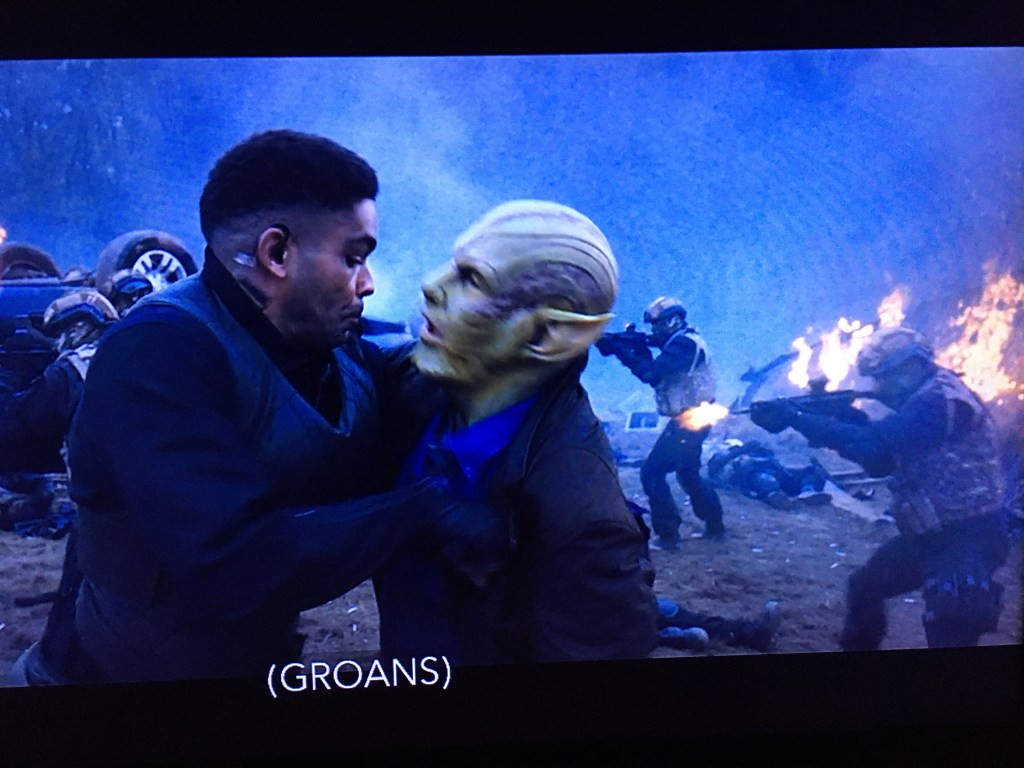
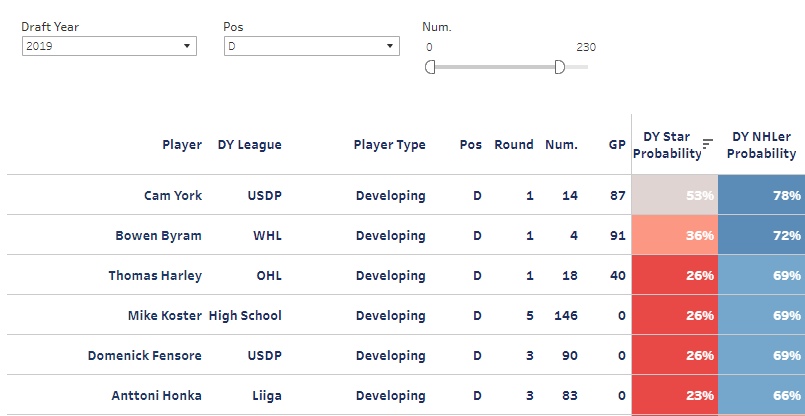
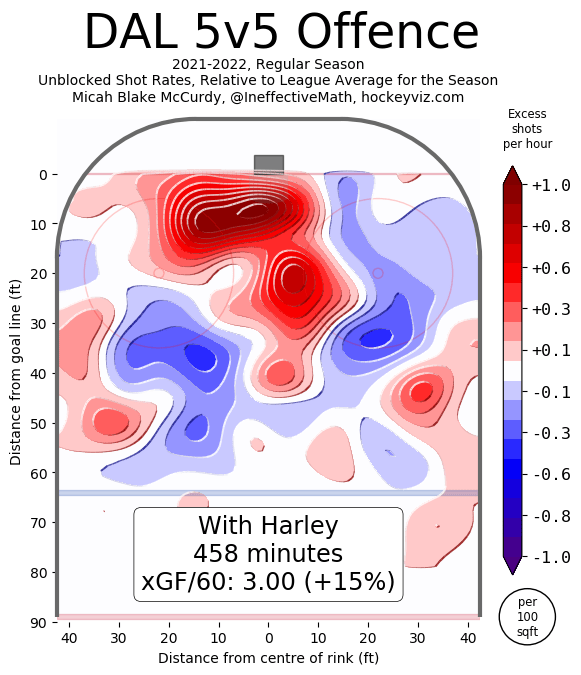
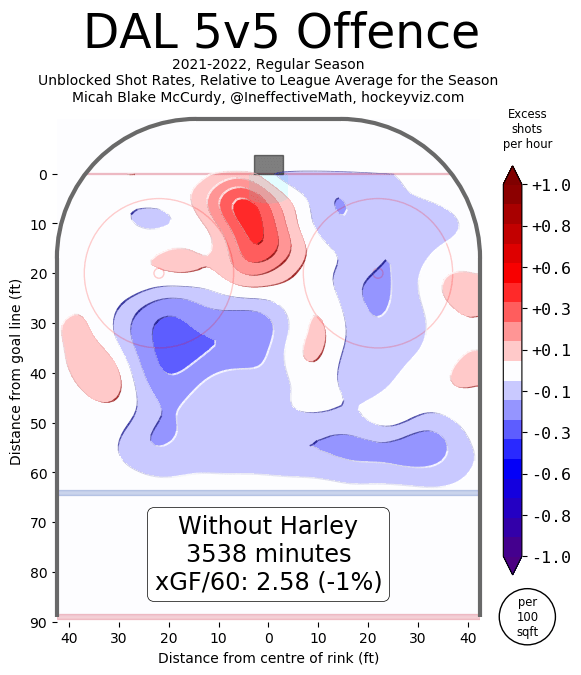
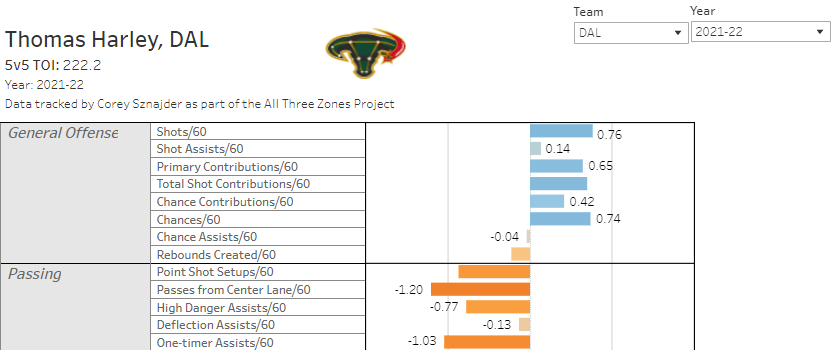
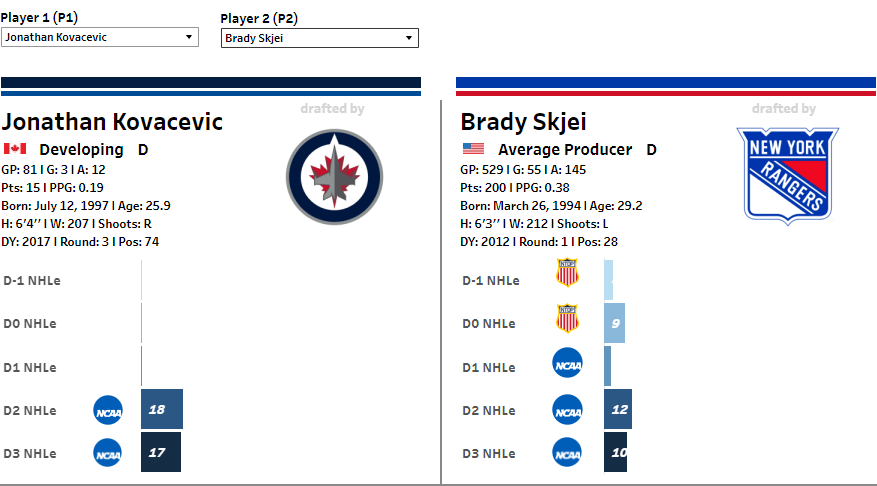
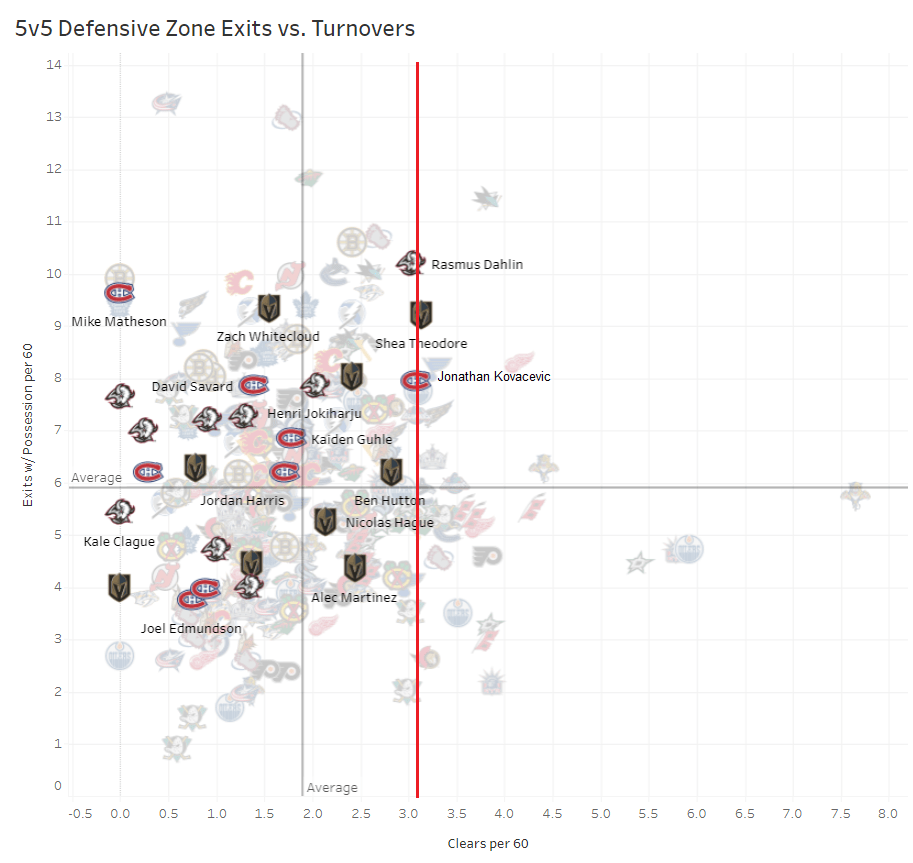
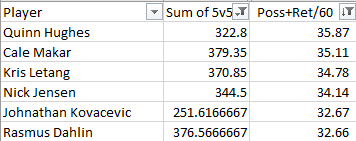
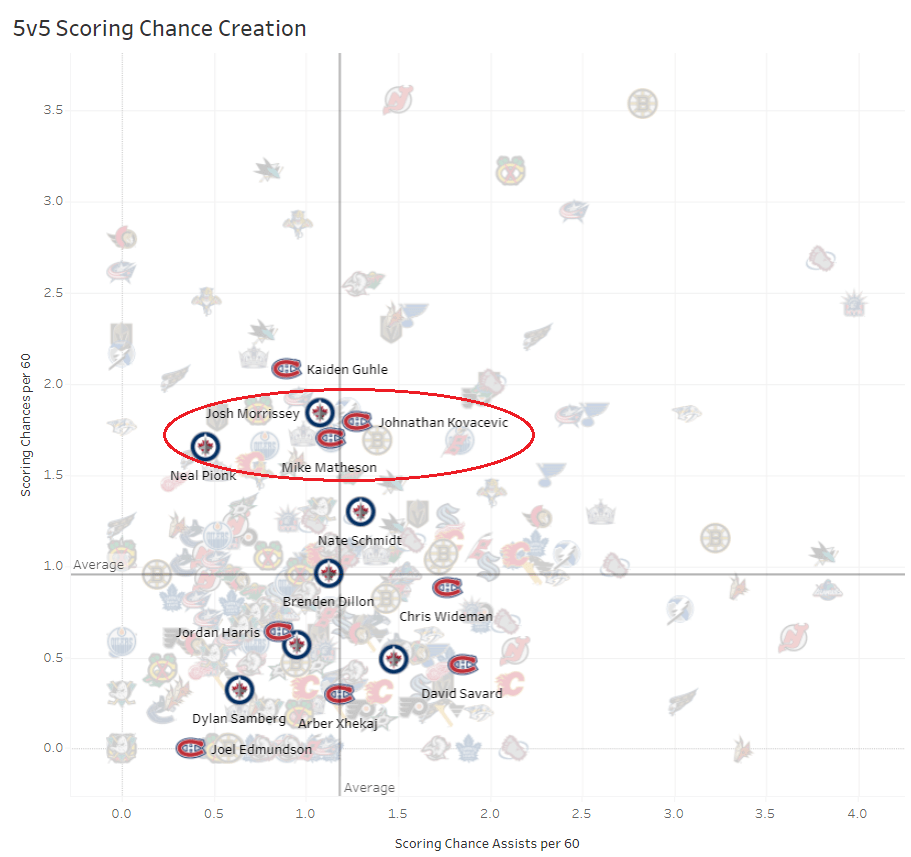
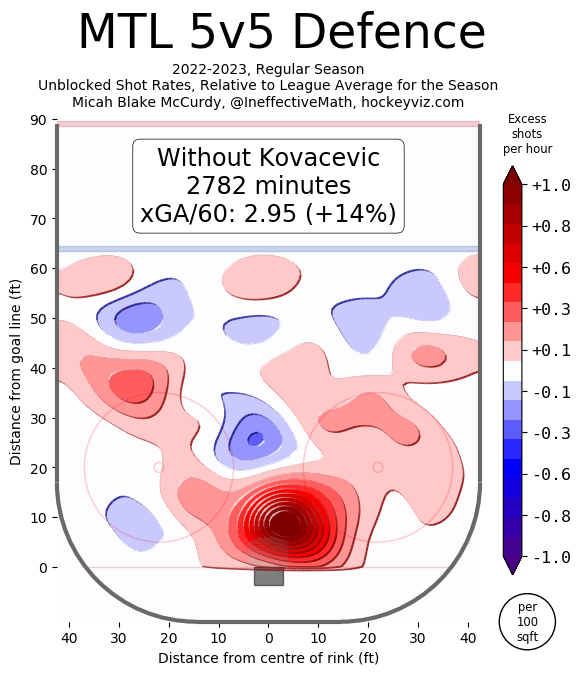
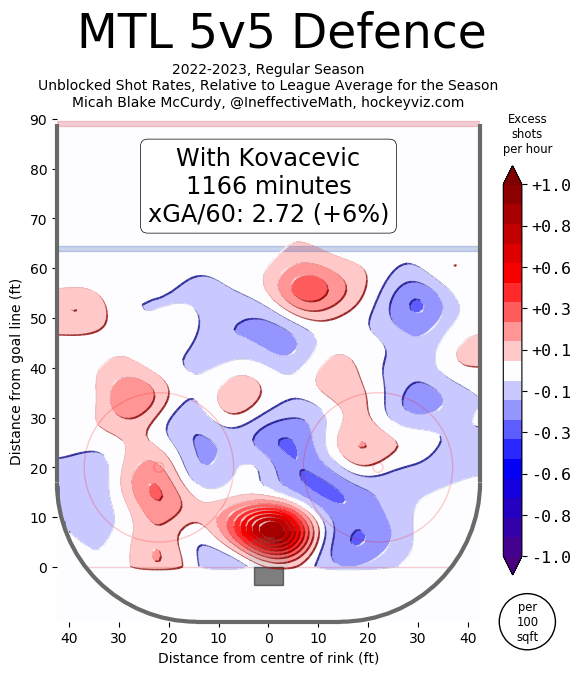
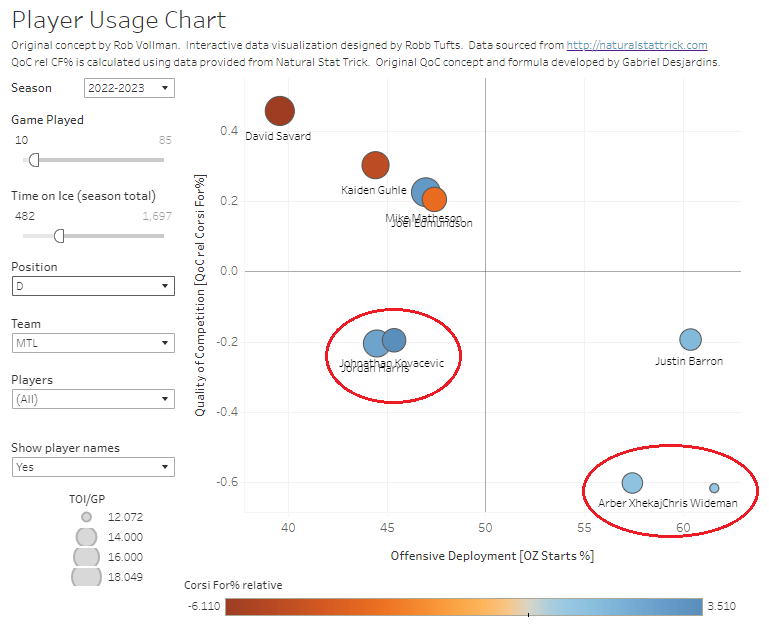
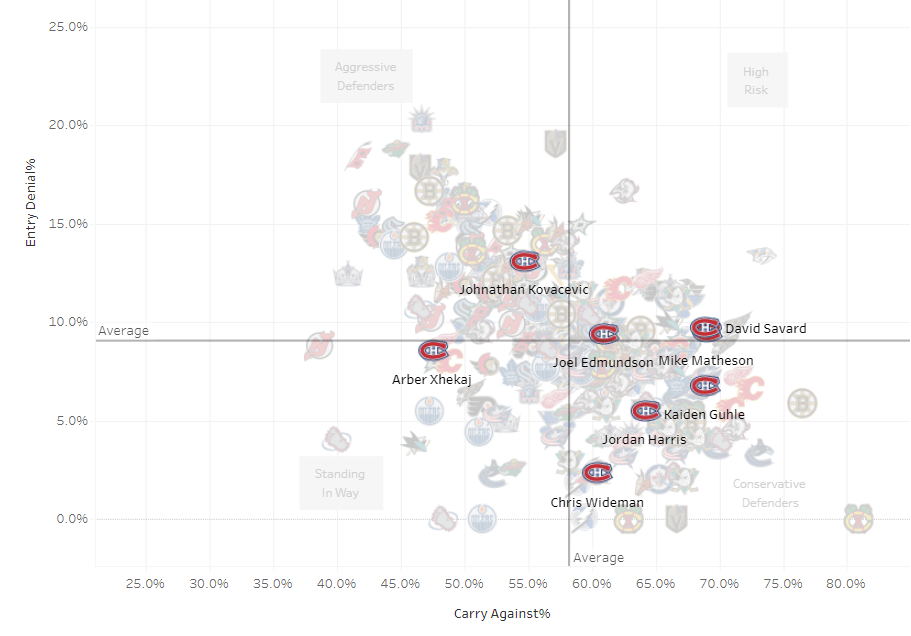
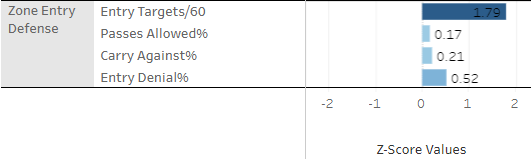
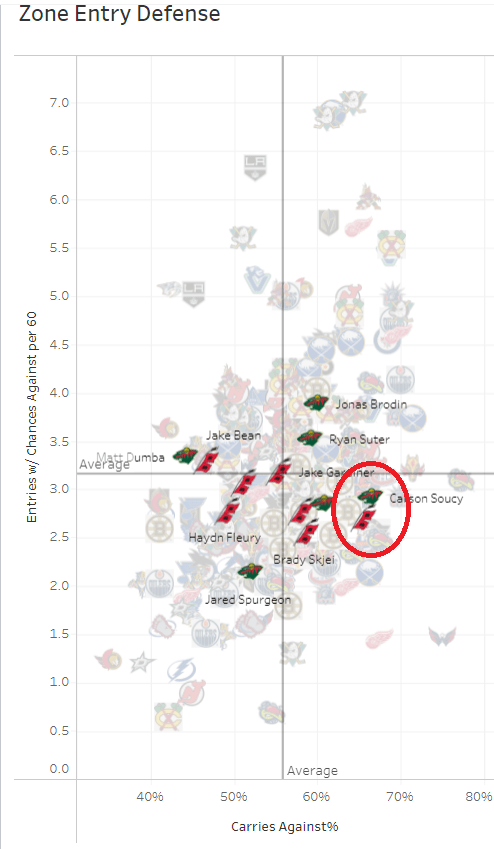
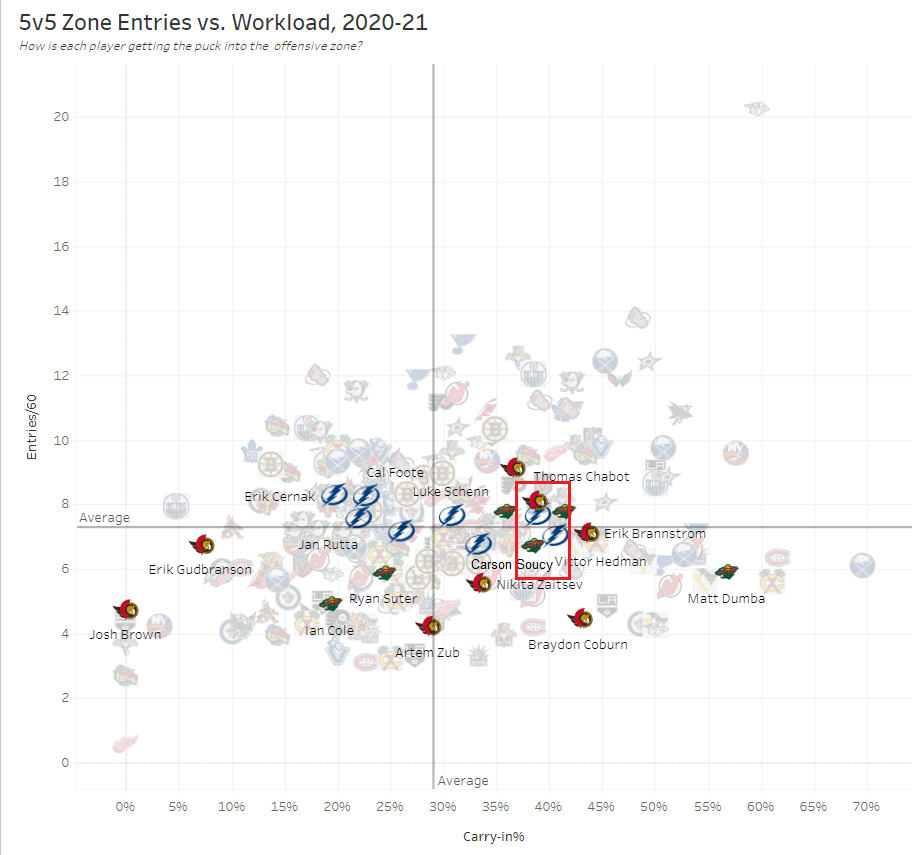
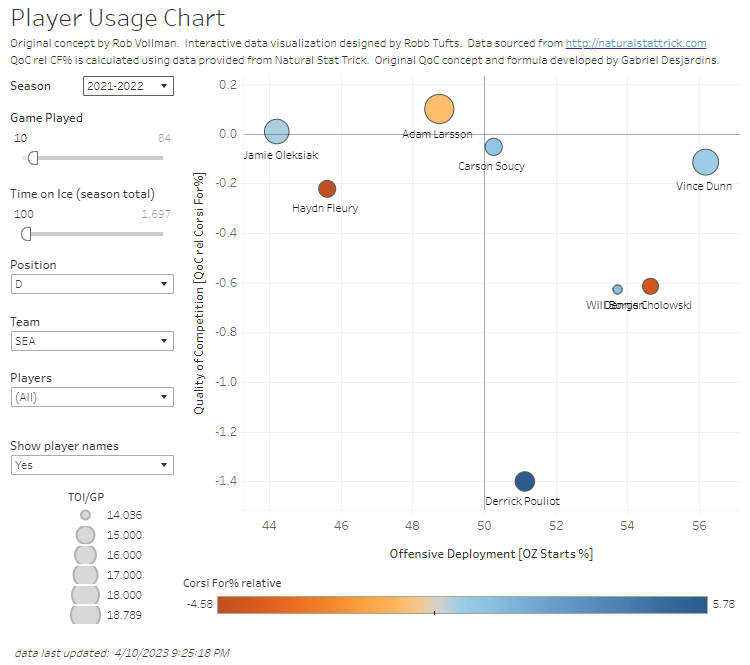
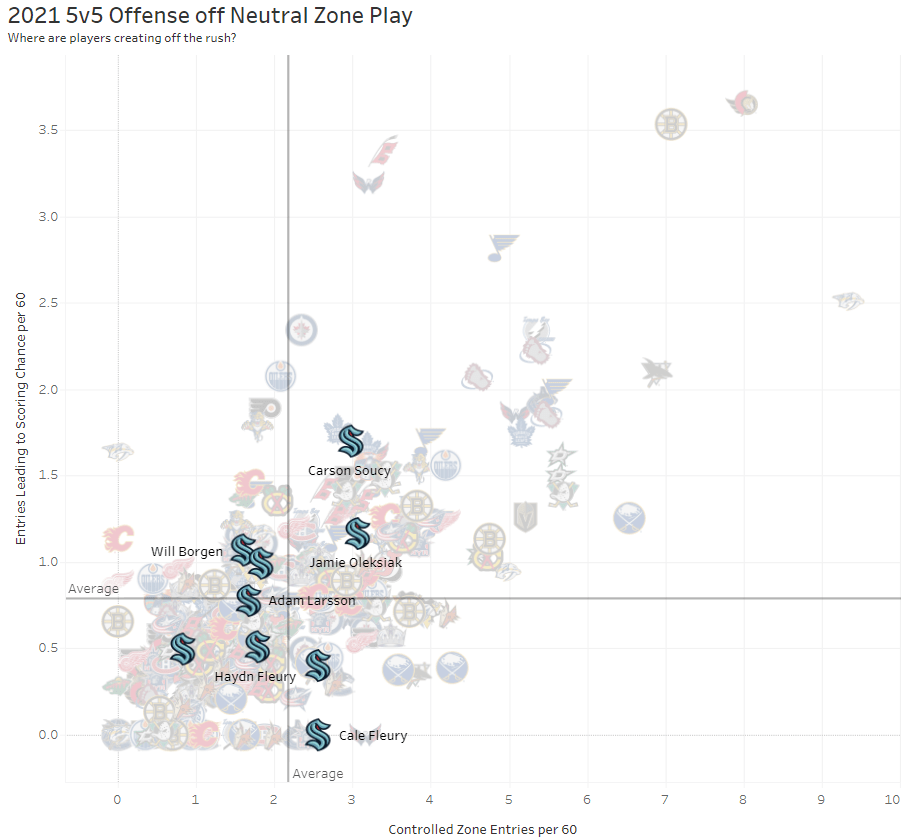

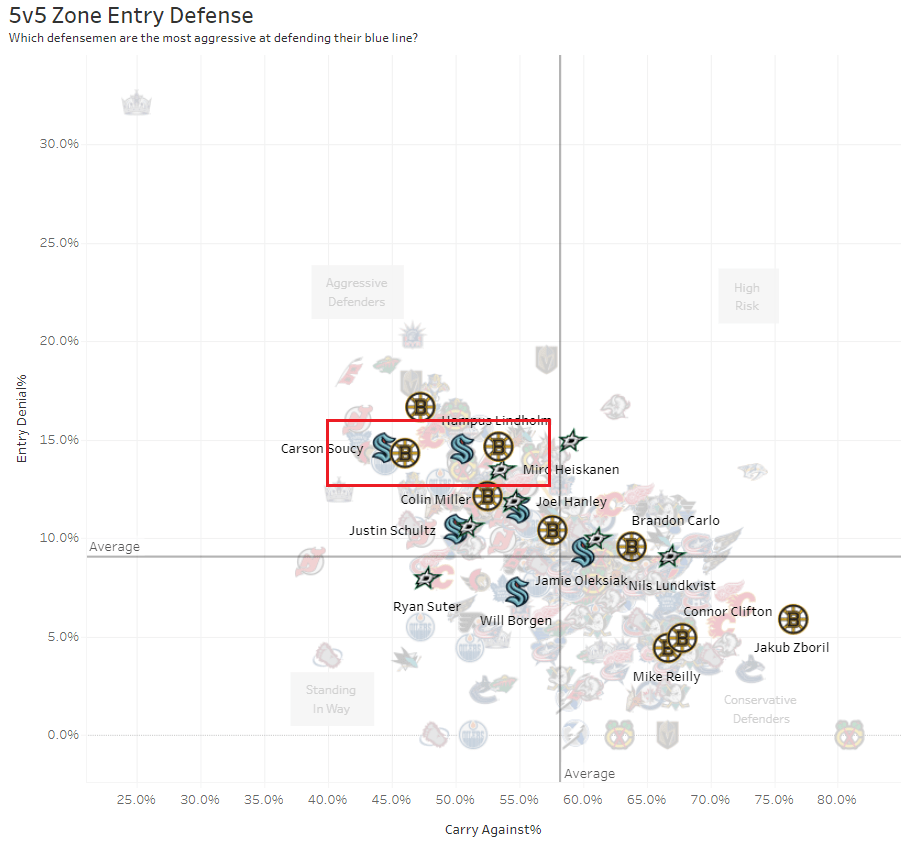
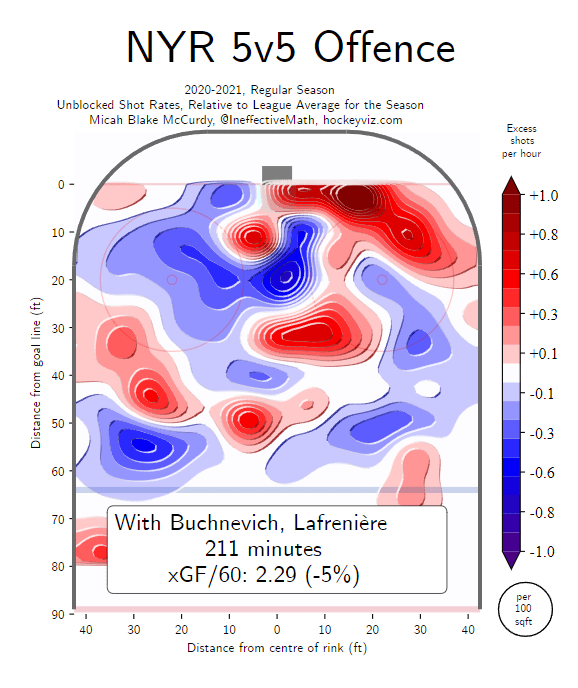
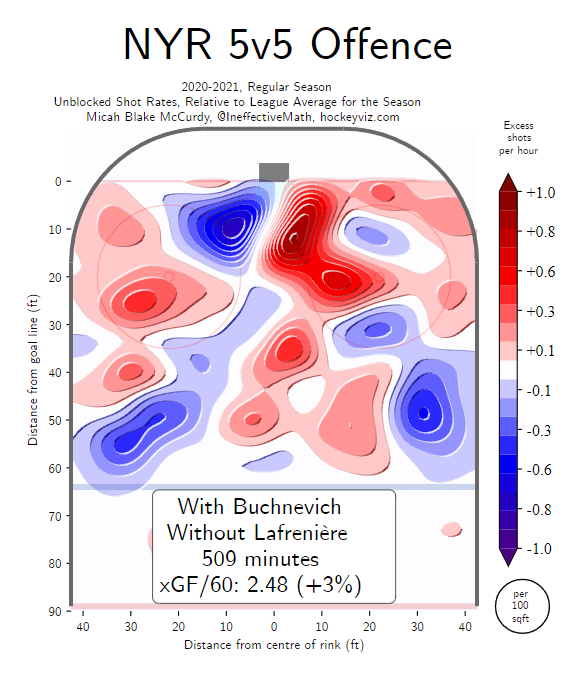
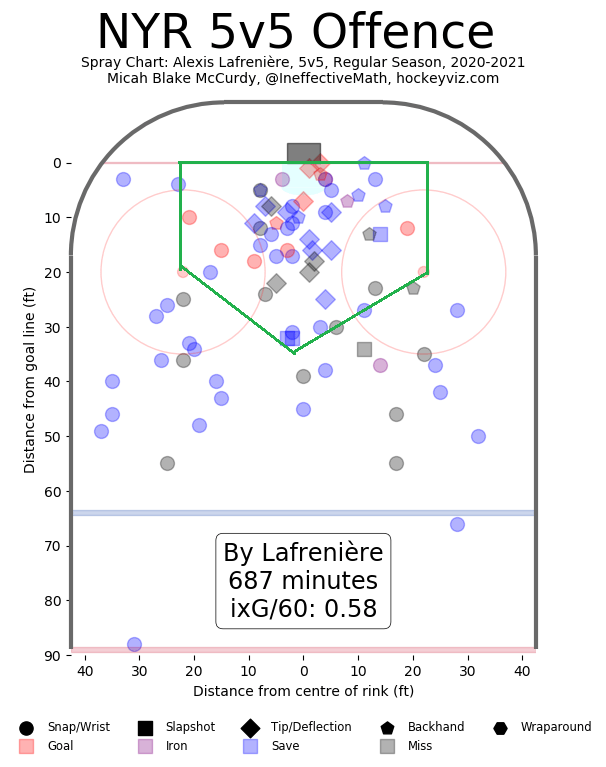
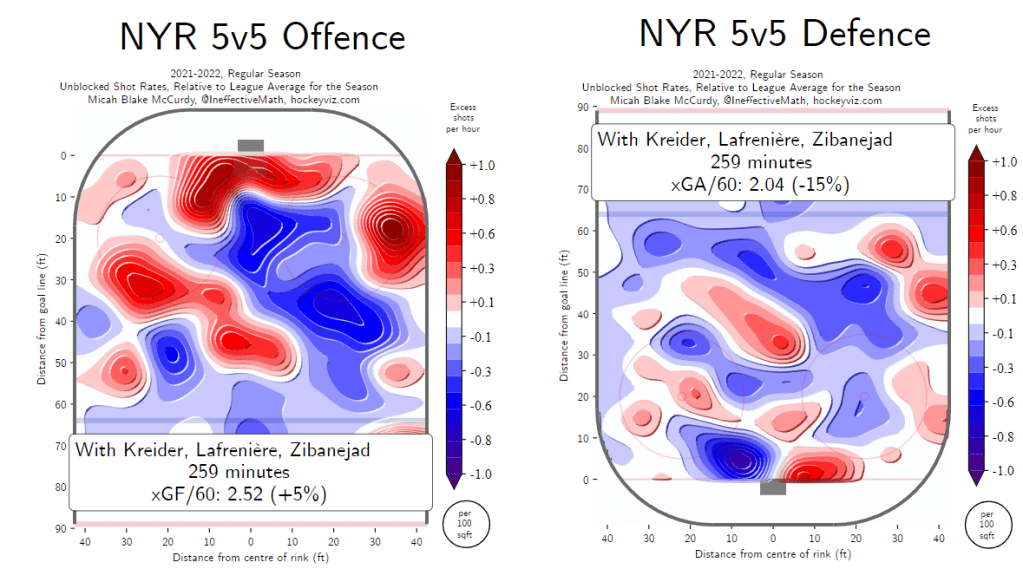


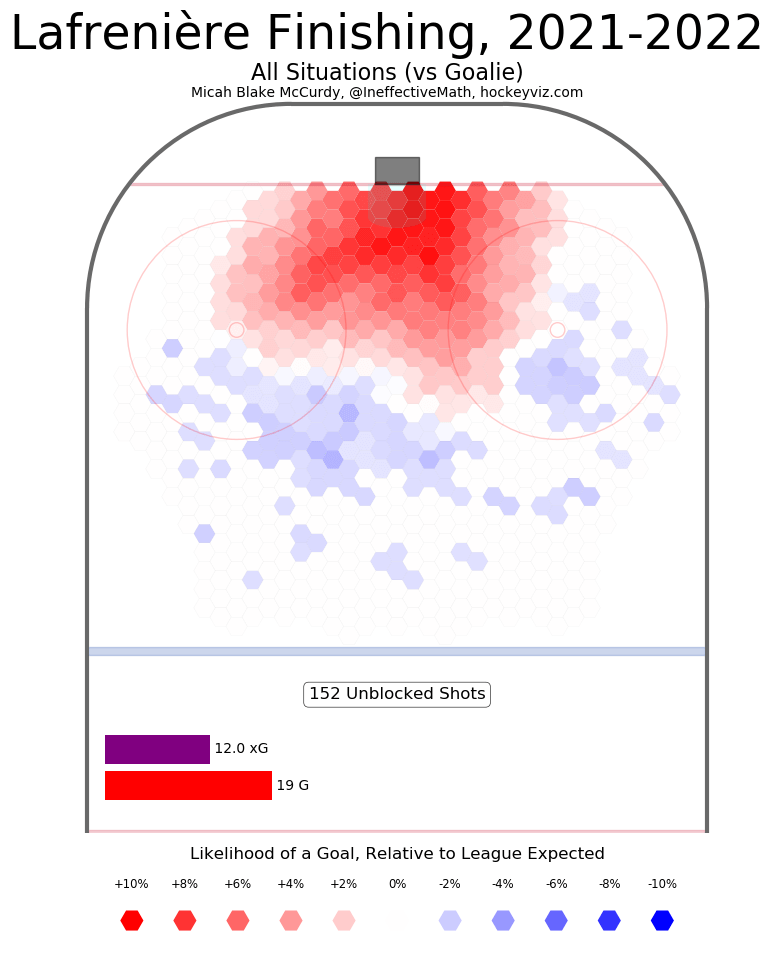
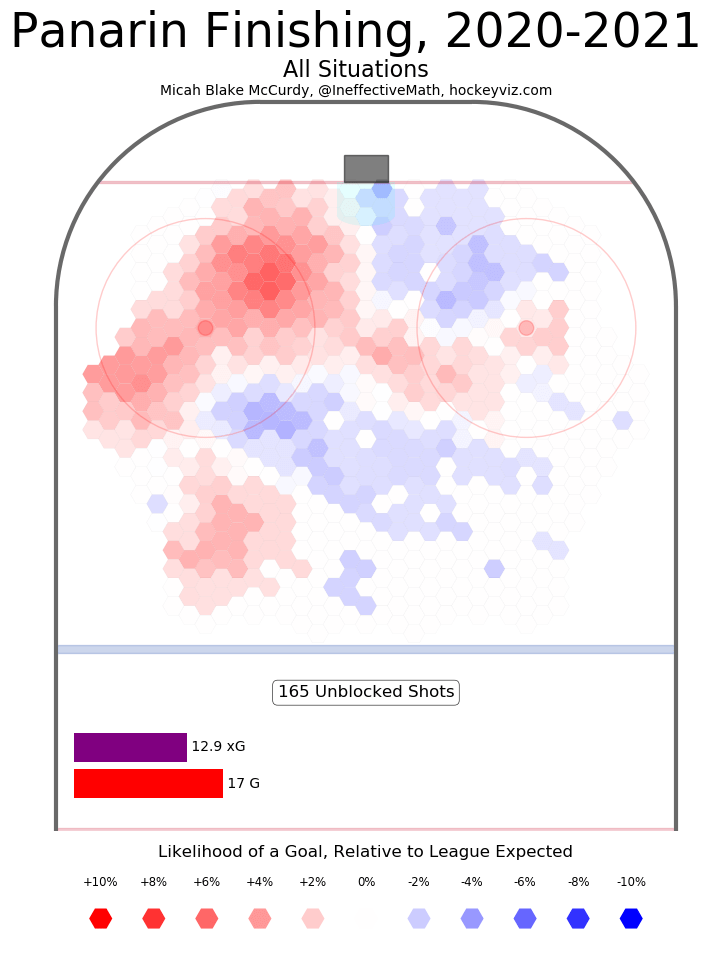
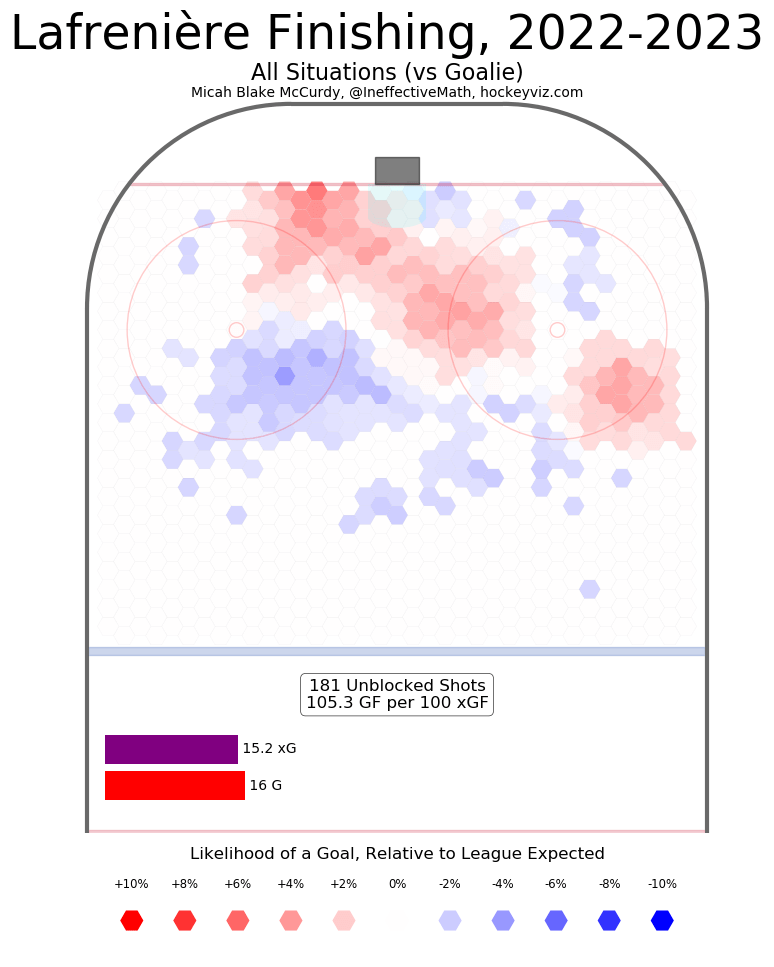
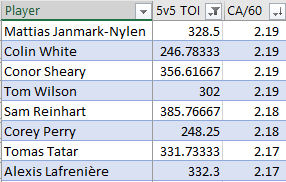
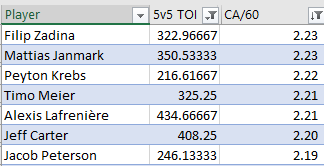
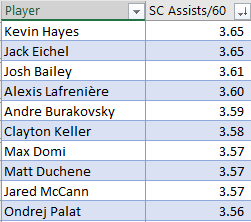
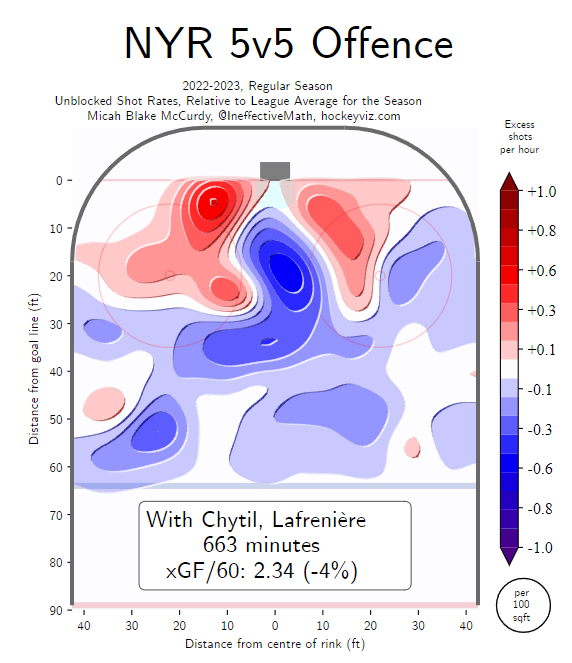
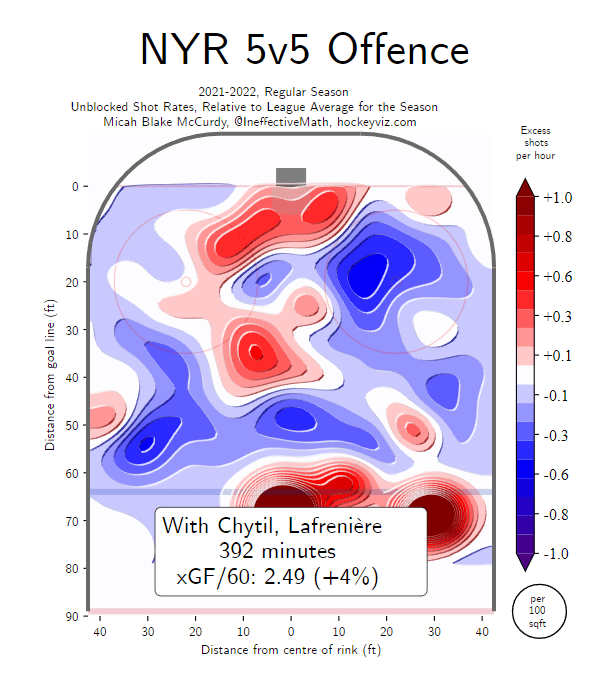
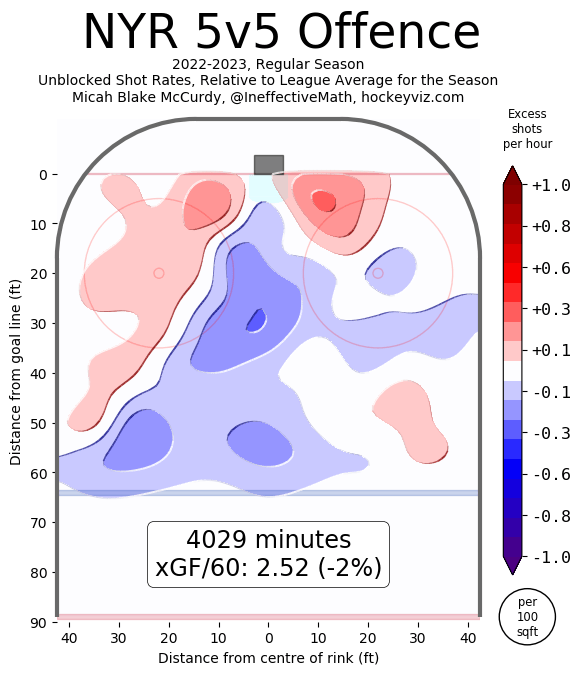

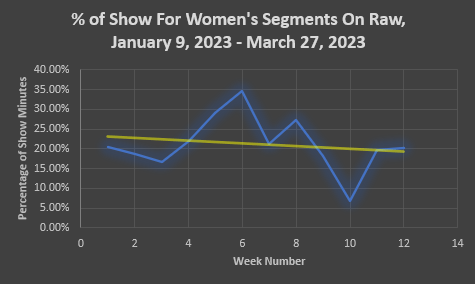
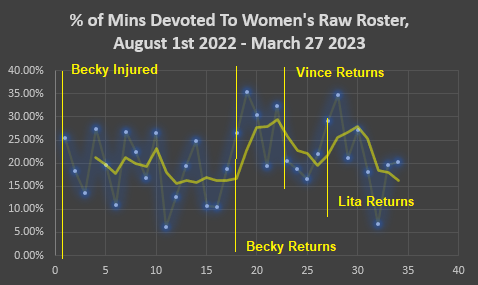
 Cliffy's hell-hole