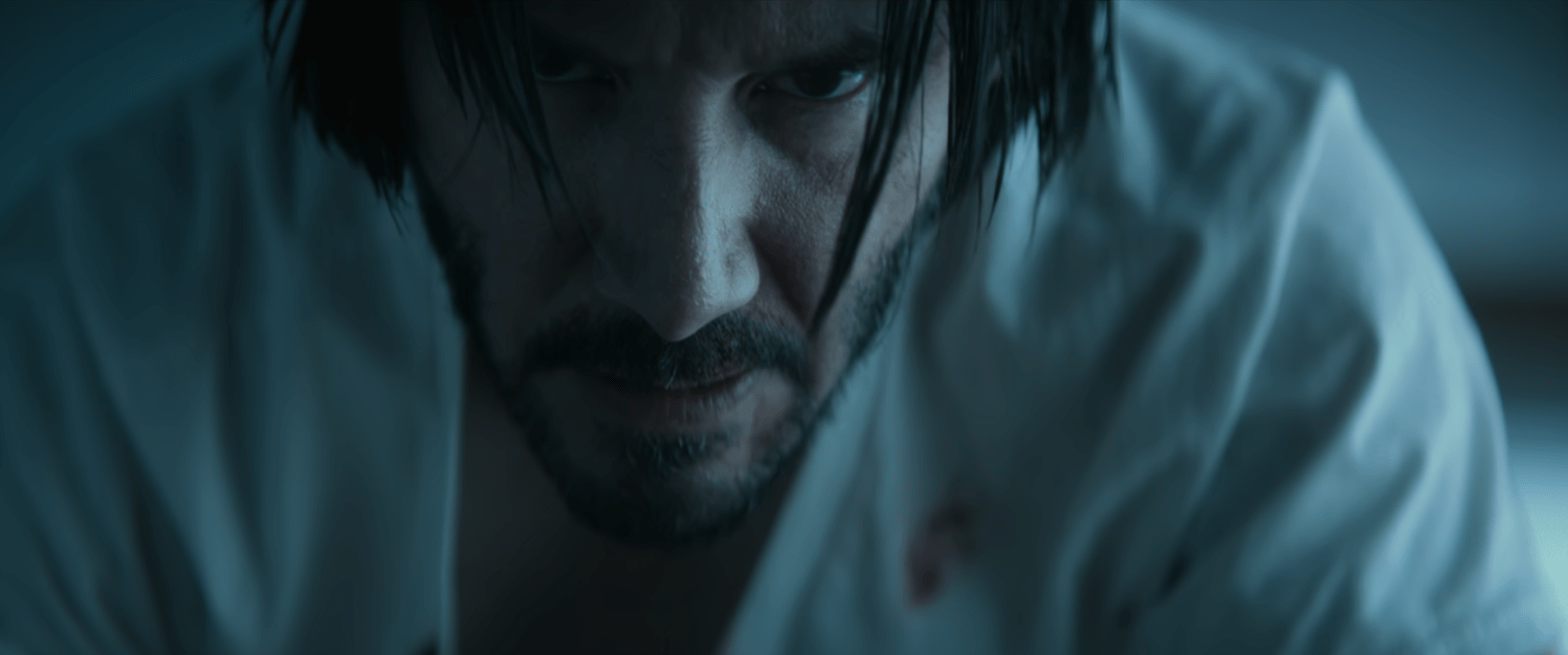
The signature Hollywood action movie series to debut this century (setting aside superhero movies, which are their own genre) is undoubtedly John Wick. The first in the franchise, released in 2014, was not only a financial success with $129-million in global box office against a $20-million budget, but a critical one as well: John Wick generated 77% positive reviews at Metacritic and holds an 86% at Rotten Tomatoes. While the action sequences are exceptionally well done, and the hallmark of the entire series, it’s what is shown to us before the titular character fires a single bullet that sets up the rest of the movie.
The movie opens with a slow-rolling SUV crashing into a concrete loading dock, and the SUV is absolutely mangled. Also mangled is Keanu Reeves, who crawls out of the vehicle wearing a suit that is covered in blood:
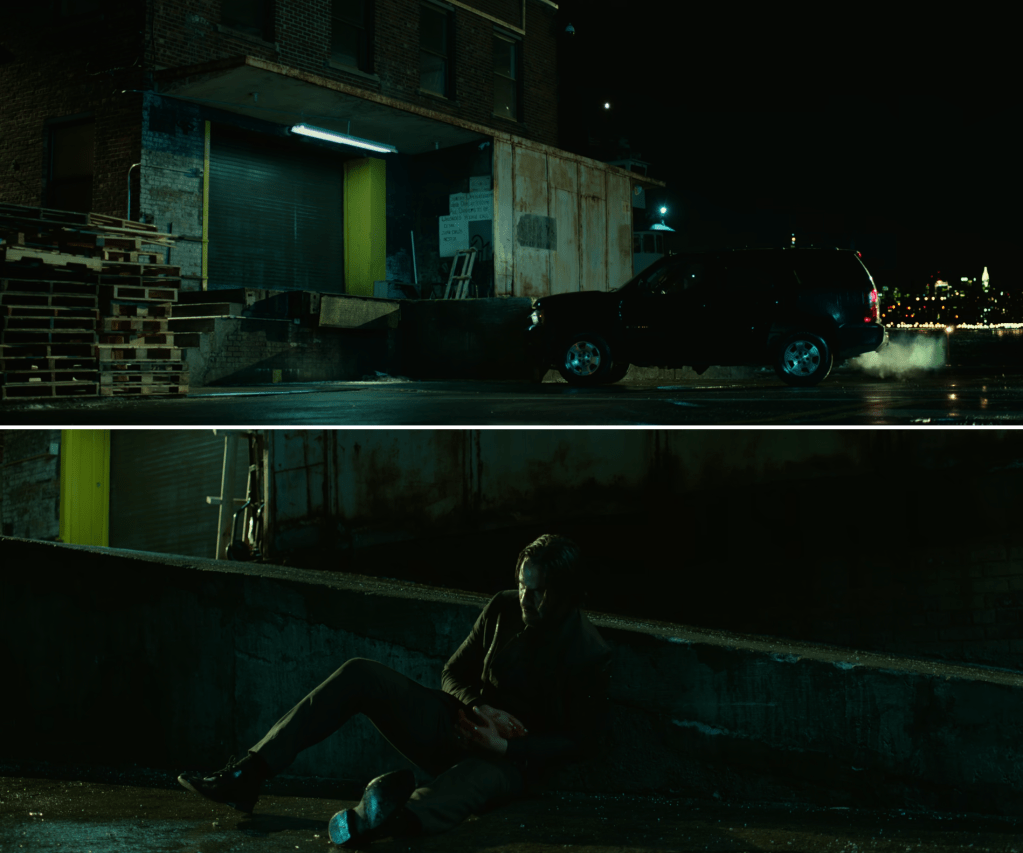
As this man is sitting up against the loading ramp, we get two shots that establish the foundation of our character.
The first is a wedding ring on his blood-soaked left hand. Then the man takes a smart phone out of his pocket, and as he’s sitting against that ramp, presumably dying from his injuries, the one thing he does is watch a video of a woman on a beach:
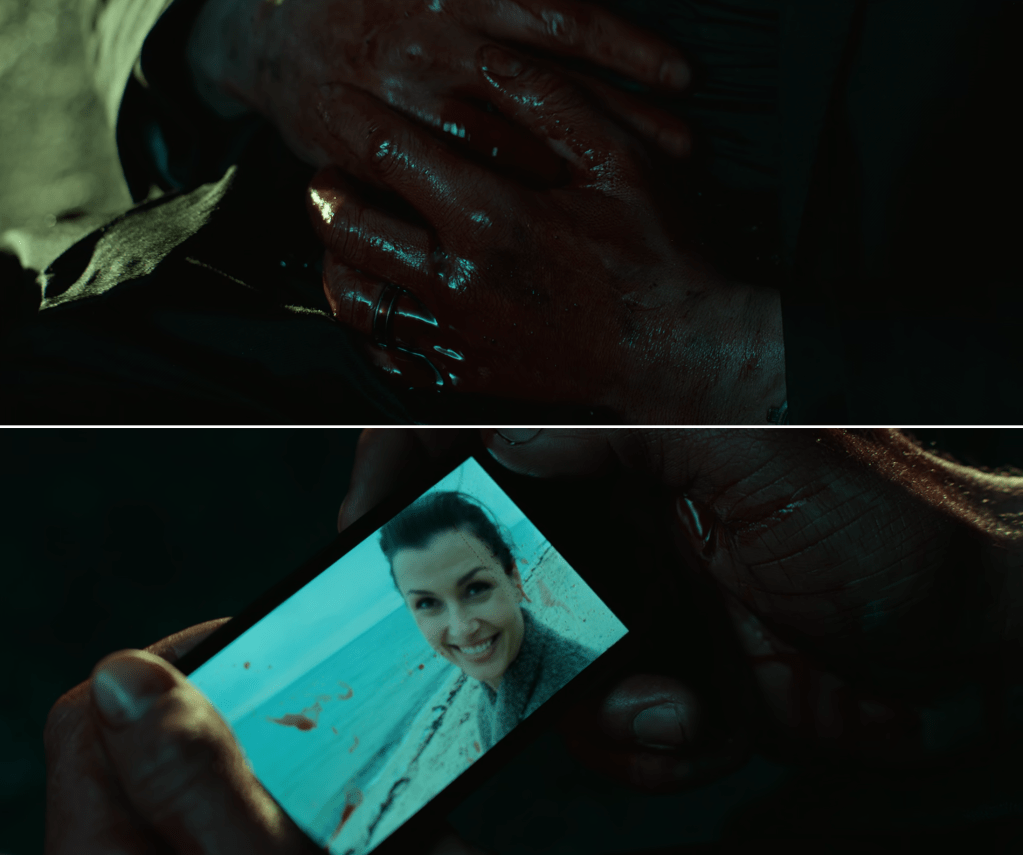
Given that he seems to be bleeding out, we’ve seen the wedding ring, and he watches a video of the woman rather than call her, the implication is the video is of his wife and she’s dead. At one point in this video, she says, “What are you doing, John?” so we now have a good idea that this is our main character, John Wick.
From the first images of the movie to the moment he watches the video, a grand total of 41 seconds has passed. In those 41 seconds, we know (or have a pretty good idea) he’s been in a very violent fight (if it was just a car accident, he probably doesn’t drive away bleeding like that), that he’s slowly dying, and he was married but his wife is deceased.
Wick slumps over and it cuts to the John Wick title card. During the title card, we hear a bedside alarm buzzing, which wakes him up and he shuts off. Then we get two more important shots.
The first shot is photos of either Wick, his wife, or both in frames on a ledge that he passes on the way to the kitchen. Director Chad Stahelski makes sure to capture Wick’s face in the reflection as he walks by to tell us that he’s not only thinking about her, but he’s still trapped by those memories:
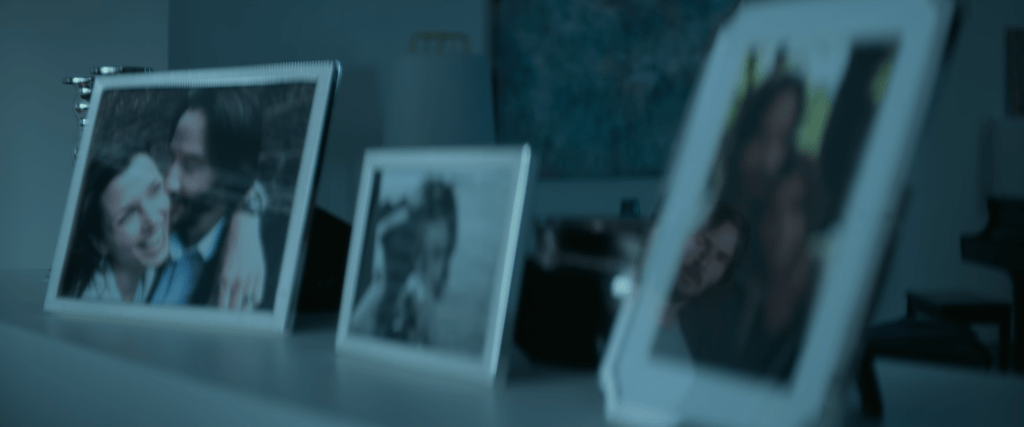
When people lose loved ones, they often leave up photos of the deceased, so this doesn’t help illuminate exactly when his wife died. It is the next shot, when he goes to the bathroom, that provides more context.
As he’s about to wash up, the camera pans over to the sink next to him and there is a brush, some cream and lotion, soap, and more:
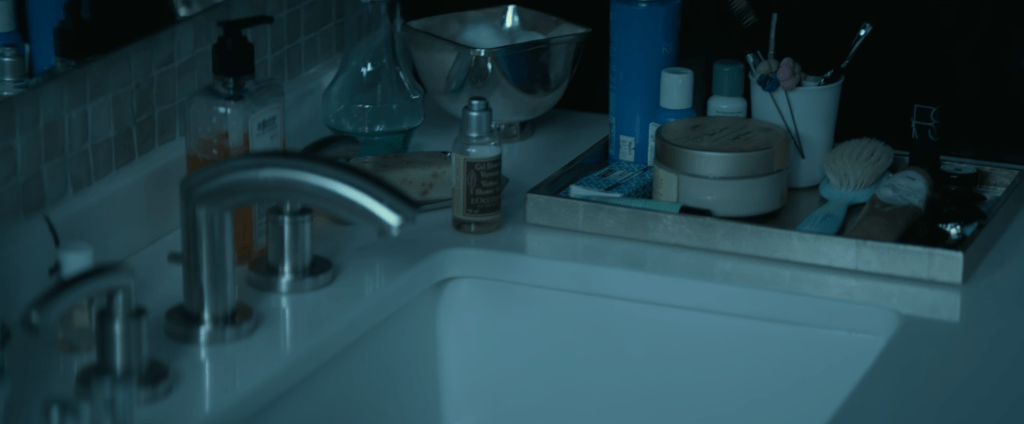
Leaving photos up is one thing, but leaving his wife’s entire morning/nighttime routine next to the bathroom sink tells us hers was a recent passing. If this had been months, he likely would have cleared those away by now, so this grief/sadness is still very fresh for him.
Now we get the full story. In a flashback after the bathroom scene, we hear a pinging sound while Wick and his wife are together somewhere on a boardwalk. She collapses and the scene cuts to Wick walking into her hospital room where she’s laying unconscious with the pinging sound being machines registering her heartbeat:
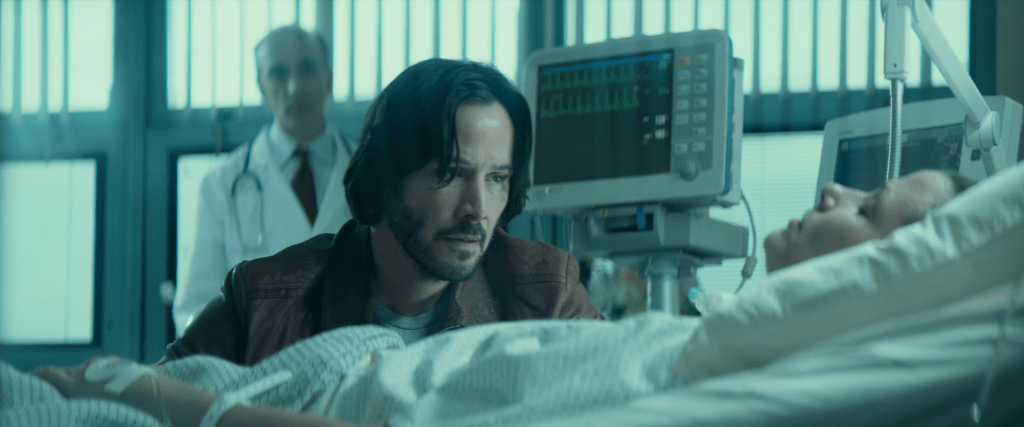
We don’t really need this, right? We know they were married, we know he loved her, and we know she’s dead. It is what happens next that makes this scene so necessary.
Wick leans over the hospital bed and kisses his wife on the forehead. After he does that, he looks over his shoulder at the doctor standing behind him, and the doctor gives him a nod:
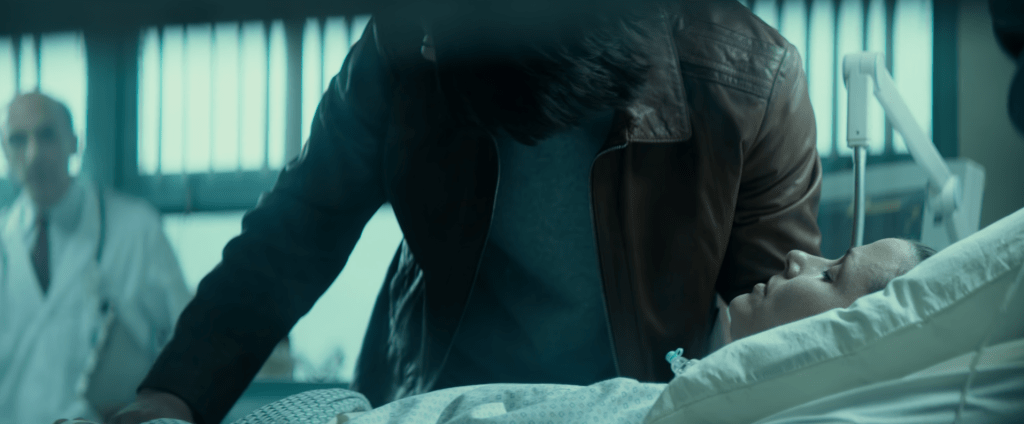
The doctor then moves behind the machine that shows her vitals and seems to unplug something. A few seconds later, she flatlines and the alarm starts blinking red:
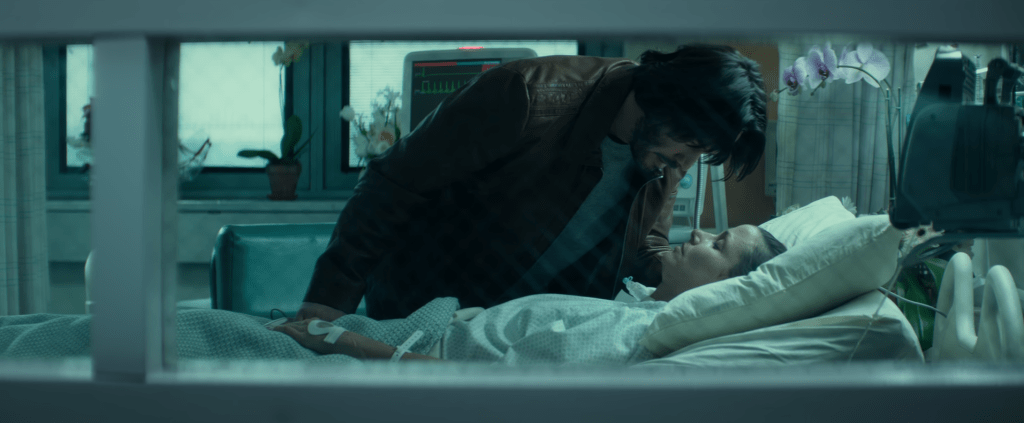
Not only did Wick lose his wife whom he loved very much, but he had to pull the plug on her. That is a whole other level of tragedy.
We are shown his wife’s funeral (on a rainy day, no less), and there’s a man standing at a distance after everyone leaves. John goes to talk to him:
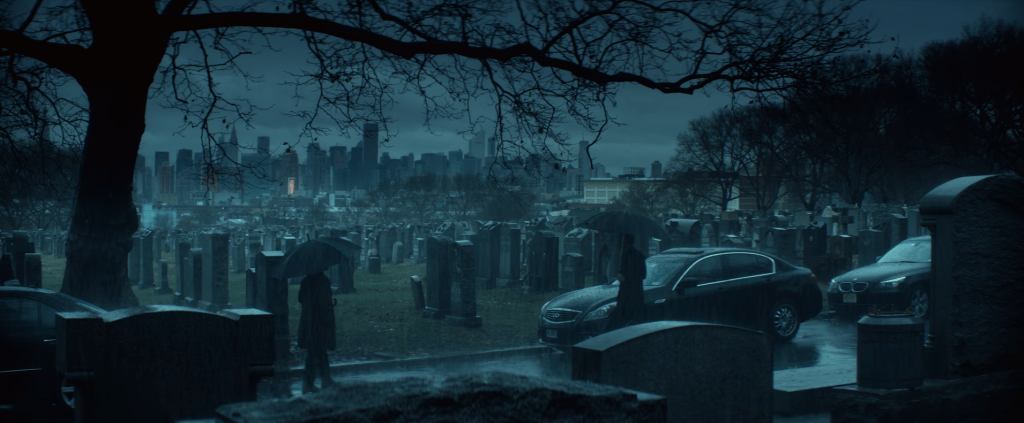
This is the first time we have any character on the screen say a word. Given that this is his wife’s funeral, and that this man (Willem Dafoe) is the first person Wick talks to, it is safe to assume this is someone close to him in some way. After sharing condolences and a bit of wisdom on life, Dafoe says he’s, “Just checking up on an old friend.” They shake hands and part ways.
To this point, we haven’t seen Wick show much emotion outside of appearing to be crying the moment his wife flatlines. The way the scene is shot, though, his hair is covering his face and it’s hard to tell, so the message here is he’s trying to keep his emotions in check, or hidden, through the worst days of his life.
After a brief scene of the funeral reception, Wick gets a package at the door. Attached to the package is a note. The package and the note are from his wife, who prepared all this before she died. The note says that he still needs something or someone to love. There are two key points of this scene.
First off, this scene is lit up. It is nighttime, but there are bright lights on in the room:
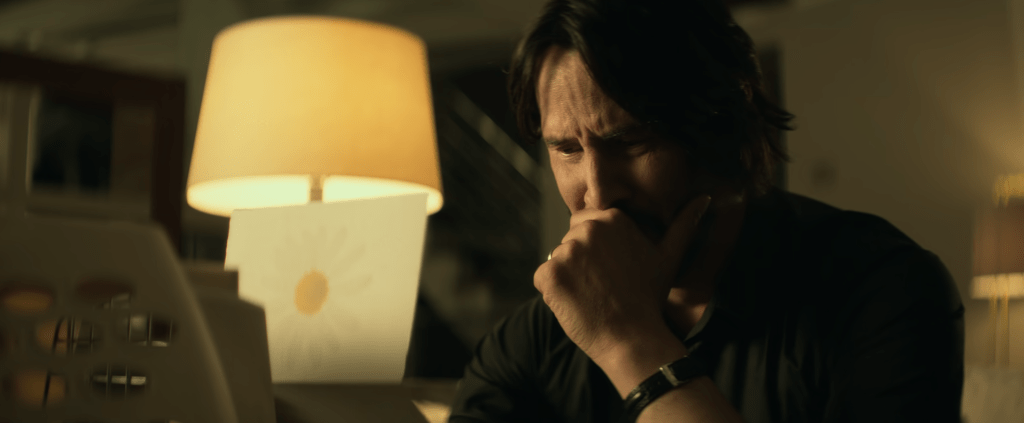
From the initial car crash scene to the bedroom/kitchen/bathroom scenes, to the hospital, to the funeral, it is all some variation of dark/grey/dull white. There is no colour outside of flashbacks of time spent with his wife, like this:
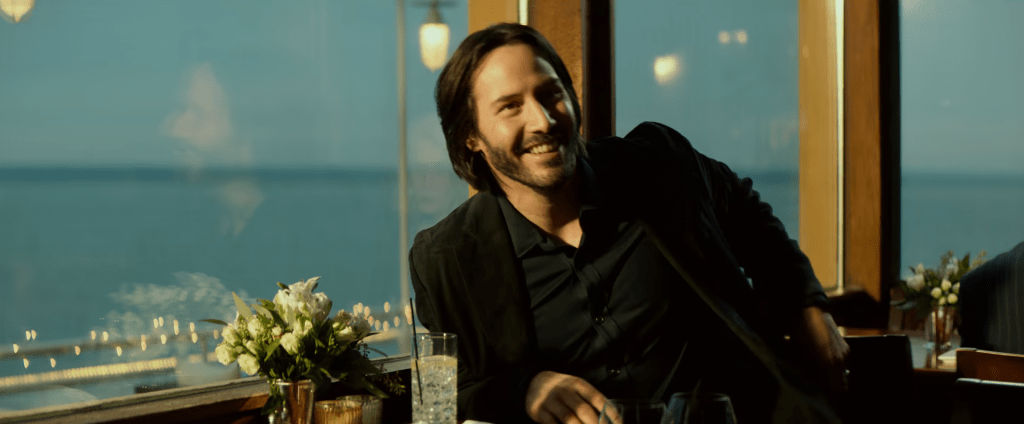
That we are only giving some brightness when he’s with his wife, or she’s trying to reach out to him in some way, only reinforces how much she really meant, and still means, to him.
The package delivered is a crate and in that crate is a puppy named Daisy. On the first night with the dog, Wick makes a bed out of a blanket on the floor for Daisy. The next morning, Daisy hops on the bed and starts licking his face. It is an adorable scene, but also one that helps drive home what his wife told him in the note she left: He needs something to love and take care of. We are told this by his wife, but not only does Daisy wake him up by licking his face, she does it a few seconds before his alarm goes off. It starts ringing as he’s about to get out of bed:
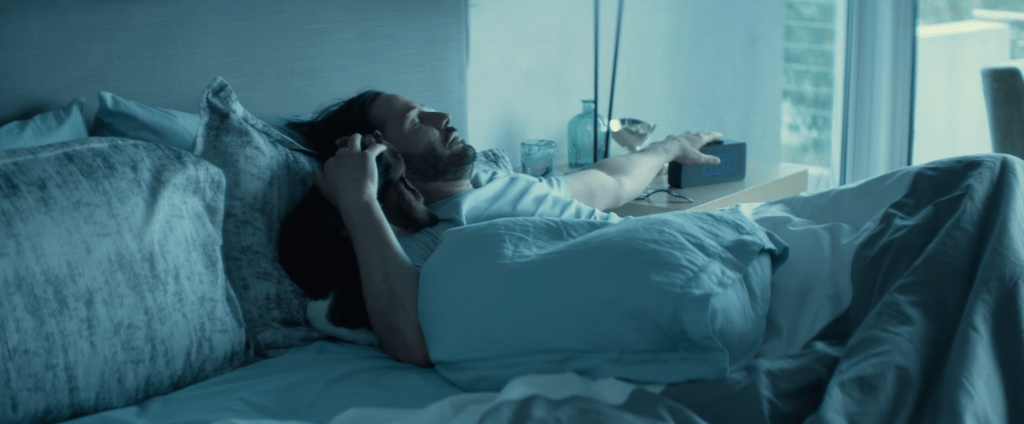
At the beginning of the movie, the first scene after the title card is Wick being woken up by his alarm. Now, he’s being woken up by something he cares about.
After feeding the dog and letting it do its business on the lawn, Wick gets ready for the day. There is another brief, but crucial, scene where he’s putting on his jacket and walking past the same ledge of photos shown earlier just after his wife died. Only this time, instead of Stahelski framing Wick’s face in the photos, when John was still weighed down by his grief, he is walking towards the camera, past the photos, and he barely glances at them:
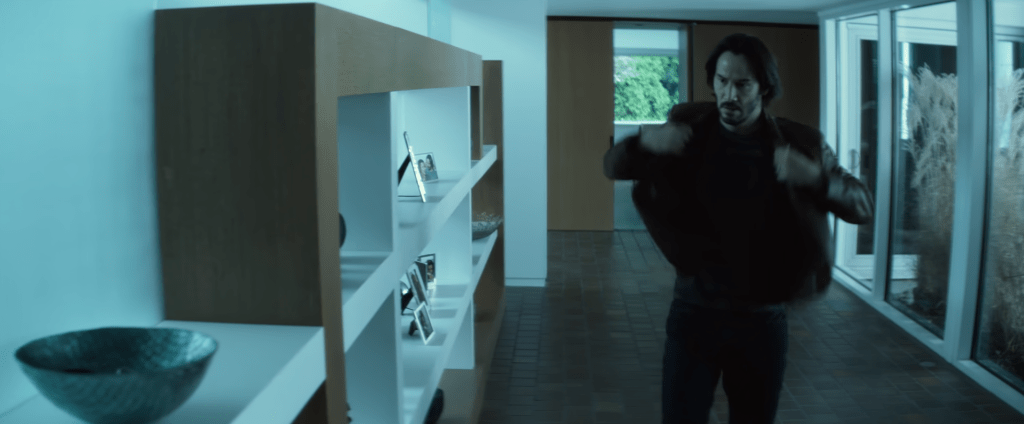
This isn’t to say that he’s not thinking about his wife – no one moves on that fast. But he’s no longer trapped by grief. Daisy has now given something else to think about, to care about, and to love, and it’s not only something we’re told in the note but shown by the director.
From the moment we’re shown the car crash that opens the movie, to the time Wick is putting on his jacket as he walks past those photos, about nine minutes have passed. We get one brief conversation with Dafoe’s character at the funeral, John saying a few words to his dog, a voiceover of his wife reading the note, and that’s it. There are a handful of lines, but here is what we are told visually:
- A man, who falls out of his SUV after a slow-rolling crash, is slowly bleeding to death from what was likely a vicious fight.
- This man is John Wick and he was married. Watching a video of her as he’s bleeding to death tells us not only is she dead, and not only that they were married, but that he truly, genuinely loved her.
- It isn’t as if his wife simply died from an accident, but Wick had to make the impossible decision to pull the plug on her.
- Before the accident and after his wife’s death, John hadn’t been able to move on. He is still looking at photos of her and hasn’t cleaned her cream/lotion/soap from the bathroom counter.
- The use of colour in various scenes indicates what his life is like when she’s dead and what his life was like when she, or some part of her, was still alive.
- The dog that his wife gifts him has truly given him something for which to wake up in the morning, rather than being woken up by a ringing alarm.
- This dog has helped him not necessarily move on from his wife’s passing but give him some reprieve and companionship as he tries to make it through the next day.
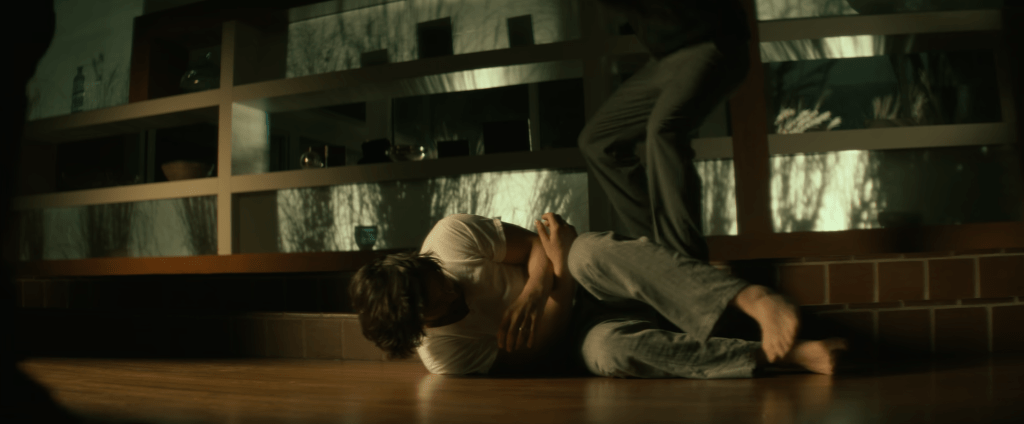
Finally, the use of colour comes into play one more time. Wick meets the Russian gangsters at the gas station and in the next scene, they break into his house, kick the shit out of him, and kill his dog. When this happens, there is still colour in the scene:
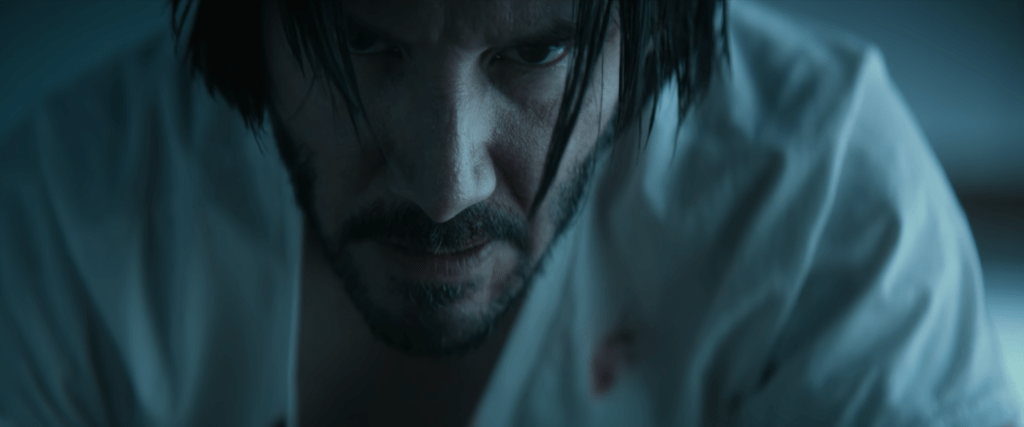
The next morning, after Wick buries Daisy, he is cleaning the blood off the floor. With that final remnant of his wife buried in the backyard, the colours are dulled once again:
There is a scene later in the movie when Wick tells the head of the Russian mob that when they killed his dog, they killed the only chance he had at an opportunity to grieve un-alone. That cements for anyone in the audience who didn’t pick up on this colour change an hour earlier, because that had been made clear to us.
From here on out is where John Wick turns into the action movie we know it to be. There is still a lot of visual storytelling through action sequences, the way scenes are presented, and further use of colour palettes. The reason John Wick can give us 90 minutes of great action sequences is it takes the first nine minutes of the movie to tell us everything we need to know about our main character. The action scenes are what made the John Wick series an extremely successful franchise both financially and critically, but visual storytelling like this is what elevates it from a great action movie to a classic piece of modern filmmaking.
 Cliffy's hell-hole